Across the vast steppes and deserts of Mongolia, nomadic herders are confronting a climate that is growing drier, hotter and more unpredictable. Traditional knowledge remains essential, yet many are now turning to digital tools to protect their livestock and livelihoods. One such tool helped herder Ganchimeg avert disaster this summer when her sheep drifted toward a dangerous salty lake.
A Moment of Panic on the Steppe
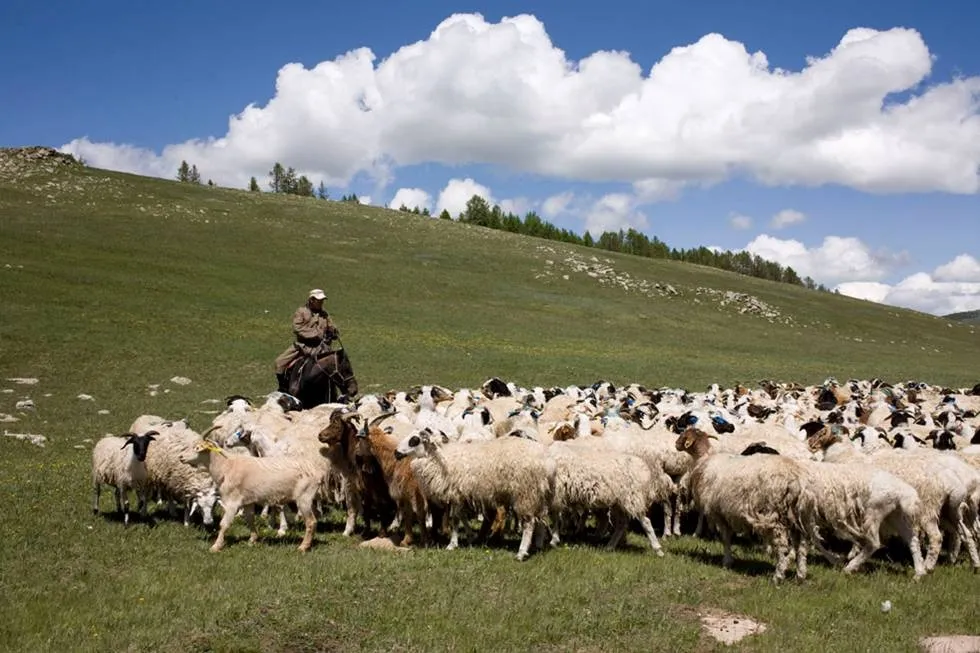
Vegetation near Ganchimeg’s camp had deteriorated, leaving her flock hungry and restless. The animals began moving toward a brackish lake whose water could have sickened or killed them. “If they drank or stepped into it, the whole flock would be destroyed,” she later recalled outside her traditional ger. Using a mobile application that tracks livestock, her husband located the sheep in time and intercepted them before harm occurred. Without the GPS signal, she said, the family might have lost the entire flock.
The incident illustrates a broader reality: Mongolian herders stand on the front line of both climate change and advancing desertification. Rising temperatures, prolonged droughts, more intense dust storms and harsher winters are reshaping the landscapes that have sustained pastoralism for centuries.
The Hunu App and Its Origins
The application that aided Ganchimeg is called Hunu. Its founder, 26-year-old Bilgudei Gankhulug, developed the tool after witnessing the devastating 2024 dzud—an extreme weather pattern of summer drought followed by severe winter cold and heavy snow. That event killed more than eight million livestock and underscored the vulnerability of herding households.
Hunu combines several practical functions. A small solar-powered GPS device is attached to one animal in a group; because herds typically stay together on the open steppe, a single tracker is often sufficient. The app also delivers artificial-intelligence-supported weather alerts for dust storms and blizzards, phenomena that have become more frequent. Additional map layers show snow depth, wind direction, soil moisture and drought conditions, helping families decide when and where to move their animals.
Climate Pressures on the Mongolian Steppe
Mongolia is a large, sparsely populated country whose climate is warming faster than the global average. Scientists and government assessments point to longer dry spells, declining pasture quality and an increase in extreme events. Desertification, driven by both climate trends and historical overgrazing, further reduces the land’s capacity to support livestock.
Dzuds remain among the most feared hazards. When summer drought weakens animals and is followed by extreme cold and deep snow, livestock cannot reach forage and mass die-offs can occur. Herders who once relied primarily on seasonal migration and inherited knowledge now face conditions that change more rapidly than traditional calendars can accommodate.
Technology as a Complement to Tradition
The adoption of GPS tracking, weather apps and satellite-derived pasture information does not replace nomadic skills. Rather, it augments them. Real-time location data reduces the time spent searching for strayed animals. Early warnings of approaching storms give families a chance to shelter livestock or adjust routes. Information on soil moisture and vegetation helps avoid overused or degraded pastures.
Similar digital approaches are appearing elsewhere on the steppe. Some communities use satellite monitoring to assess grazing pressure and plan rotations. Others combine mobile connectivity with traditional seasonal movements. The common thread is an effort to retain mobility and flexibility—the core strengths of pastoralism—while gaining better situational awareness.
Broader Context and International Attention
Mongolia’s challenges have drawn international notice. The country recently hosted a major conference on desertification, highlighting both the severity of land degradation and the search for practical responses. National policies increasingly emphasise climate-resilient livestock management, improved water access and support for herder cooperatives. Technology forms one element of a wider adaptation strategy that also includes better fodder reserves, insurance schemes and pasture restoration.
Yet significant obstacles remain. Not every household can afford devices or reliable data connections. Network coverage is uneven across remote areas. Sustained benefits depend on continuous updates to weather models and map data, as well as training so that herders can interpret the information effectively.
A Fragile but Adaptive Way of Life
Pastoralism has long demonstrated remarkable resilience in Mongolia’s demanding environment. Families move with the seasons, read the land closely and maintain herds that convert sparse vegetation into food, fibre and income. Climate change tests that resilience by compressing the margins of error. A single poor decision about water or pasture can now carry higher stakes.
Tools such as the Hunu app offer a way to narrow those risks. They do not eliminate drought, cold or desertification, but they can improve the odds that herders receive timely information and retain control over their animals. For Ganchimeg, the difference was concrete: a flock saved because a signal reached her husband in time.
As conditions on the steppe continue to shift, the combination of ancestral knowledge and carefully chosen technology may determine how many families can remain on the land. The herders of Mongolia are adapting once again—this time with satellites, solar chargers and algorithms joining the traditional toolkit of mobility, observation and endurance.
Read more – slangpilot.com