Union Home Minister Amit Shah’s recent statement that the Uniform Civil Code will be implemented in all 21 BJP-NDA ruled states before the 2029 Lok Sabha elections has sharpened focus on a deliberate political and constitutional strategy. Rather than introducing a single central law in Parliament, the Bharatiya Janata Party is advancing the long-standing ideological objective of a common civil code through state legislatures. This state-by-state approach reflects both legal realities and calculated political choices.
A Time-Bound Political Commitment
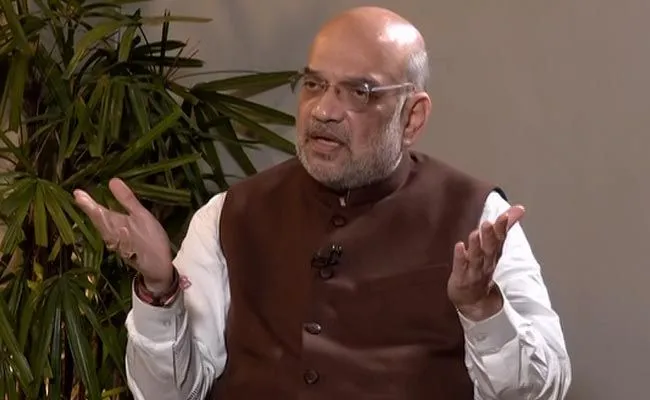
Speaking in Mumbai, Shah expressed confidence that UCC would be introduced across the 21 states governed by the BJP and its National Democratic Alliance partners before 2029. He linked the initiative to the earlier abolition of triple talaq, presenting it as part of a broader effort to ensure equal rights, particularly for Muslim women. The timeline converts what had been a gradual, state-led process into a clear electoral-cycle objective.
UCC has remained one of the BJP’s core ideological goals, alongside the construction of the Ram temple in Ayodhya and the abrogation of Article 370—both of which have been achieved. Shah has previously described a single law for every citizen as a commitment of the party since its inception. The 2029 formulation now gives that commitment a concrete, measurable deadline.
Constitutional Space for State Action
Personal laws relating to marriage, divorce, adoption, wills, succession and joint family matters fall under Entry 5 of the Concurrent List in the Seventh Schedule of the Constitution. This means both Parliament and state legislatures have the power to legislate on these subjects. States can therefore enact their own Uniform Civil Codes without waiting for a central law.
Article 44 of the Constitution, which directs the State to endeavour to secure a uniform civil code for citizens throughout India, sits among the Directive Principles of State Policy. These principles are fundamental to governance but are not enforceable by courts. The absence of a justiciable fundamental right to a uniform code has left the field open for incremental, jurisdiction-specific legislation.
Political and Practical Advantages of the State Route
A single national UCC would have to reconcile India’s vast diversity of personal laws and customary practices, including those of tribal communities and populations in the Northeast. Party and organisational sources have previously acknowledged that codifying one uniform law across such variation is far more complex than reforming criminal law. Different regions and communities follow distinct customs that cannot be easily standardised without extensive consultation and potential resistance.
The state-by-state route allows the BJP to test models, accommodate local specificities and demonstrate workable implementation before attempting a nationwide framework. It reduces the immediate political cost of a confrontational central bill and creates facts on the ground. Once several states have functioning codes, the argument for a broader law gains practical weight.
This approach also keeps the issue politically alive between election cycles. Each state enactment reinforces the party’s ideological narrative of equality before the law and social reform while allowing it to present the changes as progressive measures rather than abrupt impositions.
Progress Across States
Uttarakhand became the first state to pass a UCC law in 2024 and brought it into force in January 2025. The code provides common rules on marriage, divorce, inheritance and succession, prohibits polygamy, mandates marriage registration and regulates live-in relationships by requiring registration of both the relationship and its termination. Children born from such relationships are recognised as legitimate. Scheduled Tribes and certain communities protected by constitutional customary-law provisions are excluded.
Gujarat, Assam and Madhya Pradesh have since passed similar legislation and are awaiting presidential assent and notification. These codes broadly follow the Uttarakhand template—covering marriage, divorce, succession and live-in relationships, prohibiting polygamy, and requiring registration of live-ins—while incorporating some variations. Madhya Pradesh’s version, for instance, also addresses adoption and contains provisions relating to triple talaq and nikah halala.
Other states, including Maharashtra, Chhattisgarh, Rajasthan and West Bengal, have formed committees or begun drafting processes. The pattern is clear: BJP-ruled or NDA-aligned states are moving at different speeds but in the same direction.
The Role of Ideological and Organisational Thinking
The preference for a state-first strategy has roots in RSS thinking as well. When the issue gained national prominence in 2023, organisational sources indicated a preference for deeper study, wider consultation and initial experimentation by BJP-ruled states, with the possibility of an overarching central law considered later. Subsequent statements from RSS leaders welcomed the Uttarakhand model and suggested it could be studied and adapted more widely, while continuing to stress the need for consultation.
By turning this preference into a 2029 target across all NDA-ruled states, the BJP has converted a cautious, incremental approach into a time-bound political programme.
Opposition Concerns and Allied Caution
Opposition parties have largely framed the state codes as majoritarian exercises rather than genuine gender-equality reforms, arguing that they selectively target minority personal laws. Concerns have also been raised about the exemption of tribal communities and the regulation of live-in relationships. Some NDA allies have taken a more measured position, emphasising the need for consensus and sensitivity to India’s social diversity rather than unilateral imposition.
These differences underscore why a central law remains politically complicated. A nationwide bill would require navigating not only opposition resistance but also the varied comfort levels of coalition partners.
A Strategic Choice with Long-Term Implications
The decision to pursue UCC through states rather than Parliament is therefore both constitutionally feasible and politically pragmatic. It allows the ruling party to advance a core ideological objective, generate legislative precedents, refine models through experience, and maintain momentum without immediately confronting the full complexity of a national consensus.
Whether this state-level expansion eventually culminates in a central law remains an open question. For now, the strategy is clear: build the Uniform Civil Code from the states upward, create a critical mass of implemented codes before 2029, and keep the issue firmly within the realm of achievable political action rather than unresolved national debate. In doing so, the BJP is treating the Directive Principle in Article 44 not as a distant aspiration but as a programme that can be realised incrementally through the federal structure itself.
Read more – huggymonster.com