Plant-based eating emphasizes whole plant foods such as vegetables, fruits, legumes, whole grains, nuts, and seeds. It does not require eliminating animal products entirely. Even modest increases in vegetable intake deliver measurable health benefits. The World Health Organization recommends that adults consume more than 400 grams of fruits and vegetables daily as part of a healthy diet to reduce the risk of noncommunicable diseases, including cardiovascular conditions and certain cancers.
Despite these clear guidelines, many adults fall short of recommended vegetable servings. Practical, low-effort strategies make it easier to close the gap without overhauling daily meals.
Understanding the Benefits of More Vegetables
Vegetables provide fiber, vitamins, minerals, and a range of beneficial plant compounds. Higher intake is associated with lower risk of heart disease, stroke, and premature mortality. Benefits increase with greater consumption, particularly for vegetables. Analyses of large population studies show progressive advantages as daily vegetable servings rise from two toward five or more.
Plant-based patterns that prioritize vegetables also support healthy weight management and overall dietary quality when they focus on minimally processed foods. The approach remains flexible, allowing individuals to add more plants while continuing to include other preferred foods.
Start with Small, Consistent Additions
The most sustainable changes begin with existing meals rather than complete recipe overhauls. Adding one extra vegetable serving to a familiar dish quickly increases total intake.
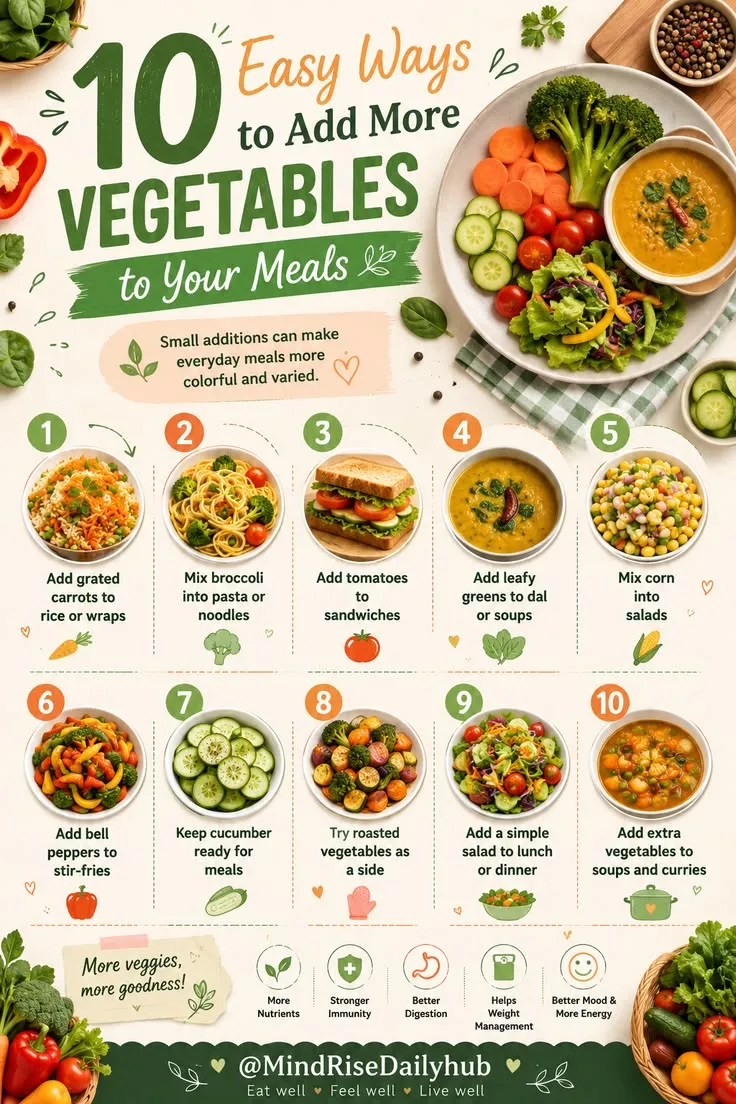
At breakfast, stir chopped spinach, mushrooms, or bell peppers into eggs or omelets. Blend a handful of leafy greens into a smoothie with fruit for a nutrient boost that is barely noticeable in taste. These simple additions build the habit of including vegetables early in the day.
For lunch, layer extra tomato, cucumber, lettuce, or avocado into sandwiches and wraps. Replace some of the usual filling with additional produce. A side of raw vegetables with hummus or a bean-based dip turns a standard lunch into a higher-vegetable meal.
Dinner offers multiple opportunities. Double the vegetables in pasta sauces, stir-fries, stews, casseroles, and chili. Roast a large tray of mixed vegetables once or twice a week and use them across several meals. Swap a portion of starchy sides such as potatoes or refined grains for broccoli, carrots, cauliflower, or leafy greens.
Use Convenience Formats Without Sacrificing Quality
Preparation time often limits vegetable intake. Frozen, canned (low- or no-salt), and pre-washed options remove barriers while retaining nutritional value. Keep bags of frozen mixed vegetables, spinach, or broccoli on hand to add directly to soups, sauces, or grain bowls. Pre-cut or bagged salad greens make it simple to include a side salad or bulk up any plate.
Batch cooking further supports consistency. Roast or steam a variety of vegetables in advance and store them for three to five days. These ready-to-use portions can be reheated, added to bowls, or combined with legumes and whole grains for quick meals.
Make Vegetables More Appealing
Taste and texture influence whether people consistently choose vegetables. Pairing them with familiar flavors improves acceptance. Season with herbs, spices, garlic, lemon, olive oil, or light sauces. Yogurt-based dips, guacamole, or hummus enhance raw vegetables. Roasting brings out natural sweetness in many produce items and creates more appealing textures than boiling alone.
Creative substitutions also help. Spiralized zucchini or other vegetable noodles can partially replace pasta. Cauliflower can form the base of pizza crusts or rice alternatives. Lettuce leaves serve as wraps in place of tortillas or bread. These swaps increase vegetable volume while keeping meals satisfying.
Focus on Variety and Gradual Exposure
Eating a wide range of vegetables supplies a broader spectrum of nutrients and beneficial compounds. Aim to rotate colors and types across the week—leafy greens, red and orange vegetables, cruciferous options, and others.
Repeated exposure helps overcome initial dislike of certain vegetables. Offering small portions of a less-preferred item alongside liked foods, or preparing it in different ways, gradually increases acceptance for many people. Research supports repeated exposure as an effective strategy for improving both liking and intake over time.
Practical Daily Framework
A realistic target for many adults is two to three cups of vegetables daily, with some aiming higher for additional benefits. One approach is to include at least one cup at each main meal and another as a snack. Pre-dinner vegetable snacks while cooking, or afternoon raw vegetables with a dip, fit easily into busy schedules.
Pulses such as beans, lentils, and chickpeas also contribute toward plant-food goals and pair well with vegetables in soups, salads, and main dishes. Whole grains combined with vegetables create balanced, filling plates.
Building Long-Term Habits
Sustainability comes from reducing friction. Keep washed and cut vegetables visible and accessible in the refrigerator. Plan meals that automatically include produce. When dining out or ordering in, choose dishes that feature substantial vegetable portions or request extra vegetables on the side.
Progress does not need to be perfect. Adding one extra serving most days produces meaningful cumulative benefits. Tracking approximate daily intake for a short period can highlight easy opportunities for improvement without creating pressure.
Plant-based eating centered on more vegetables is accessible and adaptable. By embedding small, practical changes into existing routines, using convenient forms of produce, enhancing flavor, and prioritizing consistency, individuals can steadily increase their vegetable intake. These steps support better long-term health while remaining realistic for everyday life.
Read more – llookwhatmomfound.com