Financial planning is one of the most impactful skills a person can develop, yet many young professionals and families overlook it in their early earning years. A well‑designed financial plan provides direction, stability, and the confidence to pursue both short‑ and long‑term goals—from emergency preparedness and debt elimination to investing and retirement.
In today’s fast‑paced world, having financial clarity is more crucial than ever. This article explores practical, evidence‑based financial planning principles tailored specifically for young professionals and families, offering actionable insights to build lasting financial health.
1. Begin with Clear Financial Goals
Setting clear goals is the foundation of effective financial planning. Without goals, money management can become aimless and reactive rather than purposeful and proactive.
Young professionals and families should define:
-
Short‑term goals (1–3 years): e.g., building an emergency fund, saving for vacations, or paying off credit cards.
-
Medium‑term goals (3–7 years): e.g., buying a car, paying for a wedding, or upgrading your home.
-
Long‑term goals (10+ years): e.g., retirement savings, children’s education, or financial independence.
These goals help you allocate income intentionally rather than spending reactively. Writing them down and revisiting them periodically improves focus and accountability.
2. Track Income and Expenses with a Budget
An accurate budget is central to financial clarity. Tracking your money helps you understand where it goes each month and identify opportunities to save. Starting with a detailed record of income, recurring costs, and discretionary spending builds the foundation for intelligent financial decisions.
A well‑structured budget enables you to:
-
Cut excessive spending
-
Allocate money toward emergencies and goals
-
Control impulsive purchases
-
Plan savings and investments
Many financial experts recommend using a simple monthly framework like the 50/30/20 rule—50% for needs, 30% for wants, and 20% for savings and debt repayment—to make budgeting less overwhelming.
3. Pay Yourself First Through Savings
One powerful financial strategy is to “pay yourself first,” meaning a portion of your income goes into savings before you pay bills or spend on lifestyle needs.
This principle encourages:
-
Consistent savings habits
-
Building funds for emergencies and goals
-
Compounding interest advantage over time
Automating transfers to savings or investment accounts ensures that saving becomes a priority—not an afterthought. Even small, regular amounts can grow significantly and create lasting financial stability.
4. Build a Strong Emergency Fund
An emergency fund cushions you against unplanned expenses like job loss, medical emergencies, or urgent repairs. Financial planners generally recommend saving three to six months’ worth of living expenses in a liquid, easily accessible account.
Starting small is still effective: early milestones such as even a modest amount in savings can provide motivation and momentum, especially for young professionals just beginning their financial journey.
Keeping your emergency funds separate from day‑to‑day accounts ensures they remain intact when real emergencies arise.
5. Pay Off and Manage Debt
Debt can be one of the largest barriers to financial progress—especially high‑interest debt like credit cards or unsecured personal loans.
Young professionals and families should:
-
Prioritize paying off high‑interest debt first
-
Avoid borrowing for non‑essential spending
-
Use formal strategies (e.g., snowball or avalanche methods) to reduce balances efficiently
Managing debt responsibly improves cash flow, reduces financial stress, and boosts credit scores—making future borrowing, like mortgages, more affordable.
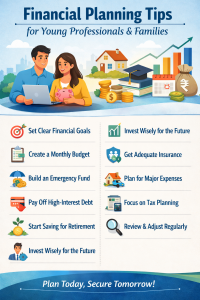
6. Save and Invest Early for Retirement
Starting retirement savings early is one of the most effective ways to build long‑term wealth. Even modest monthly contributions benefit from compound growth over decades.
Young professionals should consider contributing to employer‑sponsored accounts (if available) or individual retirement plans. When employers offer matching contributions, those benefits are essentially “free money” toward your retirement future.
By beginning early, you maximize growth potential and decrease the burden of needing to save large sums later in life.
7. Protect Income with Insurance
Protecting yourself and your family from financial shock is a key part of responsible planning. Appropriate insurance coverage—including health and life insurance—helps absorb major costs from illness, disability, or loss of income.
For young professionals:
-
Health insurance prevents medical emergencies from eroding savings.
-
Life and disability coverage protect dependents if you’re the primary income earner.
Insurance ensures that major financial setbacks don’t derail your entire financial plan.
8. Choose Smart Investment Strategies
Investing allows your money to grow and work for you beyond basic savings accounts. Diversified investments—such as mutual funds, index funds, and equities—can offer better long‑term returns when aligned with your risk tolerance.
Tips for investing include:
-
Start with diversified, low‑cost funds
-
Match your portfolio to your timeline and financial goals
-
Regularly review and rebalance your investments
-
Consider systematic investment plans (SIPs) to gain consistency
Young professionals have a long time horizon, allowing them to benefit from market growth trends and compounding returns.
9. Plan for Major Life Expenses
Young professionals and families often face major life expenses such as buying a home, funding education, or planning weddings. Each of these milestones requires thoughtful financial preparation.
To prepare:
-
Define the cost and timeline for each major objective
-
Allocate funds within your budget
-
Use specific savings instruments (e.g., recurring deposits or targeted investment plans)
-
Review progress regularly
Breaking large targets into smaller milestones makes them manageable and reduces financial stress.
10. Prioritize Tax Efficiency
Tax planning is a subtle yet impactful component of financial planning. Reducing tax liability through legal avenues—such as specific retirement accounts or eligible deductions—keeps more income working for your goals.
Smart tax planning:
-
Improves net returns on investments
-
Increases disposable income for savings
-
Encourages efficient retirement and education planning
Young professionals should evaluate tax‑advantaged accounts and deductions available in their region and income bracket.
11. Continuously Educate Yourself
Financial literacy is not a one‑time achievement; it’s a lifelong pursuit. The more you learn about money management, investing, and financial markets, the better equipped you’ll be to make smart decisions.
Ways to improve financial knowledge:
-
Read books and financial blogs
-
Attend workshops or webinars
-
Follow trusted financial educators
-
Consult certified financial professionals
This ongoing education helps you adapt your financial plan as circumstances change, ensuring resilience and sustainability.
12. Review and Adjust Your Plan Regularly
Life evolves: incomes change, goals shift, families grow, and priorities adjust. Because of this, a financial plan should never be “set and forget.” Periodic review ensures that your strategy remains aligned with your life stage and aspirations.
Regular review helps you:
-
Track progress toward goals
-
Adjust for changes (like income increases or new expenses)
-
Rebalance investments
-
Upgrade insurance coverage
Financial flexibility enables long‑term stability, steering you away from rigid plans that could hinder growth.
Conclusion: Building a Strong Financial Foundation
For young professionals and families, effective financial planning is not a luxury—it’s a necessity. Starting early gives you a powerful advantage: time. By setting clear goals, budgeting intelligently, saving and investing consistently, protecting your income, and preparing for both everyday expenses and future dreams, you cultivate a solid financial future.
The journey requires discipline and patience, but the outcomes—reduced stress, financial confidence, and long‑term security—are worth the effort. Building financial resilience today ensures that when life’s uncertainties come, you stand prepared—not overwhelmed.