Being an introvert is often misunderstood as being shy or lacking confidence. In reality, introversion is a personality trait that reflects how a person gains and restores energy. Introverts generally feel more comfortable in calm environments, enjoy meaningful conversations over large social gatherings, and prefer focused, independent work. These characteristics are strengths rather than limitations and can lead to exceptional success in the right career.
Today’s workplace has evolved significantly, offering flexible work environments, remote opportunities, and careers that value creativity, analytical thinking, attention to detail, and problem-solving. As a result, introverts have more opportunities than ever to build successful and fulfilling careers. Research suggests that introverts often excel in roles requiring deep concentration, thoughtful decision-making, creativity, structured communication, and one-on-one collaboration rather than constant group interaction.
This guide explores the best career options for introverts, the qualities that make these careers suitable, and practical tips for achieving long-term professional success.
Understanding Introversion in the Workplace
Introversion is a natural personality characteristic, not a weakness. Introverts usually recharge through quiet time and often prefer thoughtful communication over frequent social interaction. While they can work effectively with teams, they generally perform best in environments that allow concentration, planning, and meaningful collaboration instead of constant interruptions.
Modern organizations increasingly recognize that successful teams benefit from diverse personality types. Introverts contribute unique perspectives through careful analysis, active listening, creativity, and thoughtful decision-making. Many respected business leaders, scientists, writers, engineers, and entrepreneurs identify as introverts, demonstrating that leadership and success are not limited to extroverted personalities.
Strengths That Make Introverts Successful
Introverts possess several qualities that employers value across industries. They are often excellent listeners who carefully consider information before making decisions. Their ability to focus deeply on complex tasks allows them to produce high-quality work with fewer distractions.
Many introverts are highly organized, detail-oriented, and capable of solving problems through logical thinking. They also tend to build strong one-on-one professional relationships based on trust and meaningful communication. These strengths make them valuable contributors in workplaces where accuracy, creativity, research, analysis, and independent thinking are essential.
What Introverts Should Look for in a Career
Choosing the right career involves more than selecting a high-paying profession. Introverts should consider whether the work environment matches their preferred way of working. Careers that provide opportunities for independent work, flexible schedules, structured collaboration, and focused problem-solving often lead to greater job satisfaction.
A suitable career should also align with personal interests, educational background, long-term goals, and preferred communication style. Many introverts thrive in positions where quality of work is valued more than constant networking or public speaking.
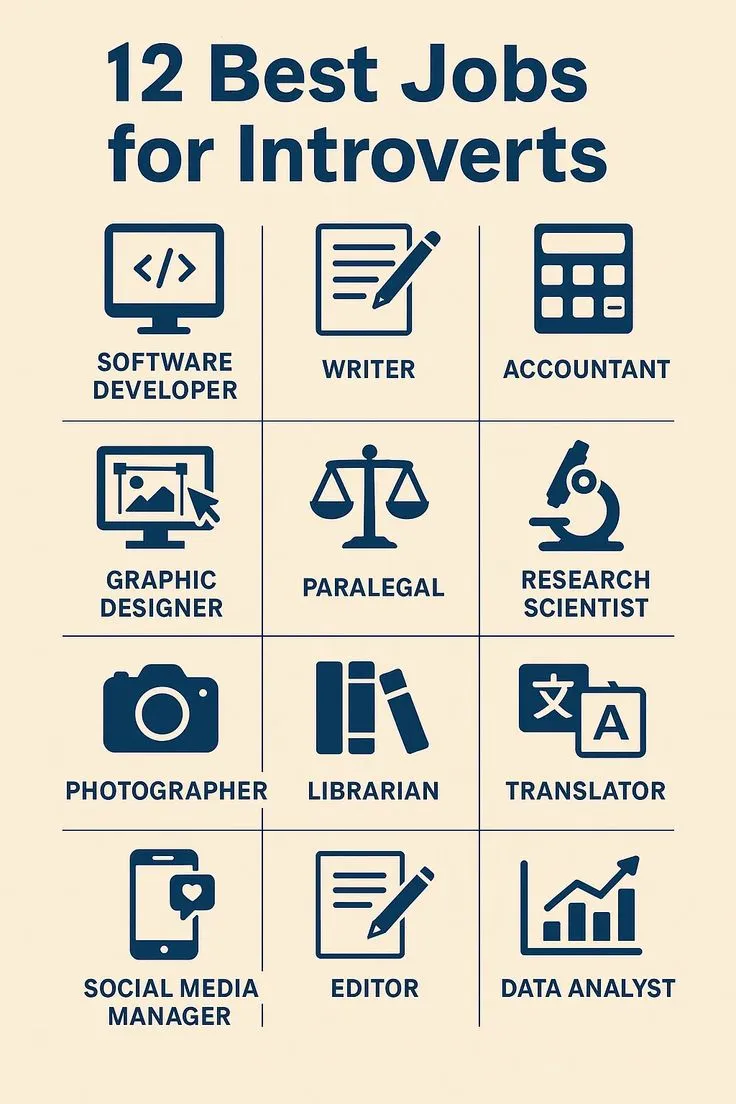
Best Career Options for Introverts
Several professions naturally complement the strengths of introverted individuals while offering excellent career growth opportunities.
Software Developer
Software development is one of the most popular career choices for introverts. Developers spend much of their time designing applications, writing code, solving technical problems, and improving software systems. The role emphasizes concentration, analytical thinking, and creativity while offering flexible and remote work opportunities.
Data Analyst
Data analysts collect, organize, and interpret information to help organizations make informed decisions. This profession requires logical reasoning, attention to detail, and the ability to identify meaningful patterns. Communication is usually structured around reports and presentations rather than constant client interaction.
Writer and Content Creator
Writing allows introverts to express ideas thoughtfully while working independently. Content writers, technical writers, authors, editors, and copywriters often enjoy flexible schedules and remote work opportunities. Strong research skills and creativity make this career particularly rewarding for many introverts.
Graphic Designer
Graphic designers combine creativity with technology to produce visual content for websites, advertisements, branding, and digital media. The work involves independent project development while maintaining occasional collaboration with clients or creative teams.
Accountant
Accounting requires precision, organization, and analytical thinking. Professionals in this field manage financial records, prepare reports, analyze budgets, and ensure regulatory compliance. The structured nature of accounting makes it an excellent fit for detail-oriented individuals.
Research Scientist
Research careers allow professionals to investigate complex questions through experimentation, observation, and analysis. Scientists spend considerable time conducting research, interpreting data, and publishing findings, making this profession ideal for people who enjoy deep intellectual work.
Librarian or Archivist
These careers involve organizing information, maintaining collections, conducting research, and assisting visitors in a calm environment. Strong organizational skills and attention to detail are valuable assets in these professions.
UX/UI Designer
User experience and user interface designers create digital products that are both functional and visually appealing. The role combines research, creativity, psychology, and technology while allowing extended periods of focused work.
Medical Coder
Medical coding involves translating healthcare records into standardized codes for insurance and documentation purposes. Accuracy, concentration, and attention to detail are essential, making this profession suitable for individuals who enjoy structured work.
Digital Marketing Specialist
Not all marketing roles require constant public interaction. Search engine optimization specialists, content marketers, email marketers, and analytics professionals often work independently while developing strategies that improve online visibility and customer engagement.
Research consistently highlights careers such as software engineering, data analysis, accounting, writing, technical communication, design, and research among the strongest fits for many introverts because they reward focus, thoughtful communication, and independent problem-solving.
High-Paying Careers for Introverts
Many careers that suit introverts also provide excellent earning potential. Software engineering, cybersecurity, engineering, actuarial science, financial analysis, data science, research, architecture, technical writing, and information technology are among the professions offering competitive salaries while emphasizing analytical thinking and specialized expertise.
Rather than avoiding interaction entirely, these careers typically involve structured collaboration where expertise and results are valued more than constant social engagement.
Remote and Freelance Opportunities
The growth of remote work has created numerous opportunities for introverts to build rewarding careers from home. Freelance writing, graphic design, programming, virtual assistance, digital marketing, translation, online tutoring, bookkeeping, and consulting allow professionals to manage their work environment while maintaining flexibility.
Remote work often reduces workplace distractions and provides greater control over daily schedules, allowing introverts to perform at their highest potential.
Careers That May Be Challenging for Some Introverts
Although introverts can succeed in virtually any profession, some careers require continuous social interaction, frequent public speaking, or high-pressure networking. Sales, event management, public relations, customer-facing hospitality roles, and certain recruitment positions may feel more demanding for individuals who require regular quiet time to recharge.
However, personality should never be viewed as a barrier. Many introverts develop excellent communication skills and thrive in leadership positions by using preparation, empathy, and active listening rather than relying solely on extroverted communication styles.
Skills Introverts Should Develop
Professional success depends on continuous learning regardless of personality type. Introverts can strengthen their careers by improving written communication, presentation skills, emotional intelligence, adaptability, leadership abilities, digital literacy, time management, and problem-solving.
Networking does not have to involve large social events. Building meaningful professional relationships through one-on-one conversations, mentorship, online communities, and industry events can be equally effective.
Tips for Career Growth as an Introvert
Career advancement is achieved through consistent performance, skill development, and professional confidence. Introverts benefit from preparing thoroughly before meetings, setting clear career goals, seeking constructive feedback, and volunteering for projects that showcase their expertise.
Learning to communicate achievements confidently, maintaining a professional online presence, and investing in continuous education also contribute to long-term success. Taking time to recharge after demanding social interactions helps maintain productivity and prevents burnout.
Common Myths About Introverts at Work
One of the biggest misconceptions is that introverts cannot become effective leaders. In reality, many successful leaders are introverts who inspire teams through careful listening, thoughtful decision-making, empathy, and strategic thinking.
Another common myth is that introverts dislike people. Most introverts value meaningful relationships and collaborative work; they simply prefer deeper interactions over constant social activity. Introversion should not be confused with shyness or poor communication skills. With the right environment and opportunities, introverts can excel in virtually every profession.
Conclusion
Introversion is a valuable personality trait that brings unique strengths to today’s workplace. Deep focus, analytical thinking, creativity, empathy, attention to detail, and thoughtful communication enable introverts to excel across a wide range of industries. The key to career satisfaction lies in choosing roles that align with personal strengths, interests, and preferred work environments rather than attempting to fit traditional stereotypes.
Whether pursuing careers in technology, healthcare, finance, design, research, education, or creative fields, introverts have countless opportunities to achieve professional success. By embracing their natural abilities, continuously developing new skills, and selecting careers that support their working style, introverts can build fulfilling, impactful, and financially rewarding careers in today’s evolving job market.