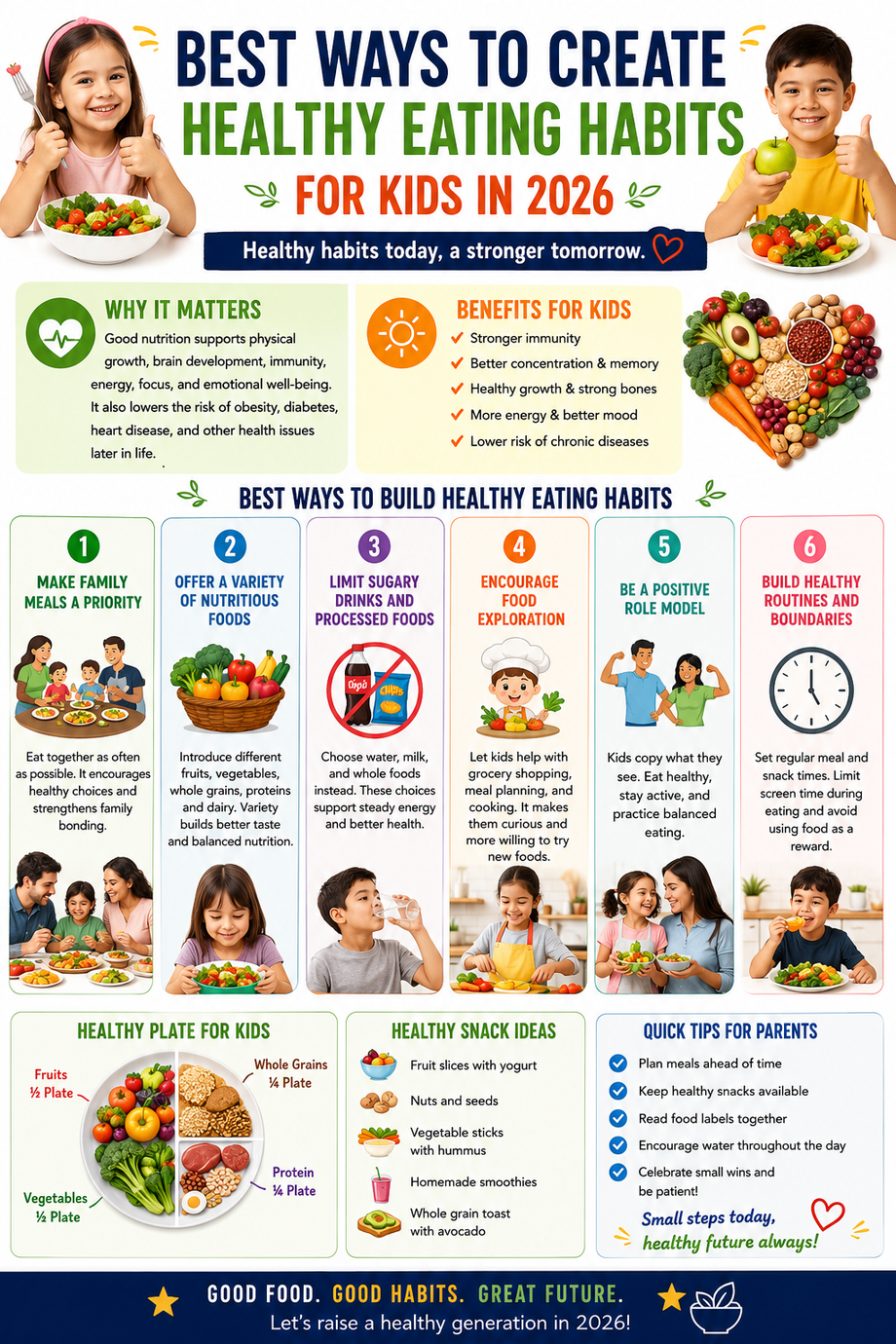
Healthy eating habits established during childhood often last a lifetime. As children grow, their nutritional needs change, but one thing remains constant: a balanced diet plays a crucial role in supporting physical growth, brain development, immunity, and overall well-being. In 2026, parents face new challenges when it comes to nutrition, including increased screen time, easy access to processed foods, aggressive food marketing, and busy family schedules.
Health experts, pediatricians, and nutrition organizations consistently emphasize that healthy eating is not about strict dieting or eliminating favorite foods. Instead, it involves creating positive relationships with food, encouraging balanced choices, and building routines that children can maintain as they grow older.
The good news is that healthy eating habits can be developed gradually through small, consistent changes. Here are some of the best ways parents can help children build lifelong healthy eating habits in 2026.
Why Healthy Eating Habits Matter for Children
Healthy eating habits influence nearly every aspect of a child’s development. Proper nutrition provides the energy needed for daily activities, supports brain function, strengthens bones and muscles, and helps maintain a healthy immune system. Children who consume balanced meals are often better able to concentrate in school and participate actively in sports and recreational activities.
Good eating habits can also reduce the risk of obesity, diabetes, heart disease, and other health conditions later in life. In addition, healthy nutrition supports emotional well-being and stable energy levels throughout the day. By introducing nutritious foods early, parents can help children develop positive attitudes toward eating that continue into adulthood.
Benefits of Healthy Eating for Kids
A nutritious diet offers numerous benefits beyond physical growth. Children who eat a variety of fruits, vegetables, whole grains, lean proteins, and dairy products receive essential vitamins and minerals that support healthy development. Balanced nutrition contributes to stronger immunity, improved memory, better academic performance, and sustained energy levels.
Healthy eating also helps regulate mood and reduces the likelihood of excessive sugar crashes or fatigue. Furthermore, children who learn healthy eating habits early are more likely to make informed food choices as teenagers and adults. Establishing these habits creates a strong foundation for lifelong health and wellness.
Make Family Meals a Daily Priority
Family meals remain one of the most effective ways to encourage healthy eating habits. When families eat together, children are exposed to a variety of nutritious foods and positive eating behaviors. Shared meals provide opportunities for parents to model healthy food choices while creating a relaxed environment for conversation and connection.
Studies have shown that children who regularly participate in family meals tend to consume more fruits, vegetables, and nutrient-rich foods. Family dining also reduces the likelihood of mindless snacking and excessive consumption of processed foods. Even if schedules are busy, setting aside time for a few shared meals each week can make a meaningful difference in a child’s eating habits.
How Family Meals Influence Food Choices
Children often learn by observing the behavior of adults around them. During family meals, parents can demonstrate portion control, balanced eating, and willingness to try different foods. These experiences help children develop curiosity about nutritious foods and understand the importance of balanced meals.
Family meals also encourage slower eating, which can improve digestion and help children recognize feelings of fullness. By making mealtime enjoyable rather than stressful, parents create positive associations with healthy foods. Consistency is key, as regular family meals reinforce healthy routines and strengthen healthy eating habits over time.
Offer a Variety of Nutritious Foods
Children are more likely to develop healthy eating habits when they are regularly exposed to different foods. Offering a variety of fruits, vegetables, proteins, dairy products, and whole grains helps ensure children receive a broad range of nutrients.
It is normal for children to reject unfamiliar foods initially, but repeated exposure often increases acceptance. Nutrition experts recommend presenting new foods without pressure and allowing children to explore different tastes and textures. Variety also prevents boredom and encourages balanced nutrition. By including colorful and diverse foods in meals, parents can help children develop adventurous and healthy eating preferences.
Encourage Food Exploration
Food exploration can make healthy eating more exciting for children. Allowing kids to participate in grocery shopping, meal planning, or cooking introduces them to new ingredients and promotes curiosity about nutrition. Children are often more willing to try foods they have helped prepare. Parents can also make meals visually appealing by incorporating colorful fruits and vegetables. Encouraging children to describe flavors, textures, and colors can transform mealtime into an educational experience. These positive interactions help build confidence around trying new foods and reduce resistance to healthy options.
Limit Sugary Drinks and Processed Foods
Sugary beverages and highly processed foods are among the biggest nutritional challenges facing children today. These products often contain excessive amounts of sugar, sodium, and unhealthy fats while providing limited nutritional value. Frequent consumption can contribute to weight gain, dental problems, and energy fluctuations. Instead of sugary drinks, parents should encourage water and milk as primary beverage choices. Whole foods such as fruits, vegetables, nuts, and yogurt offer healthier alternatives to packaged snacks. Limiting processed foods does not mean banning them entirely; moderation and balance are more effective long-term strategies for promoting healthy eating habits.
Smart Alternatives to Unhealthy Snacks
Healthy snacks play an important role in maintaining energy and nutrition throughout the day. Instead of chips, candies, or sugary treats, parents can offer options such as fresh fruit, yogurt, nuts, cheese, whole-grain crackers, or vegetable sticks with healthy dips. These alternatives provide essential nutrients while helping children feel satisfied between meals. Preparing healthy snacks in advance also makes nutritious choices more convenient. When healthy options are easily accessible, children are more likely to choose them over less nutritious alternatives.
Teach Portion Control Without Restriction
Portion control is an important skill that helps children develop a healthy relationship with food. Rather than enforcing strict rules, parents should encourage children to listen to their hunger and fullness signals. Pressuring children to finish every bite or restricting foods excessively can sometimes create unhealthy attitudes toward eating. Teaching mindful eating helps children understand when they are genuinely hungry and when they have eaten enough. Balanced portion sizes support healthy growth while preventing overeating. By focusing on awareness rather than restriction, parents can help children build sustainable eating habits.
Encourage Mindful Eating
Mindful eating involves paying attention to the eating experience without distractions. Encouraging children to eat at the table rather than in front of screens can improve awareness of hunger and fullness cues. Slower eating allows children to enjoy flavors and recognize satisfaction before overeating. Parents can support mindful eating by creating calm mealtime environments and avoiding pressure or criticism. These practices help children develop healthier relationships with food and reduce emotional or distracted eating habits.
Be a Positive Role Model
Children often imitate the behaviors they observe. Parents who demonstrate healthy eating habits send powerful messages about nutrition. Eating fruits and vegetables regularly, choosing balanced meals, and maintaining a positive attitude toward food can influence children’s choices more effectively than lectures. Children are more likely to try nutritious foods when they see adults enjoying them. Consistency is essential because children notice everyday habits. By becoming positive role models, parents create an environment where healthy eating feels normal and enjoyable.
Lead by Example Every Day
Healthy role modeling extends beyond mealtime. Parents can involve children in grocery shopping, meal preparation, and discussions about nutrition. Demonstrating balanced food choices and avoiding negative language about weight or dieting helps foster positive attitudes toward food. Small daily actions often have a greater impact than occasional nutrition lessons. Children learn through observation, and positive examples can shape healthy behaviors that last well into adulthood.
Create Consistent Meal and Snack Routines
Consistent eating schedules help children develop healthy patterns and regulate hunger throughout the day. Regular meals and snacks provide steady energy and reduce the temptation to overeat or snack excessively. Predictable routines also help children understand when food will be available, reducing anxiety around eating. Structured schedules support better digestion and can improve overall nutrition quality. Families should aim to establish meal and snack times that fit their lifestyle while remaining reasonably consistent.
Why Routines Support Better Nutrition
When children know what to expect, they are more likely to develop healthy eating behaviors. Regular schedules encourage balanced meals rather than random grazing throughout the day. Consistency also helps parents plan nutritious options and avoid last-minute unhealthy choices. Over time, predictable routines create stability and reinforce healthy eating habits. These patterns become particularly valuable as children grow and gain more independence in their food choices.
Conclusion
Creating healthy eating habits for kids in 2026 requires patience, consistency, and a positive approach to nutrition. By prioritizing family meals, offering a variety of nutritious foods, limiting processed snacks, teaching portion control, modeling healthy behaviors, and maintaining regular meal routines, parents can help children develop lifelong healthy habits.
Rather than focusing on perfection, families should aim for balance and gradual improvement. Small daily choices often have the greatest long-term impact. When children learn to enjoy nutritious foods and build positive relationships with eating, they gain valuable skills that support their health, growth, and well-being for years to come.