In a rapidly changing world, career planning has become an essential aspect of professional success. Whether you are just starting your career, seeking advancement, or transitioning into new roles, having a thoughtful long‑term career strategy helps you make intentional decisions, adapt to change, and achieve your goals more effectively. Career planning is not just about getting the next job or promotion — it’s about creating a roadmap that supports lifelong growth, learning, and fulfillment.
Below are evidence-based strategies that will empower you to take control of your career trajectory and foster sustainable professional development.
1. Define Clear Career Goals
Setting clear and realistic career goals is the foundation of any effective career plan. Without defined objectives, professionals may drift through their work without direction or purpose. Goal setting gives structure to your ambitions, enabling you to measure progress and stay motivated. Employing frameworks such as SMART (Specific, Measurable, Achievable, Relevant, Time‑bound) helps ensure that goals are practical and achievable. Breaking long‑term aspirations into smaller milestones can prevent overwhelm and make large objectives more manageable. Regularly revisiting and refining these goals keeps your career plan aligned with evolving interests and market realities.
2. Conduct a Self‑Assessment
Understanding your strengths, weaknesses, values, and interests is critical for choosing the right professional path. A self‑assessment enables you to identify the skills you already possess and those you need to develop for future roles. This process can involve formal methods like SWOT analysis (strengths, weaknesses, opportunities, threats) as well as reflective practices such as journaling or seeking feedback from peers and mentors. By uncovering areas of strength and growth, you gain deeper insight into the types of roles and environments where you are most likely to thrive long term.
3. Identify and Bridge Skill Gaps
Once your goals are clear and you understand your current capabilities, the next step is to evaluate what skills or qualifications you need to move forward. Employers today place increasing value on both technical expertise and transferable “soft” skills such as leadership, communication, problem‑solving, and teamwork. Conducting a gap analysis — comparing where you are against where you want to be — helps prioritize learning efforts and allocate time efficiently. Continuous learning can involve structured workshops, certifications, formal education, or self‑study to keep your skill set relevant and competitive.
4. Embrace Continuous Learning and Development
The modern workplace evolves quickly, driven by technological change and shifting industry demands. Committing to lifelong learning is one of the most important career planning strategies available. This may include attending training sessions, participating in industry conferences, enrolling in courses, or exploring new tools and technologies. Skills can depreciate over time if not actively maintained, making ongoing education crucial for staying adaptable and competitive in the long run. Seeking mentorship or coaching provides individualized support and perspective from those with firsthand experience.
5. Build and Leverage a Professional Network
Networking is not simply about meeting people — it is about creating and nurturing meaningful professional relationships that support mutual growth. A strong network opens doors to new opportunities, insights, and collaborations that may not be available through traditional job searches. Effective networking strategies include attending industry events, joining professional associations, participating in online communities, and engaging with peers and leaders in your field. Over time, these connections can provide mentorship, referrals, knowledge of industry trends, and exposure to new roles, making networking a key long‑term career planning tool.
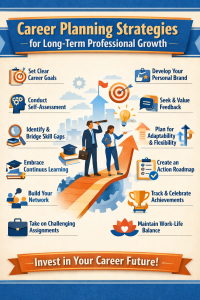
6. Seek and Value Feedback
Feedback from supervisors, mentors, and peers provides invaluable information about how others perceive your strengths and areas for improvement. Constructive criticism helps you refine your performance, adapt your strategies, and uncover blind spots that could otherwise hinder progress. By actively asking for feedback, especially after key projects or presentations, you demonstrate a commitment to growth — an attribute that can accelerate career advancement. Combining feedback with self‑reflection ensures that you are aligned with both external expectations and internal goals.
7. Take on Challenging Assignments
Career growth does not happen by staying within your comfort zone. Taking on stretch assignments — tasks or roles that require skills beyond your current capabilities — helps you build new competencies and demonstrates your potential to employers. These challenges can include leading a team project, volunteering for cross‑functional work, or tackling tasks that push your limits. Over time, successfully navigating challenging assignments will significantly strengthen your portfolio and increase your visibility as a proactive and capable professional.
8. Develop a Strong Personal Brand
In an increasingly digital world, your personal brand is a reflection of your professional reputation. It encompasses how you present yourself both online and offline, including your communication style, achievements, portfolio, and public presence. Cultivating a strong personal brand helps you stand out in competitive fields and provides clarity about your unique value proposition. This can involve refining your professional social media profiles, creating content that showcases your expertise, or building a personal website that highlights your achievements. A consistent and strategic personal brand attracts opportunities rather than waiting for them.
9. Plan for Adaptability and Flexibility
The job market is dynamic, and career paths are rarely linear. Prioritizing flexibility enables you to adjust your plan when unexpected opportunities or shifts in the industry emerge. Embracing adaptability means being open to lateral moves, new roles outside your original expectations, or even career pivots that better align with your evolving interests and market conditions. Professionals who remain agile are better equipped to navigate uncertainty, overcome setbacks, and seize emerging opportunities.
10. Structure Your Career Plan With an Action Roadmap
A career plan is more effective when it includes a detailed action roadmap. This roadmap outlines specific steps you intend to take, deadlines to meet, measurable outcomes, and milestones along the way. For example, rather than simply “improve leadership skills,” your roadmap might specify “complete advanced leadership workshop by Q3 and lead a cross‑department project by year‑end.” Having clarity and an organized structure enhances accountability and keeps you focused on progress rather than merely intentions. Regularly reviewing and updating this roadmap ensures it remains relevant and aligned with your changing aspirations.
11. Track Progress and Celebrate Achievements
Monitoring your progress over time helps you understand how far you have come and what adjustments are needed to stay on track. Keeping records of accomplishments — whether in a professional journal, portfolio, or performance reviews — provides measurable evidence of growth. Celebrating even small achievements reinforces motivation, builds confidence, and reinforces positive momentum toward larger goals. Reviewing progress also offers an opportunity to reassess priorities and reset your strategy as necessary.
12. Maintain Work‑Life Balance
Long‑term professional growth does not happen in isolation from other parts of your life. Maintaining a healthy work‑life balance is essential to prevent burnout and sustain productivity over time. Professionals who balance career aspirations with personal wellbeing tend to have greater resilience, creativity, and long-term satisfaction. Allocating time for rest, relationships, hobbies, and health supports sustained performance and prevents the depletion of the energy required to pursue career goals.
Conclusion: Career Planning as a Lifelong Practice
Career planning is not a one‑time event but a continuous journey that evolves with your skills, interests, and market opportunities. The strategies outlined above — from setting clear goals and building skills to networking intentionally and maintaining personal wellbeing — form a robust framework for long‑term professional development.
By embracing these practices, you are not merely responding to opportunities as they arise; you are actively shaping your professional trajectory. With deliberate planning, adaptability, continuous learning, and strategic relationship-building, you can build a career that is not only successful but deeply fulfilling and aligned with your long‑term aspirations.