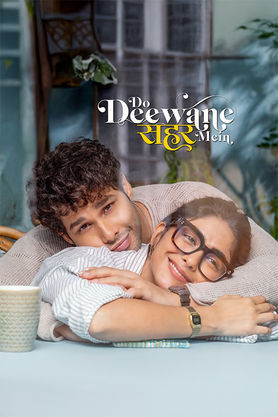
In an era when Bollywood romance often leans heavily on spectacle, heightened emotions, and dramatic declarations, Do Deewane Seher Mein takes a quieter route. Directed by Ravi Udyawar and starring Siddhant Chaturvedi and Mrunal Thakur, the film attempts to present love as fragile, uncertain, and deeply flawed. However, while its intentions are sincere, the film ultimately struggles to transform its thoughtful premise into a compelling cinematic experience.
Released in February 2026, the Hindi-language romantic drama explores emotional vulnerability, self-doubt, and the slow, often painful journey toward intimacy. Backed by prominent producers including Sanjay Leela Bhansali, the film promised an emotionally rich exploration of modern relationships but delivers a mixed result.
A Story Rooted in Emotional Fragility
At its core, Do Deewane Seher Mein follows the story of Shashank and Roshni, two emotionally scarred individuals who meet and gradually develop a complicated romantic relationship. Their connection does not blossom instantly. Instead, it unfolds through hesitation, emotional resistance, and unresolved trauma.
The film examines how past wounds shape present relationships, highlighting the reality that love is often influenced by insecurities and emotional baggage. Rather than presenting love as a magical solution, it portrays it as a gradual process of acceptance and healing.
This approach feels grounded and realistic. Unlike conventional Bollywood romances that rely on dramatic confrontations and passionate reunions, the film focuses on silences, emotional distance, and internal struggles. It reflects how modern relationships often evolve slowly, shaped by fear, uncertainty, and emotional hesitation.
However, while the premise offers depth, the execution lacks the emotional intensity needed to sustain audience engagement.
Strong Intentions Undermined by Weak Conflicts
One of the major weaknesses of the film lies in its screenplay. The narrative introduces emotional conflicts but fails to explore them with sufficient depth. The tension between the characters often feels superficial, and their emotional journeys lack meaningful progression.
The pacing further weakens the experience. Instead of building emotional momentum, the film frequently drifts through extended scenes that add little to character development or narrative growth. As a result, the emotional stakes never reach the level required to fully immerse the viewer.
The romantic drama feels slow and emotionally restrained, which may be intentional but ultimately reduces its impact. A love story built on emotional complexity requires strong narrative tension, something this film struggles to provide.
Performances That Strive but Cannot Save the Film
Despite the script’s limitations, Siddhant Chaturvedi delivers a sincere performance. He portrays Shashank as emotionally guarded, capturing the vulnerability of a man shaped by insecurity and fear of rejection. His subtle expressions and restrained acting reflect the character’s internal conflict.
Mrunal Thakur brings emotional depth to Roshni, portraying her as fragile yet emotionally resilient. She effectively conveys hesitation, confusion, and emotional vulnerability. Her performance adds authenticity to the character, making her believable and relatable.
There are moments when their chemistry feels genuine, particularly in quieter scenes where emotions are expressed through silence rather than dialogue. However, even their committed performances cannot fully overcome the film’s weak narrative structure.
The actors do their best with the material available, but the screenplay does not provide enough emotional substance for truly memorable character arcs.
Direction That Prioritizes Realism Over Drama
Director Ravi Udyawar adopts a restrained and realistic approach. He avoids exaggerated drama, choosing instead to focus on emotional nuance and realism. His direction emphasizes subtle emotional shifts rather than dramatic confrontations.
The cinematography supports this approach, using muted tones and intimate framing to reflect emotional isolation and loneliness. The urban setting enhances the sense of emotional disconnection experienced by the characters.
However, the film’s excessive restraint becomes a limitation. By avoiding emotional highs, it also reduces emotional engagement. While realism adds authenticity, it also makes the film feel emotionally distant.
The slow pacing and lack of dramatic progression may challenge viewers expecting a more emotionally dynamic romantic drama.
Music and Technical Aspects: Gentle but Forgettable
The film’s music blends well with its emotional tone but fails to leave a lasting impression. The songs complement the narrative without disrupting it, yet none stand out as memorable.
Technically, the film is competent. The cinematography effectively reflects the emotional mood, and the editing maintains narrative continuity. However, technical strength alone cannot compensate for the lack of emotional depth in storytelling.
The film looks polished but lacks emotional resonance.
A Realistic but Emotionally Distant Love Story
Do Deewane Seher Mein deserves credit for portraying love in a realistic and emotionally honest manner. It does not romanticize relationships or present love as perfect. Instead, it shows love as uncertain, fragile, and imperfect.
The film highlights emotional vulnerability and the difficulty of forming meaningful connections. It acknowledges that love is not always passionate or dramatic. Sometimes, it is quiet, hesitant, and incomplete.
However, this realism also makes the film feel emotionally distant. The lack of strong emotional progression prevents it from creating a lasting emotional impact.
Final Verdict: Honest but Ultimately Underwhelming
Do Deewane Seher Mein is a film with thoughtful intentions but flawed execution. It attempts to explore imperfect love in a realistic way but struggles due to weak storytelling and slow pacing.
Siddhant Chaturvedi and Mrunal Thakur deliver sincere performances, but they cannot overcome the film’s structural limitations. The direction prioritizes realism, but the lack of emotional intensity makes the experience less engaging.
The film is not without merit. It is introspective, realistic, and emotionally sincere. However, it falls short of becoming a powerful romantic drama.
It may appeal to viewers who appreciate slow, character-driven storytelling. But for those seeking emotional depth and passionate romance, the film may feel underwhelming.