The entertainment industry has always evolved alongside technological progress and changing audience preferences. In 2026, the transformation of media is happening faster than ever before. Digital platforms, advanced technologies, and global connectivity are reshaping how people consume movies, music, television, and online content. Audiences now expect more personalized, immersive, and accessible entertainment experiences.
Streaming services, artificial intelligence, and virtual experiences are influencing the production and distribution of media. At the same time, social media platforms and independent creators are redefining how content reaches audiences worldwide. These changes are not only affecting entertainment companies but also transforming marketing strategies, storytelling techniques, and audience engagement.
Understanding the latest entertainment trends helps media professionals, creators, and businesses stay competitive in a rapidly evolving landscape. The following trends highlight how the media industry is being reshaped in 2026.
Table of Contents
ToggleThe Rise of Streaming Platforms
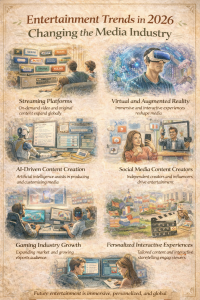
Streaming platforms continue to dominate the entertainment landscape as audiences increasingly prefer on-demand content over traditional television. Services that provide movies, series, and documentaries allow viewers to watch their favorite programs anytime and anywhere. This convenience has significantly changed consumer behavior and reduced dependence on scheduled broadcasting.
In 2026, streaming platforms are expanding their libraries with exclusive content, original productions, and regional programming to attract diverse audiences. Many companies are investing heavily in high-quality storytelling and large-scale productions to remain competitive. The global reach of streaming services also allows local creators to share their work with international viewers, creating a more diverse and interconnected entertainment industry.
Growth of Artificial Intelligence in Content Creation
Artificial intelligence is becoming a powerful tool in the entertainment industry. AI technologies help analyze audience preferences, predict trends, and recommend personalized content to viewers. These data-driven insights allow media companies to produce shows and movies that align with audience interests.
AI is also assisting in the creative process by supporting script development, editing, visual effects, and music composition. Production teams can automate repetitive tasks, saving time and reducing costs. While human creativity remains essential, AI tools are improving efficiency and helping creators experiment with new storytelling formats that were previously difficult to produce.
Expansion of Virtual and Augmented Reality Experiences
Virtual reality (VR) and augmented reality (AR) are transforming how audiences experience entertainment. Instead of passively watching content, viewers can now immerse themselves in interactive digital environments. These technologies are particularly popular in gaming, live events, and cinematic experiences.
In 2026, VR and AR are becoming more accessible through improved hardware and mobile integration. Entertainment companies are using these technologies to create virtual concerts, interactive movies, and immersive theme park attractions. As technology continues to advance, immersive experiences are expected to play a larger role in storytelling and audience engagement.
Influence of Social Media Content Creators
Social media platforms have become powerful distribution channels for entertainment. Content creators on video-sharing and social platforms attract millions of viewers by producing engaging and relatable content. Short-form videos, live streams, and digital storytelling are increasingly shaping entertainment culture.
In 2026, many creators are building strong personal brands and collaborating with traditional media companies. This collaboration allows entertainment studios to reach younger audiences who spend significant time on digital platforms. The rise of influencer-driven entertainment demonstrates how individual creators can compete with large media organizations by producing innovative and authentic content.
Globalization of Entertainment Content
The globalization of entertainment is another important trend reshaping the media industry. Digital platforms make it possible for audiences to access content from different countries and cultures. International films, television series, and music are gaining popularity beyond their original markets.
This global exchange encourages collaboration between production companies across different regions. Co-productions and multilingual storytelling are becoming more common as creators aim to reach worldwide audiences. The increasing demand for diverse content also encourages media companies to invest in regional talent and culturally unique narratives.
Interactive and Personalized Entertainment
Personalization has become a key expectation among modern audiences. Viewers now prefer entertainment experiences tailored to their interests and preferences. Streaming platforms use algorithms and data analytics to recommend content that aligns with individual viewing habits.
Interactive storytelling is also becoming more popular. Some films and shows allow viewers to influence the storyline by making choices during the narrative. This level of engagement makes entertainment more immersive and memorable. In 2026, personalization and interactivity continue to redefine how audiences connect with media content.
Evolution of Gaming as a Mainstream Entertainment Medium
Gaming has evolved into one of the largest sectors in the entertainment industry. Modern video games combine advanced graphics, storytelling, and social interaction to create highly engaging experiences. Competitive gaming events and live streaming platforms have further increased the popularity of gaming worldwide.
In 2026, the gaming industry is expanding beyond traditional consoles and computers. Cloud gaming services allow players to access high-quality games without expensive hardware. This accessibility has opened the gaming market to a wider audience, including casual players and mobile users. As gaming continues to grow, it increasingly overlaps with film, music, and digital storytelling.
Integration of Technology and Live Entertainment
Live entertainment events such as concerts, sports competitions, and theatrical performances are also evolving through technology. Hybrid experiences that combine physical and digital participation are becoming more common. For example, fans who cannot attend events in person can still participate through live streaming or virtual platforms.
Advanced technologies such as holographic displays, real-time visual effects, and immersive sound systems are enhancing the quality of live performances. These innovations make events more visually appealing and accessible to global audiences. As technology continues to advance, live entertainment is expected to become more interactive and technologically sophisticated.
Conclusion
The entertainment industry in 2026 is undergoing a significant transformation driven by technological innovation and changing audience expectations. Streaming platforms, artificial intelligence, immersive technologies, and global connectivity are reshaping how media content is created and consumed.
Social media creators and digital platforms are expanding the definition of entertainment, while globalization is introducing audiences to diverse stories from around the world. Personalized and interactive experiences are also becoming essential features of modern entertainment.
As these trends continue to evolve, the media industry will likely become even more dynamic and innovative. Companies and creators who adapt to these changes will be better positioned to connect with audiences and thrive in the future of entertainment.