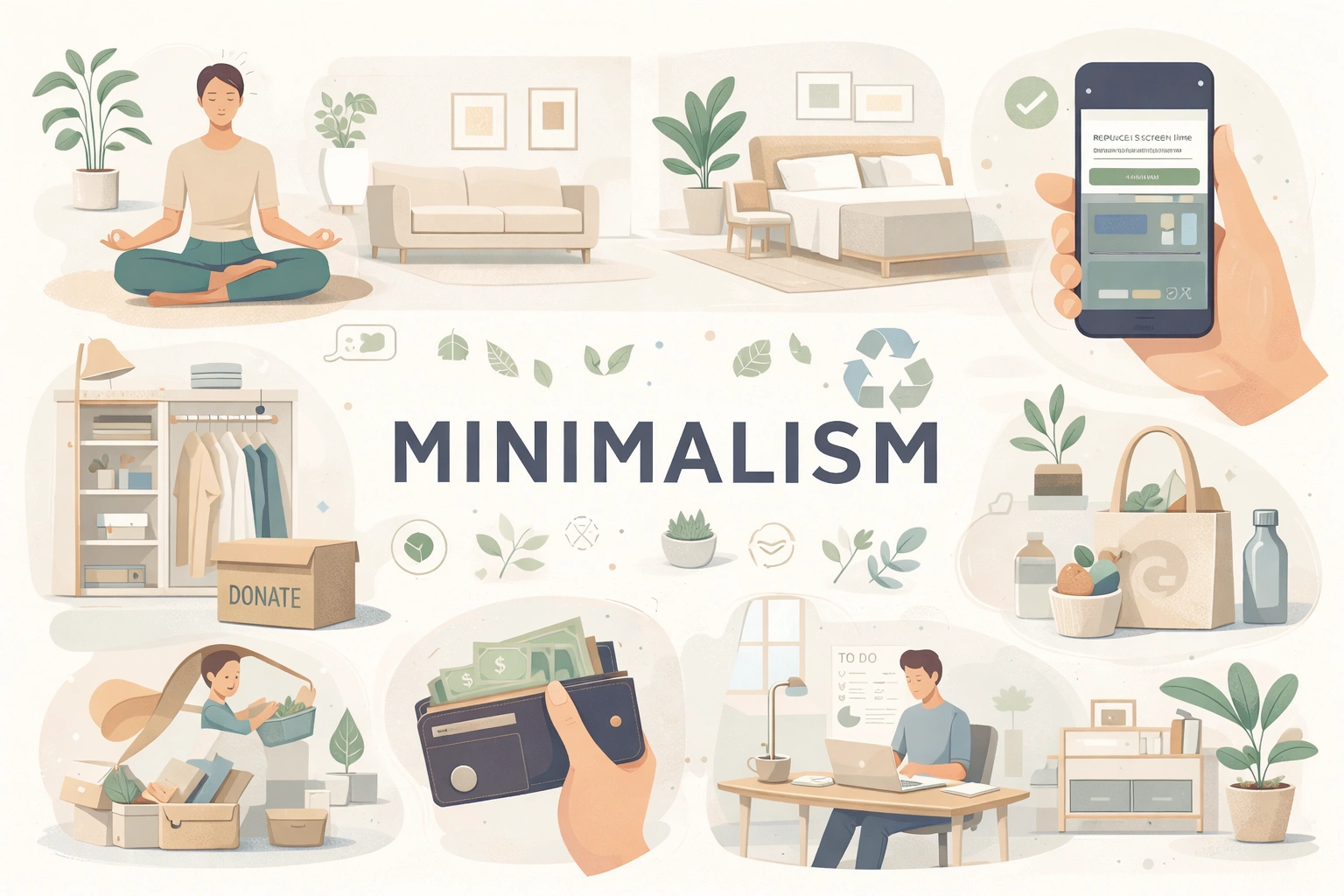
In an age defined by constant consumption, digital overload, and fast-paced lifestyles, minimalism has emerged as a powerful counter-movement. The minimalist lifestyle focuses on intentional living—owning fewer possessions, reducing distractions, and prioritizing what truly matters. Rather than being about deprivation, minimalism is about creating space for clarity, purpose, and well-being.
In recent years, minimalist trends have evolved beyond decluttering into a broader philosophy influencing homes, work habits, finances, and mental health. This article explores how minimalist lifestyle trends are redefining modern living and shaping a more balanced and meaningful way of life.
Table of Contents
ToggleUnderstanding the Concept of Minimalism
Minimalism is a lifestyle philosophy that encourages individuals to focus on essentials and eliminate excess. It is not limited to physical possessions but extends to mental, emotional, and digital spaces. The core idea is to remove what does not add value, allowing more room for meaningful experiences and personal growth.
Modern minimalism differs from traditional interpretations by emphasizing flexibility and personalization. It is not about strict rules or extreme reduction but about aligning choices with individual values and priorities. For some, it may mean decluttering their home, while for others, it involves simplifying schedules or reducing digital distractions.
This approach promotes intentional decision-making and helps individuals gain better control over their lives in an increasingly complex world.
Decluttering and Simplified Living Spaces
One of the most visible aspects of minimalism is decluttering and simplifying living environments. This trend focuses on reducing unnecessary items and creating clean, organized spaces that promote calmness and efficiency. A clutter-free environment can improve focus, reduce stress, and enhance overall well-being.
Minimalist homes often feature functional furniture, neutral color palettes, and open spaces. The emphasis is on quality over quantity, with carefully selected items that serve a purpose or bring joy. This approach also encourages sustainable consumption by reducing waste and avoiding unnecessary purchases.
By simplifying living spaces, individuals can create an environment that supports productivity, relaxation, and mental clarity, making daily life more manageable and enjoyable.
Digital Minimalism and Reducing Screen Overload
In today’s digital age, managing screen time and online distractions has become a key aspect of minimalism. Digital minimalism involves consciously reducing the use of devices, social media, and unnecessary digital content to improve focus and mental health.
Many individuals are adopting practices such as limiting social media usage, turning off notifications, and setting boundaries for screen time. This helps reduce information overload and allows for more meaningful offline interactions.
Digital minimalism also encourages mindful consumption of content, focusing on quality rather than quantity. By reducing digital clutter, individuals can improve concentration, enhance productivity, and create a healthier relationship with technology.
Minimalist Approach to Finances and Consumption
Minimalism has significantly influenced financial habits and consumer behavior. The minimalist approach to finances emphasizes mindful spending, saving, and investing in experiences rather than material possessions. This trend encourages individuals to evaluate their purchases and prioritize long-term value over short-term satisfaction.
By reducing unnecessary expenses, people can achieve greater financial stability and reduce stress related to money. Minimalist consumption also supports sustainability by promoting conscious buying decisions and reducing waste.
This approach often leads to a more intentional lifestyle, where financial resources are aligned with personal goals and values. It empowers individuals to take control of their finances and focus on what truly matters.
Mindfulness and Mental Well-Being
Minimalism is closely linked to mindfulness and mental well-being. By eliminating distractions and focusing on essentials, individuals can cultivate a more present and intentional mindset. This practice helps reduce stress, anxiety, and mental clutter.
Mindfulness in minimalism involves being aware of thoughts, emotions, and surroundings, allowing individuals to make conscious decisions. It encourages practices such as meditation, journaling, and spending time in nature to enhance mental clarity and emotional balance.
As a result, minimalism supports a healthier and more balanced lifestyle, where individuals can focus on personal growth and meaningful experiences rather than constant consumption and busyness.
Sustainable and Eco-Friendly Living
Sustainability is a key component of modern minimalist trends. By consuming less and choosing eco-friendly products, individuals can reduce their environmental impact. Minimalism encourages practices such as recycling, reusing, and opting for durable and sustainable goods.
This approach aligns with the growing awareness of environmental issues and the need for responsible consumption. Minimalist living reduces waste and promotes a more sustainable lifestyle, contributing to environmental conservation.
Many people are also adopting zero-waste practices and supporting ethical brands as part of their minimalist journey. This trend reflects a shift toward conscious living and environmental responsibility.
Minimalism in Work and Productivity
Minimalism is also influencing work habits and productivity. In professional settings, it involves simplifying workflows, reducing unnecessary tasks, and focusing on high-priority activities. This approach helps improve efficiency and reduce burnout.
By eliminating distractions and streamlining processes, individuals can achieve better results with less effort. Minimalist work practices often include time management techniques, prioritization, and setting clear goals.
This trend is particularly relevant in the modern work environment, where digital distractions and multitasking can reduce productivity. Minimalism encourages a more focused and intentional approach to work, leading to improved performance and job satisfaction.
The Future of Minimalist Living
The future of minimalism is likely to continue evolving as people seek balance in an increasingly complex world. Advances in technology, changing work patterns, and growing environmental awareness will shape how minimalism is practiced.
Minimalism is expected to become more integrated into everyday life, influencing design, technology, and consumer behavior. Smart solutions that promote efficiency and sustainability will play a key role in this evolution.
As more individuals recognize the benefits of simplicity and intentional living, minimalism will remain a significant trend in modern society. It will continue to inspire people to focus on what truly matters and create a more meaningful and fulfilling lifestyle.
Conclusion
Minimalist lifestyle trends are redefining modern living by promoting simplicity, intentionality, and balance. From decluttering physical spaces to reducing digital distractions and embracing sustainable practices, minimalism offers a holistic approach to improving quality of life.
By focusing on essentials and eliminating excess, individuals can create more space for personal growth, meaningful relationships, and overall well-being. In a world filled with constant noise and consumption, minimalism provides a refreshing and empowering alternative.
Ultimately, minimalism is not just a trend but a mindset that encourages individuals to live more consciously and purposefully. As it continues to evolve, it will play an increasingly important role in shaping the future of modern living.