Introduction: Where Faith Meets Fandom
In the heart of Tokyo’s bustling Nihonbashi district, amid towering office buildings and luxury shopping complexes, lies a serene 1,000-year-old Shinto shrine that has become an unexpected pilgrimage site for music lovers. Fukutoku Jinja, also known as Fukutoku Jinja Mebuki Inari, draws devotees not for traditional blessings of health or prosperity alone, but for a distinctly modern plea: success in securing coveted concert tickets.
As Japan’s concert and idol culture surges in popularity, fans are blending ancient spiritual traditions with contemporary passions. This phenomenon reflects a deeper cultural willingness to seek every possible edge—divine or otherwise—in a highly competitive entertainment landscape.
The Shrine’s Rich History: From Agriculture to Lotteries
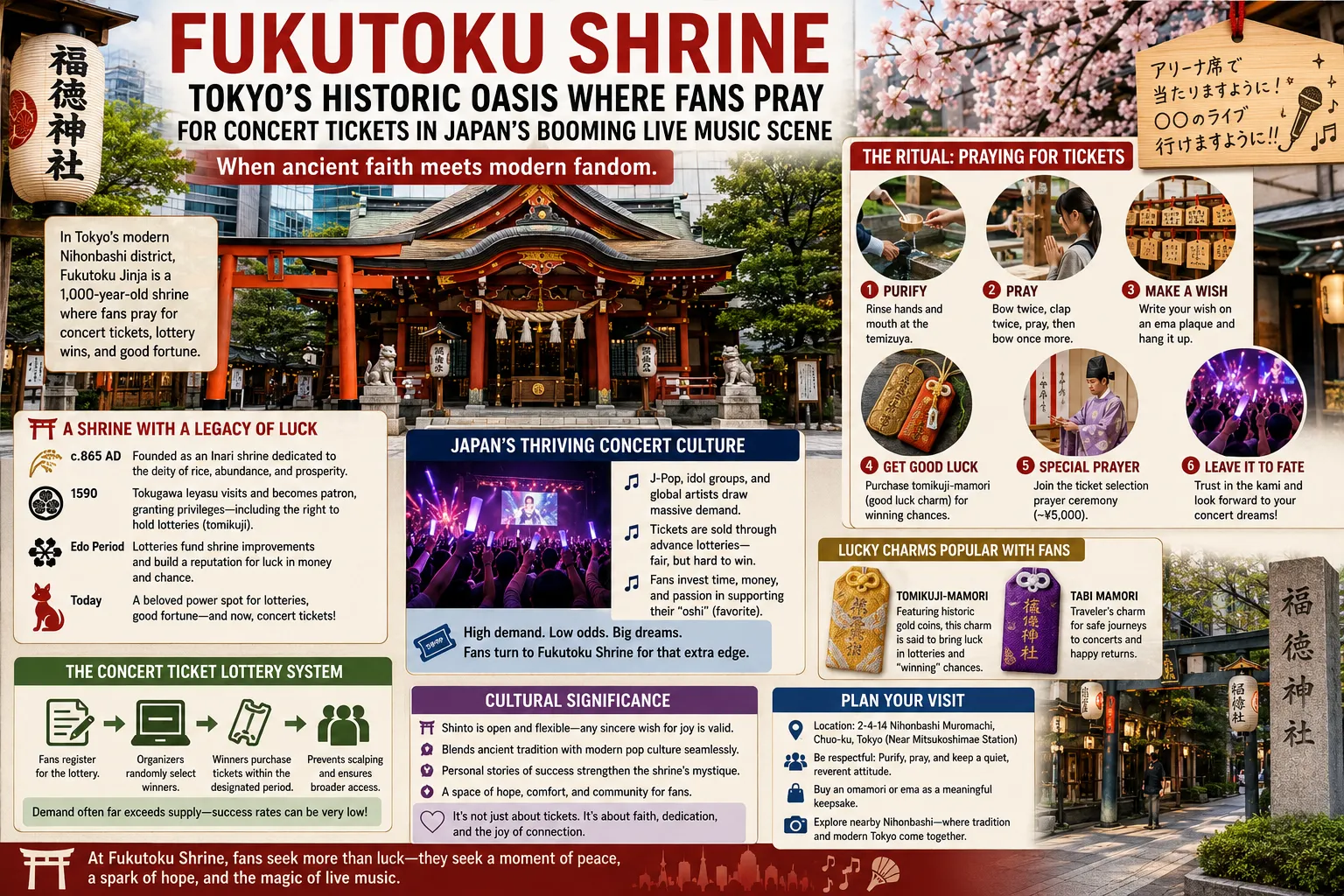
Fukutoku Shrine traces its origins to around 865 AD, originally dedicated to Inari, the Shinto deity associated with rice harvests, abundance, and prosperity. Its transformation into a hub for good fortune began in earnest during the Edo period (1603–1867). In 1590, the influential samurai and future shogun Tokugawa Ieyasu visited the shrine and became its patron, granting it special privileges, including the rare authorization to host lotteries (tomikuji) to fund shrine improvements.
These lotteries proved immensely popular, fostering a reputation for luck in financial and chance-based endeavors. Visitors purchased specialized omamori (good-luck charms), particularly the tomikuji-mamori, adorned with images of historical gold coins. Over centuries, word-of-mouth solidified the shrine’s status as a power spot for winning lotteries and monetary success.
This historical foundation naturally extended to modern interpretations of “winning big,” making it a logical destination for those facing uncertain odds.
Japan’s Thriving Concert Culture: Demand Outstrips Supply
Japan boasts one of the world’s most vibrant live music scenes, driven by J-Pop, idol groups, and international acts. Idol culture, with its dedicated “oshi” (favorite member) fandom, fuels intense loyalty. Fans invest heavily in merchandise, fan clubs, and travel, but tickets remain the ultimate prize.
Major concerts often employ a fair but frustrating multi-step lottery system. Fans register applications, and organizers randomly select winners who can then purchase tickets. This approach prevents scalping and ensures broader access, yet success rates can be dauntingly low, especially for popular artists. Demand frequently exceeds supply, turning ticket acquisition into a high-stakes endeavor.
Post-pandemic, as tours resumed, the frenzy intensified. Fans speak of “oshi-katsu” (supporting one’s oshi) as a lifestyle, where missing a concert feels like a significant loss. In this context, spiritual intervention offers psychological comfort and a sense of agency.
The Ritual: Praying for Tickets at Fukutoku
Visitors to Fukutoku Shrine follow traditional Shinto practices with a personal twist. Upon entering through the vermilion torii gate, they purify themselves at the temizuya (water fountain), rinsing hands and mouth. At the main altar, they bow twice, clap twice to summon the kami (spirits), offer silent prayers, and bow once more.
Many then purchase ema—wooden plaques—to inscribe specific wishes, such as “arena seats for [artist name]” or victories in upcoming lotteries. These are hung on racks alongside pleas for BTS, ZeroBaseOne, or local idols. The glittering tomikuji-mamori remains a bestseller, often paired with tabi mamori (traveler’s charms) for those planning tour pilgrimages.
For deeper commitment, the shrine offers a “ticket selection prayer ceremony,” where a priest performs a blessing for about 5,000 yen. During peak periods, such as post-pandemic tour announcements, crowds have overflowed, temporarily closing streets.
Cultural Significance: Blending Tradition with Modernity
Shinto’s flexible, non-dogmatic nature accommodates diverse prayers. Scholars note that seeking material desires like tickets fosters happiness and peace of mind, opening pathways to broader spiritual connection. Priests emphasize sincerity: as long as respect is shown to the kami, requests for joy are valid.
This fusion mirrors Japan’s broader cultural adaptability—honoring ancient rituals while embracing pop culture. Praying for concert tickets is not seen as incongruous but as a practical extension of seeking abundance, much like historical lotteries.
Personal stories abound: fans report success after visits, reinforcing the shrine’s mystique through community anecdotes. Even skeptics participate, adhering to the adage of doing everything possible and leaving the rest to fate.
Broader Context: Spirituality in Everyday Life
Fukutoku Shrine exemplifies Japan’s specialty shrines, each catering to specific needs—scholarship at Kanda Myojin, love at Tokyo Daijingu. This specialization makes spirituality accessible and relevant.
In a fast-paced, high-pressure society, such sites provide respite and community. The shrine’s location in a commercial district symbolizes harmony between tradition and modernity, offering a peaceful oasis amid urban hustle.
As global interest in K-pop and J-pop grows, international fans increasingly discover these customs, adding layers to Japan’s soft power through cultural exchange.
Practical Guidance for Visitors
Those planning a visit should:
- Locate the shrine at Chuo-ku, Nihonbashi Muromachi 2-4-14, near Mitsukoshimae Station.
- Respect etiquette: purify hands, bow and clap appropriately, and maintain quiet reverence.
- Purchase omamori or ema as tangible reminders.
- Combine with nearby attractions in Nihonbashi for a full day exploring Tokyo’s blend of old and new.
While outcomes depend on many factors, the experience itself—mindful reflection amid fandom—yields personal value.
Conclusion: Divine Harmony in the Pursuit of Joy
Fukutoku Shrine stands as a charming testament to Japan’s enduring spiritual traditions and dynamic pop culture. In an era where concert tickets symbolize connection, excitement, and shared experience, fans turn to the kami for that extra edge. Whether or not prayers guarantee success, they embody hope, dedication, and the human desire to bridge the ordinary with the extraordinary.
As live music continues to thrive, this tiny Tokyo sanctuary reminds us that sometimes, the most profound experiences arise from blending faith, passion, and a touch of divine luck. For devotees and curious visitors alike, a stop at Fukutoku offers more than tickets—it provides perspective, calm, and a deeper appreciation for Japan’s unique cultural tapestry.