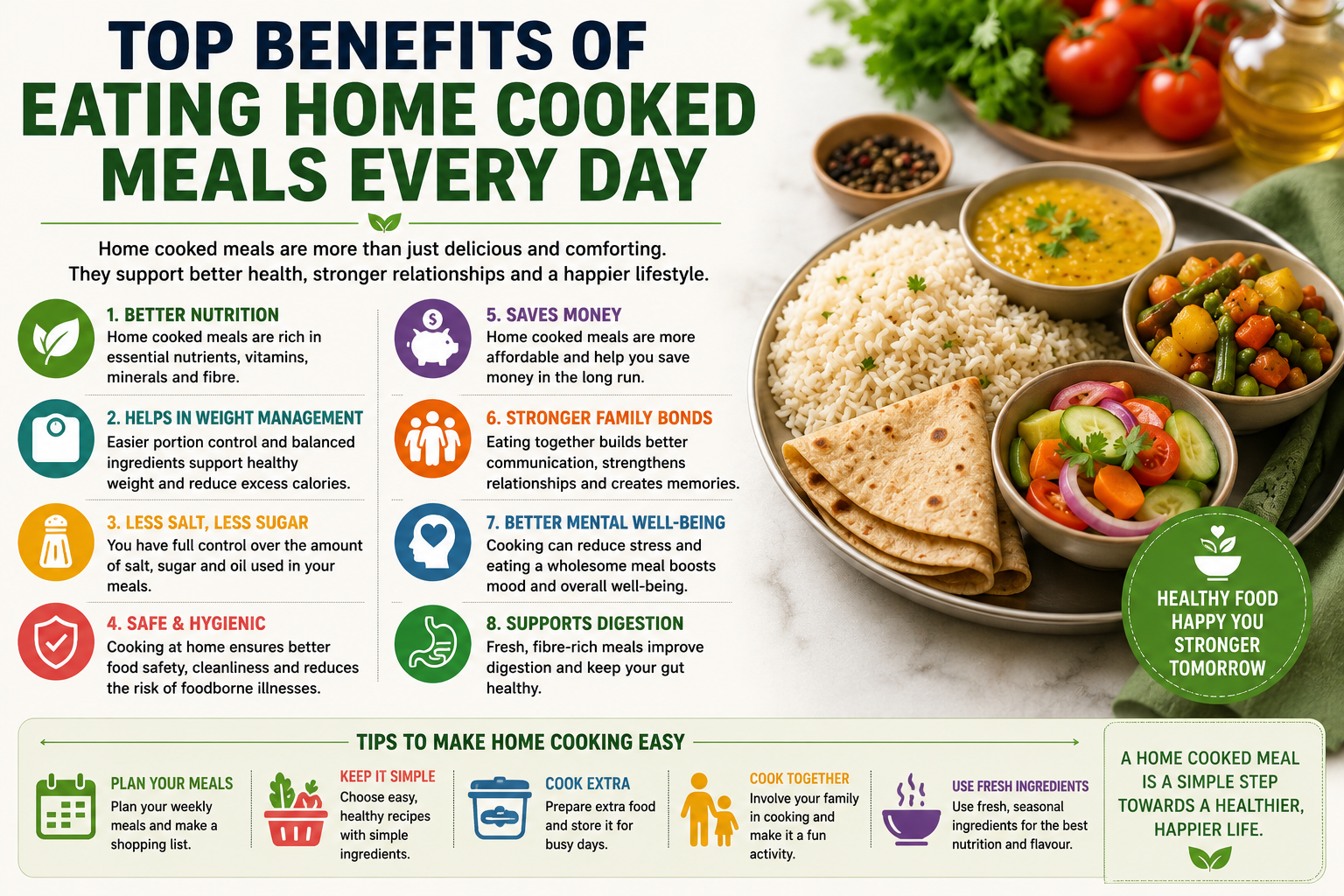
In today’s fast-paced world, convenience often takes priority over nutrition. Busy schedules, food delivery apps, and ready-to-eat meals have made eating outside the home easier than ever. However, despite the growing popularity of restaurant meals and processed foods, health experts continue to emphasize the value of home-cooked meals as one of the simplest ways to improve overall well-being.
Preparing food at home is about much more than saving money. It allows individuals and families to take control of the ingredients they consume, make healthier choices, and develop lifelong eating habits that support physical and mental health. Studies have also found that people who regularly eat home-cooked meals generally have healthier diets, consume more fruits and vegetables, and are more likely to maintain a healthy body weight. While these findings show an association rather than direct causation, they highlight the potential benefits of making home cooking a regular habit.
Here are the top reasons why eating home-cooked meals every day can positively impact your health and lifestyle.
Better Control Over Ingredients
One of the greatest advantages of home cooking is complete control over what goes into your food.
Restaurant meals and processed foods often contain excessive amounts of salt, sugar, unhealthy fats, preservatives, and artificial additives to enhance flavour and extend shelf life. When preparing meals at home, you decide how much oil, salt, and seasoning to use.
You can also choose fresh vegetables, whole grains, lean proteins, healthy cooking oils, and high-quality ingredients that suit your nutritional needs and personal preferences.
Improved Nutritional Quality
Home-cooked meals typically offer greater nutritional value than many commercially prepared foods.
Preparing meals from scratch encourages the inclusion of nutrient-rich foods such as vegetables, fruits, legumes, whole grains, dairy products, nuts, seeds, and lean protein sources. These foods provide essential vitamins, minerals, fibre, antioxidants, and healthy fats that support overall health.
Research has shown that individuals who frequently eat home-cooked meals often have higher-quality diets, including greater fruit and vegetable intake and better adherence to healthy eating patterns.
Easier Portion Control
Portion size plays a major role in maintaining a healthy weight.
Restaurant servings are often significantly larger than recommended serving sizes, encouraging people to consume more calories than needed. At home, portions can be adjusted according to age, activity level, and individual dietary goals.
Using smaller plates, measuring ingredients, and serving balanced portions can help prevent overeating without sacrificing satisfaction.
Supports Healthy Weight Management
Maintaining a healthy weight is not just about counting calories—it’s about developing sustainable eating habits.
People who regularly consume home-cooked meals often have healthier body weight and lower body fat levels compared with those who eat fewer meals prepared at home. Home cooking naturally encourages balanced meals while reducing reliance on highly processed foods that are often high in calories and low in nutritional value.
Combined with regular physical activity, home-cooked meals can become an important part of long-term weight management.
Encourages a Balanced Diet
A balanced meal typically includes carbohydrates, protein, healthy fats, vegetables, and adequate fibre.
Cooking at home makes it easier to create meals that contain all major food groups rather than relying on convenience foods that may be heavy in refined carbohydrates or saturated fats.
Families can also increase dietary variety by rotating different vegetables, grains, legumes, dairy products, and protein sources throughout the week.
Reduces Intake of Excess Salt and Sugar
Many packaged foods and restaurant dishes contain hidden sodium and added sugars.
Excessive sodium intake may contribute to high blood pressure in susceptible individuals, while too much added sugar increases the risk of obesity, dental problems, and metabolic disorders.
Preparing meals at home allows you to gradually reduce both salt and sugar without compromising taste by using herbs, spices, garlic, ginger, lemon, and fresh ingredients for flavour.
Saves Money in the Long Run
Although grocery shopping requires planning, home cooking is generally more economical than eating out regularly.
Buying ingredients in bulk, preparing multiple servings, and using seasonal produce can significantly reduce food expenses.
Meal planning also minimises food waste by ensuring that ingredients are used efficiently throughout the week.
Over time, the financial savings from cooking at home can be substantial.
Promotes Better Family Relationships
Home-cooked meals provide opportunities for families to spend quality time together.
Sharing meals encourages conversation, strengthens emotional bonds, and creates healthy routines for children. Studies have linked regular family meals with healthier eating habits, improved communication, and better emotional well-being among children and adolescents.
Cooking together can also teach valuable life skills, including meal planning, budgeting, teamwork, and nutrition awareness.
Helps Children Develop Healthy Eating Habits
Children often learn food preferences by observing adults.
When children participate in grocery shopping, meal preparation, and cooking, they become more willing to try new foods and develop a positive relationship with healthy eating.
Regular exposure to homemade meals rich in vegetables, fruits, whole grains, and protein can establish lifelong dietary habits that reduce the risk of chronic diseases later in life.
Greater Food Safety and Hygiene
Preparing meals at home provides better oversight of food safety.
You can wash ingredients properly, cook foods to safe temperatures, store leftovers correctly, and avoid cross-contamination.
This level of control reduces the risk of foodborne illnesses and ensures greater confidence in the quality of every meal.
Supports Mental Well-Being
Cooking can also benefit mental health.
Many people find meal preparation relaxing and rewarding. Chopping vegetables, mixing ingredients, and creating a meal can serve as a mindful activity that reduces stress after a busy day.
Completing a home-cooked meal often provides a sense of accomplishment while encouraging healthier daily routines.
Sharing homemade meals with loved ones can further strengthen social connections and emotional well-being.
Encourages Mindful Eating
Home-cooked meals are often eaten more slowly and with fewer distractions than fast food consumed on the go.
Mindful eating allows people to recognise hunger and fullness cues, enjoy flavours more fully, and avoid unnecessary overeating.
Simple habits such as eating at the dining table, avoiding screens during meals, and chewing food thoroughly can improve digestion and eating satisfaction.
Reduces Dependence on Ultra-Processed Foods
Ultra-processed foods have become increasingly common in modern diets.
While occasional convenience foods can fit into a balanced eating pattern, relying heavily on highly processed meals may increase intake of sodium, added sugars, unhealthy fats, and refined carbohydrates.
Cooking with fresh or minimally processed ingredients encourages healthier eating patterns and greater nutritional diversity.
Practical Tips for Cooking at Home Every Day
Building a home-cooking routine does not require elaborate recipes.
A few practical strategies include:
- Plan meals for the week in advance.
- Keep healthy pantry staples such as lentils, beans, rice, oats, and whole grains.
- Stock fresh fruits and vegetables.
- Prepare ingredients in advance for busy weekdays.
- Cook extra portions for future meals.
- Experiment with herbs and spices instead of excessive salt.
- Involve family members in meal preparation.
These habits make home cooking easier and more sustainable.
Conclusion
Eating home-cooked meals every day offers numerous benefits that extend far beyond nutrition. From improving diet quality and supporting healthy weight management to saving money, strengthening family relationships, and encouraging mindful eating, home cooking remains one of the most effective ways to support long-term health.
While no single dietary habit guarantees perfect health, preparing balanced meals with fresh ingredients provides greater control over nutrition and helps establish healthier routines for individuals and families alike. By making home cooking a regular part of daily life, people can enjoy meals that are not only delicious but also nourishing, economical, and beneficial for overall well-being.