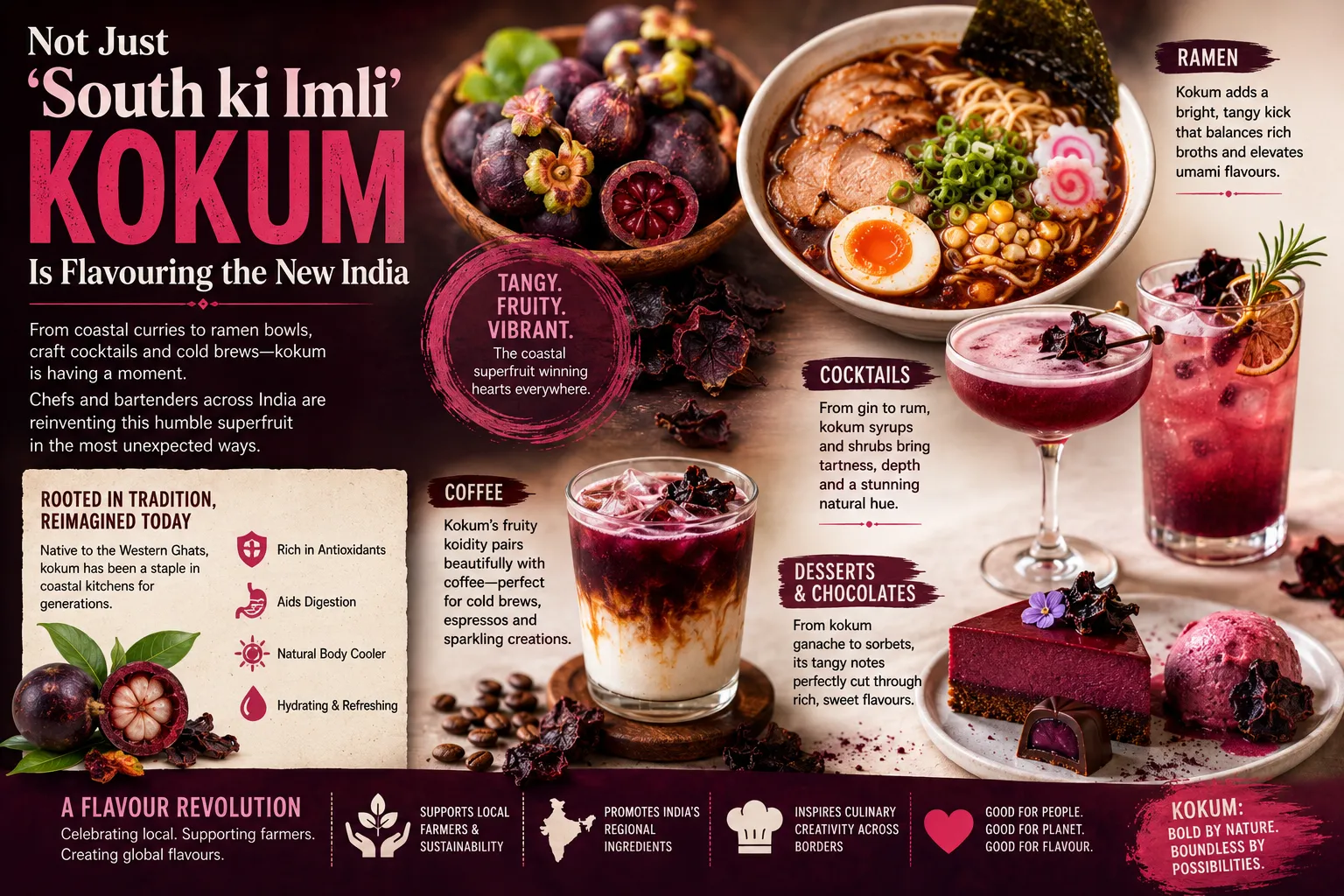
For generations, kokum has been a staple ingredient in the coastal kitchens of western India, particularly in Goa, Maharashtra, Karnataka, and parts of Kerala. Known for its pleasantly sour taste, deep purple-red colour, and cooling properties, kokum has traditionally been used in curries, dals, seafood preparations, and refreshing summer drinks like sol kadhi. Today, however, this humble fruit is experiencing a culinary renaissance.
Across India, chefs, pastry artists, mixologists, and specialty coffee experts are rediscovering kokum and incorporating it into innovative dishes and beverages. From flavouring Japanese ramen and artisanal chocolates to adding a tangy twist to cocktails and coffee, kokum is moving far beyond its regional roots. This growing popularity reflects a broader movement in Indian gastronomy—one that celebrates indigenous ingredients while presenting them in fresh, contemporary ways.
What Is Kokum?
Kokum comes from the fruit of Garcinia indica, a tropical evergreen tree native to the Western Ghats of India. The fruit is harvested during the summer months, after which its outer rind is typically sun-dried and used as a natural souring agent in cooking.
Unlike tamarind, kokum offers a gentler, fruitier acidity with subtle sweet notes and a rich crimson hue. It is widely appreciated not only for its unique flavour but also for its nutritional and medicinal value.
In traditional Indian households, kokum has long been used to prepare digestive beverages, aid hydration during hot weather, and add complexity to curries and lentil dishes.
From Coastal Kitchens to Modern Menus
For decades, kokum remained closely associated with regional cuisines. Today, however, India’s evolving restaurant scene is introducing the ingredient to entirely new audiences.
Chefs are experimenting with kokum because of its remarkable versatility. Its bright acidity can balance rich, fatty foods, while its fruity undertones complement sweet and savoury dishes alike.
Rather than using imported souring agents, many restaurants are choosing kokum to create flavours that are distinctly Indian while still appealing to global tastes.
This shift reflects a growing appreciation for locally sourced ingredients and regional culinary traditions.
Kokum Finds a Place in Japanese Ramen
One of the most surprising uses of kokum is in Japanese-inspired ramen.
Traditional ramen broths are rich, slow-cooked, and deeply savoury. Chefs are discovering that kokum’s natural acidity provides an elegant contrast, cutting through the richness without overpowering the broth.
Some restaurants infuse kokum into vegetable stocks, while others incorporate it into spicy ramen variations or create tangy finishing oils that enhance the final bowl.
The ingredient delivers both flavour and colour, making it an attractive addition to contemporary Asian cuisine.
Reinventing Cocktails with Kokum
Mixologists have embraced kokum as one of India’s most exciting cocktail ingredients.
Its balance of tartness, fruitiness, and natural colour makes it an excellent alternative to citrus fruits in certain drinks.
Kokum is now appearing in:
- Gin-based cocktails
- Rum punches
- Whisky highballs
- Vodka infusions
- Sparkling mocktails
- Kombucha-inspired beverages
Bartenders often prepare kokum syrups, shrubs, tinctures, and fermented concentrates to create layered flavour profiles.
Its vibrant colour also enhances the visual appeal of premium cocktails.
Coffee Meets Kokum
Specialty coffee cafés are increasingly experimenting with unexpected flavour combinations, and kokum has emerged as a fascinating companion to coffee.
Its fruity acidity pairs particularly well with lightly roasted beans, producing beverages that highlight floral and berry-like notes.
Baristas are creating:
- Kokum cold brews
- Sparkling coffee drinks
- Espresso tonics with kokum syrup
- Fermented coffee beverages
- Seasonal signature drinks
These combinations appeal to consumers seeking adventurous flavour experiences beyond traditional coffee offerings.
Kokum in Desserts and Chocolate
Pastry chefs are also exploring kokum’s potential.
The fruit’s tangy flavour creates an interesting contrast to the richness of chocolate, caramel, and dairy-based desserts.
Modern dessert menus now feature:
- Kokum cheesecakes
- Chocolate-kokum bonbons
- Sorbets
- Ice creams
- Fruit compotes
- Glazed pastries
- Mousse cakes
Its natural acidity brightens sweet dishes without requiring artificial flavouring.
Artisanal chocolatiers particularly appreciate kokum for balancing dark chocolate’s bitterness.
A Sustainable Local Ingredient
The renewed popularity of kokum also supports local farming communities across India’s western coastal region.
Because kokum trees are native to the Western Ghats, increasing demand encourages sustainable cultivation while promoting indigenous biodiversity.
Unlike imported exotic fruits or flavouring agents, kokum offers restaurants a locally available ingredient with a lower transportation footprint.
Many chefs view this as part of a broader commitment to environmentally responsible sourcing.
Health Benefits Add to Its Popularity
Although chefs primarily value kokum for its flavour, nutrition experts have long recognized its health-promoting properties.
Kokum contains:
- Vitamin C
- Polyphenols
- Antioxidants
- Dietary fibre
- Natural organic acids
Traditional Ayurvedic practices have associated kokum with improved digestion, hydration, and cooling during hot weather.
Some studies also suggest that compounds found in kokum may possess antioxidant and anti-inflammatory properties, although researchers continue to investigate these potential health benefits.
Its refreshing taste has made it a popular ingredient in wellness beverages.
Celebrating Regional Indian Ingredients
Kokum’s growing popularity represents a larger movement within Indian cuisine.
Across the country, chefs are revisiting forgotten regional ingredients that once remained confined to local kitchens.
Examples include:
- Gondhoraj lime from West Bengal
- Bhut Jolokia from Northeast India
- Bhoot Jhalakia peppers
- Black rice from Manipur
- Mahua flowers from central India
- Bamboo shoots from the Northeast
- Kodampuli from Kerala
Rather than relying exclusively on imported ingredients, restaurants are increasingly showcasing India’s remarkable agricultural diversity.
This trend allows regional traditions to gain national and international recognition.
Why Consumers Are Embracing Kokum
Today’s diners are increasingly interested in authenticity, sustainability, and storytelling.
Ingredients like kokum satisfy all three.
Consumers enjoy discovering flavours with cultural significance while supporting local producers and experiencing something different from mainstream ingredients.
Social media has also accelerated interest in visually striking dishes and drinks, and kokum’s naturally vibrant colour makes it highly photogenic.
Combined with its unique flavour profile, this has helped the fruit gain popularity among younger audiences.
The Future of Kokum in Indian Gastronomy
As India’s food industry continues evolving, kokum appears well positioned to become a mainstream ingredient across multiple culinary categories.
Restaurants, cafés, bakeries, breweries, and beverage companies are likely to continue experimenting with new applications.
Food innovation driven by regional ingredients allows chefs to create menus that feel both contemporary and deeply rooted in Indian culinary heritage.
Kokum’s adaptability suggests that its journey has only just begun.
Whether appearing in fine dining tasting menus, casual cafés, premium cocktails, or packaged beverages, the fruit is steadily becoming one of India’s most exciting indigenous ingredients.
Conclusion
Once known primarily as the souring agent of coastal curries and the key ingredient in refreshing sol kadhi, kokum has successfully entered a new chapter in Indian gastronomy. Its unique combination of tangy flavour, vibrant colour, nutritional value, and culinary versatility has inspired chefs, bartenders, pastry artists, and coffee experts to rethink how this traditional ingredient can be used.
The rise of kokum in ramen, chocolates, coffee, cocktails, and gourmet desserts reflects more than just changing food trends. It signals a renewed appreciation for India’s rich regional ingredients and the creativity of professionals who are bringing them into modern kitchens. As consumers continue seeking authentic flavours with meaningful stories, kokum is proving that some of the most exciting culinary innovations begin with rediscovering what has been part of Indian traditions all along.