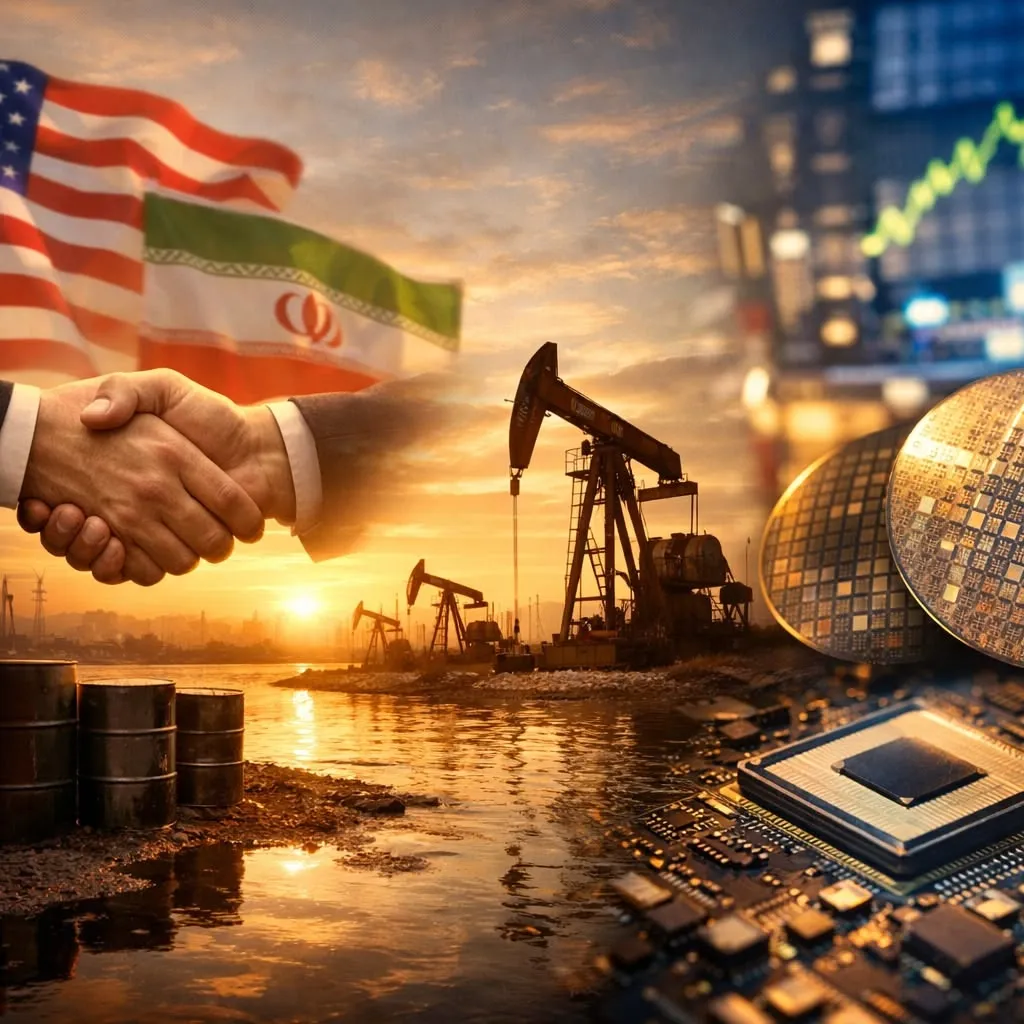
The confrontation between Iran and the United States has entered another tense phase after Washington expanded economic sanctions against Tehran and Iranian officials warned that their country was prepared to retaliate. The latest escalation has shifted attention from military pressure to the global energy market, with Iran threatening measures that could affect oil exports and shipping through the strategically important Strait of Hormuz.
The warning came a day after US Treasury Secretary Scott Bessent announced a new sanctions campaign intended to cut off what Washington describes as Iran’s economic lifelines. The United States targeted nearly 60 individuals, entities and vessels linked to Iranian activities, including oil-related networks, procurement and other sectors.
Iran, meanwhile, has signalled that continued economic pressure could trigger a tit-for-tat response. The possibility of disruption around the Strait of Hormuz is particularly significant because the waterway is one of the world’s most important routes for energy shipments.
Why Has the US Expanded Sanctions on Iran?
The latest American measures are part of a broader strategy to weaken Iran’s ability to generate revenue and finance activities that Washington considers threatening.
Bessent described the campaign as “Operation Economic Outcast”, with the stated objective of isolating Iran financially and restricting the channels through which Tehran earns and moves money. The measures extend beyond individual Iranian organisations and seek to put pressure on companies, traders and other entities connected to Iran’s economic networks.
Washington has also warned countries and businesses that continuing certain dealings with Iran could expose them to American sanctions. That creates a wider international dimension to the dispute because countries that maintain commercial relationships with Tehran may have to weigh those ties against their access to the US financial system.
The United States has particularly focused on Iran’s oil revenues because energy exports remain central to the country’s economy.
Iran Says It Is Prepared to Retaliate
Iran’s response has been firm.
Iranian officials have warned that Tehran is prepared to respond to the expanded American economic pressure. Economy Minister Ali Madanizadeh said Iran was ready for retaliation and suggested that Tehran could take offensive economic measures in response to Washington’s actions.
The threats are significant because Iran has several ways of exerting pressure beyond conventional economic measures. Its geographic position gives it influence over one of the world’s most important energy corridors.
The message from Tehran is therefore aimed not only at Washington but also at countries considering whether to comply with the new sanctions.
Iran has warned that countries cooperating with the American sanctions could face retaliation, raising concerns that the economic confrontation could spread beyond the two countries directly involved.
Why the Strait of Hormuz Matters
The Strait of Hormuz is at the centre of the latest concerns.
The narrow waterway connects the Persian Gulf with the Gulf of Oman and the wider Arabian Sea. Major oil-producing countries in the Gulf rely on the route to transport energy supplies to international markets.
Iran has previously used the possibility of restricting shipping through the strait as a strategic pressure point. Any serious disruption could affect crude oil supplies, shipping costs and energy prices far beyond the Middle East.
That is why an Iranian threat to restrict oil flows through the region can have consequences for economies that are not directly involved in the US-Iran confrontation.
Oil Markets Are Watching the Escalation
Energy markets have responded closely to developments surrounding Iran and the Strait of Hormuz.
The latest sanctions announcement initially pushed oil prices lower as traders interpreted the measures partly as an attempt to increase pressure on Tehran and potentially encourage de-escalation. Brent crude and US West Texas Intermediate both recorded declines following the announcement.
However, the market remains highly sensitive to any indication that shipping through the Gulf could be disrupted.
A sustained reduction in Iranian exports could tighten supply. A broader disruption affecting the Strait of Hormuz would carry much greater consequences because the route is important to several major oil exporters, not just Iran.
This creates a difficult situation for policymakers: measures designed to pressure Iran economically can simultaneously increase concerns about global energy security.
China Has a Critical Role
China is particularly important to the effectiveness of the new sanctions because it has been Iran’s largest oil customer.
American pressure on Iran’s oil trade therefore inevitably raises questions about how Chinese companies and financial institutions will respond. Washington has warned countries and businesses about the consequences of continuing transactions with Iran, while Beijing has rejected unilateral US sanctions and defended its economic interests.
The US administration has so far been cautious about imposing the harshest possible measures directly against major Chinese financial institutions. Such action could create consequences well beyond the Iran issue and potentially affect global financial and trade relationships.
China’s position could therefore become one of the most important factors determining whether Washington’s latest sanctions significantly reduce Iran’s ability to sell oil.
Iran’s Oil Revenue Is a Major Target
Oil remains at the heart of the economic confrontation.
For Washington, restricting Iran’s oil revenue is a way of limiting the financial resources available to the Iranian government. For Tehran, maintaining access to oil markets is essential for generating foreign currency and supporting the wider economy.
The latest American sanctions therefore target networks involved in petroleum and petrochemical activities as well as individuals and entities accused of supporting Iran’s broader economic and strategic programmes.
Iran has spent years developing methods to maintain trade despite sanctions. These include alternative financial arrangements, complex shipping networks and relationships with countries willing to continue purchasing Iranian commodities.
The effectiveness of the latest campaign will therefore depend not only on what Washington sanctions but also on how successfully those restrictions can be enforced internationally.
Could the Sanctions Hurt Iran’s Economy Further?
Iran’s economy has already experienced significant pressure from years of sanctions and the current conflict.
The latest measures could make it more difficult for Iranian companies to access international financial services, sell oil openly and maintain commercial relationships with foreign businesses.
Sanctions can also increase transaction costs because companies may have to use more complicated trading and payment arrangements. The resulting pressure can affect the broader economy even when trade does not stop completely.
However, previous sanctions have also demonstrated that Iran can adapt. Its ability to maintain relationships with major trading partners, particularly China, has allowed parts of its oil trade to continue despite American restrictions.
The Risk of a Wider Economic Conflict
The most important question now is whether the sanctions remain primarily financial or trigger a broader confrontation.
Washington has described its strategy as an economic offensive intended to isolate Tehran without necessarily expanding military action. Iran, however, has warned that economic coercion could produce consequences of its own.
The possibility of retaliation against countries that cooperate with the US sanctions adds another layer of uncertainty. Businesses operating in shipping, energy, banking and international trade could find themselves caught between competing demands.
The longer the confrontation continues, the greater the possibility that economic decisions will have geopolitical consequences.
What It Means for Global Energy Security
The US-Iran confrontation matters well beyond the Middle East because oil markets are interconnected.
A significant disruption to Iranian exports would remove some supply from the international market. A major disruption in the Strait of Hormuz would be considerably more serious because it could affect shipments involving multiple Gulf producers.
Even the threat of disruption can influence prices because traders must account for the possibility of future shortages.
For countries heavily dependent on imported crude oil, prolonged uncertainty can increase fuel costs and contribute to inflation. Higher energy prices can also raise transportation and manufacturing expenses.
This is why governments and financial markets are closely monitoring every statement from Washington and Tehran.
Diplomacy Remains an Important Option
Despite the escalating rhetoric, the dispute has not removed the possibility of diplomacy.
Pakistan has been involved in efforts to encourage dialogue and de-escalation between the United States and Iran. However, recent developments indicate that diplomatic progress remains limited.
The new sanctions increase pressure on Tehran, while Iran’s retaliation threats raise the potential cost of continuing the confrontation.
Both sides therefore face a difficult calculation. Washington wants to restrict Iran’s economic resources without creating a wider global economic shock. Tehran wants to resist American pressure while preserving its ability to export oil and maintain international trade.
What Happens Next?
The next phase of the US-Iran confrontation will depend heavily on whether Washington expands the sanctions further and how Tehran responds.
The United States has indicated that additional measures could follow. Iran, meanwhile, has made clear that it does not intend to accept unlimited economic pressure without responding.
For global markets, the most important developments will be any change in Iranian oil exports, shipping activity around the Strait of Hormuz and the response of major buyers such as China.
For governments, the challenge will be preventing an economic confrontation from turning into a wider security crisis.
Conclusion
The latest Iran-US sanctions escalation demonstrates how economic warfare can quickly become an international energy issue. Washington is attempting to cut Iran’s economic lifelines through broader sanctions, while Tehran is warning that continued pressure could trigger retaliation affecting oil and regional shipping.
The Strait of Hormuz remains the biggest source of concern because any serious disruption there could affect global energy markets. China’s continued relationship with Iran will also be crucial to determining how effective Washington’s pressure campaign becomes.
For now, both sides are increasing pressure while leaving the world watching for the next move. The central question is whether sanctions and threats will force a political settlement—or create another escalation with consequences far beyond Iran and the United States.
Read more – lasandino.com