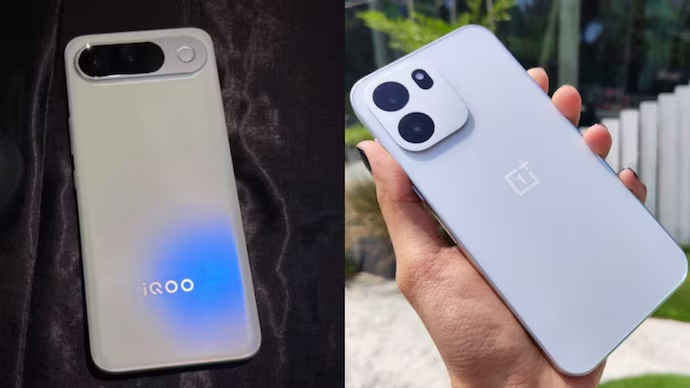
The iQOO Z11 vs OnePlus Nord CE 6 comparison has become interesting for buyers looking around the mid-range smartphone segment. Both phones bring AMOLED displays, 144Hz refresh rates, 50MP primary cameras, 32MP selfie cameras, and Android 16, but their approach is quite different. The iQOO Z11 focuses heavily on battery capacity, display size, camera flexibility, and longer software support. The OnePlus Nord CE 6 instead puts more attention on faster charging, stronger cooling, rugged protection, and a familiar OxygenOS experience.
Two Phones, Different Priorities
The iQOO Z11 was launched in India on August 20, 2026, with its starting price listed at Rs 34,999 for the 6GB RAM and 128GB storage version. The OnePlus Nord CE 6 arrived earlier, with its starting price at Rs 37,999 for 8GB RAM and 128GB storage. The iQOO therefore enters with a lower entry price, although its higher-memory variants become considerably more expensive. OnePlus keeps the starting configuration simpler while offering 8GB RAM from the beginning.
Display Looks Closely Matched
The iQOO Z11 carries a 6.83-inch 1.5K 3D curved AMOLED display with a 144Hz refresh rate. The OnePlus Nord CE 6 uses a slightly smaller 6.78-inch 1.5K AMOLED panel, while also offering a 144Hz refresh rate. Both should feel extremely smooth during scrolling, gaming, and everyday navigation. The iQOO has the larger physical screen, while OnePlus claims higher peak brightness on its display specifications.
Brightness numbers can look confusing because different manufacturers and testing modes use different measurements. The iQOO Z11 is listed with 2,000 nits HBM and up to 3,000 nits peak brightness in comparison specifications. The Nord CE 6 reaches up to 3,600 nits peak brightness, with 1,800 nits HBM listed. For outdoor viewing, both phones should remain capable, although the OnePlus has an advantage on the headline peak-brightness figure.
Performance Takes Another Route
The iQOO Z11 becomes one of the first smartphones using MediaTek’s Dimensity 7500 Turbo chipset in India. The processor is paired with LPDDR4X RAM and UFS 3.1 storage, while a 3,800mm² vapour chamber helps manage temperatures during demanding workloads. The OnePlus Nord CE 6 uses Qualcomm’s Snapdragon 7s Gen 4 processor with UFS 3.1 storage and LPDDR4X RAM according to the detailed comparison.
On paper, the OnePlus processor has a slightly higher maximum clock speed at 2.7GHz, compared with 2.6GHz for the iQOO chipset. Benchmark figures also show the Nord CE 6 ahead in certain testing, although benchmark differences should not automatically decide the buying decision. OnePlus also uses a larger 5,000mm² vapour chamber, which could help the phone handle sustained gaming loads more comfortably.
Battery Size Changes Everything
Battery capacity is one area where both phones clearly refuse to play small. The iQOO Z11 comes with a massive 7,050mAh battery and supports 44W FlashCharge technology. The OnePlus Nord CE 6 goes even further with an 8,000mAh battery and much faster 80W charging support. This makes the OnePlus especially interesting for people who regularly use their phones for gaming, video streaming, navigation, and long work sessions.
Charging speed creates another noticeable difference between these devices. The Nord CE 6 can replenish its larger battery using 80W charging, while the iQOO Z11 uses 44W charging. Independent comparison testing listed around 18 hours and 34 minutes for the Nord CE 6 and around 16 hours and 12 minutes for the Z11 under its specific battery test. Real-world results will obviously change depending on brightness, network conditions, applications, and gaming habits.
Camera Hardware Is Not Identical
The iQOO Z11 has a 50MP Sony IMX882 primary camera with optical image stabilisation, along with an 8MP secondary camera. That additional camera gives the iQOO a more flexible rear setup compared with the OnePlus Nord CE 6. The OnePlus also has a 50MP primary camera, but its secondary rear camera is a much smaller 2MP sensor. Both phones include 32MP front-facing cameras for selfies and video calls.
The iQOO Z11 also supports 4K video recording at 30 frames per second through its rear camera. The comparison specifications list the OnePlus Nord CE 6 with video recording support up to Full HD at 30 frames per second. This gives the iQOO a useful advantage for buyers who regularly record higher-resolution video directly from their smartphones. Camera processing, however, can still make a major difference beyond specifications.
Software Support Matters More Now
Both smartphones arrive with Android 16, but their software skins are completely different. The iQOO Z11 runs OriginOS 6, while the OnePlus Nord CE 6 runs OxygenOS 16. People who already enjoy OnePlus software may naturally prefer the Nord CE 6, whereas users interested in iQOO’s newer interface and built-in AI tools may find the Z11 more appealing.
Software support gives the iQOO Z11 another useful advantage for long-term buyers. The phone is listed with three years of operating-system updates and five years of security updates. The Nord CE 6 is listed with two years of operating-system updates and four years of security updates. That difference may not matter during the first year, but it becomes more important for people planning to keep one phone for several years.
Durability Favors OnePlus Strongly
OnePlus has clearly pushed durability as an important part of the Nord CE 6’s identity. The phone is listed with IP66, IP68, IP69, and IP69K protection ratings, along with MIL-STD-810H certification in the comparison information. Those specifications give the Nord CE 6 a stronger durability story for people who worry about dust, water exposure, and tougher everyday conditions.
The iQOO Z11 is not exactly fragile either, with the comparison data listing IP68 and IP69 protection. Still, the OnePlus device offers a broader set of durability certifications. This could matter for outdoor users, frequent travellers, or anyone who simply wants extra protection without buying an additional rugged case immediately.
Design And Everyday Handling
The iQOO Z11 weighs around 199 grams and measures about 7.99mm in thickness according to available specifications. The OnePlus Nord CE 6 is heavier at roughly 215 grams and thicker at around 8.5mm. The iQOO therefore looks more comfortable on paper for people who dislike carrying heavier smartphones throughout the day.
There is another small difference that users may notice during daily usage. The iQOO Z11 provides a curved display, which can make the phone feel more premium and immersive for multimedia consumption. OnePlus uses its Sunburst AMOLED display design with a more conventional overall approach. Personal preference matters here because curved screens look attractive, while flatter designs can sometimes feel easier for gaming and typing.
Which Phone Gives Better Value?
The answer depends heavily on what you actually expect from your smartphone. The iQOO Z11 makes more sense for buyers wanting a larger curved AMOLED screen, a useful ultra-wide camera, strong camera hardware, longer software support, and a slightly lower starting price. Its 7,050mAh battery is also enormous, even though its charging speed remains behind the OnePlus alternative.
The OnePlus Nord CE 6 looks stronger for people who value fast charging and maximum battery capacity above everything else. Its 8,000mAh battery is bigger, its 80W charging is substantially faster, and its larger vapour chamber could help during extended performance sessions. The durability ratings also make it attractive for buyers who want additional protection from water, dust, and rough everyday usage.
Final Buying Decision
There is no single winner across every category because the iQOO Z11 vs OnePlus Nord CE 6 battle is surprisingly balanced. iQOO has the edge in display size, camera versatility, and software support, while OnePlus answers with a bigger battery, faster charging, stronger durability credentials, and competitive performance. Buyers should look beyond processor names and camera megapixels before making the final choice. The better phone depends on whether your priority is long-term software support and display experience or charging speed and rugged everyday reliability. Check the latest prices and offers before purchasing, then choose the model that best matches your daily usage requirements.
Read More :- jayapokergacor.com