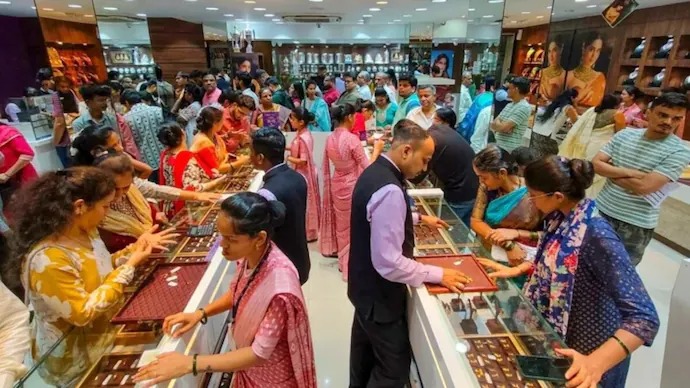
India’s consumer market may be heading toward a major shift in the next decade, with its affluent consumer base projected to grow more than fourfold by 2036. reports that a new forecast from NielsenIQ and World Data Lab estimates India could have around 10.8 crore affluent consumers by 2036, slightly ahead of China’s projected 10.3 crore.
The numbers are significant because India currently has an estimated 2.6 crore consumers in this affluent category. If the forecast holds, another 8.2 crore people could enter the group during the next ten years, creating a much larger pool of consumers with stronger spending capacity.
India’s Consumer Class Is Expanding
The projected rise does not simply mean more people buying expensive products every month. It points toward a wider change in household purchasing power, urban consumption, product preferences, and the types of brands that can find customers across India.
According to the report, India is expected to add more affluent consumers than any other major market between 2026 and 2036. China is projected to add around 6.2 crore people to the same category, while India could add approximately 8.2 crore.
That difference may look modest when viewed across ten years, but it becomes important when companies start planning their long-term expansion strategies. A larger affluent population can support stronger demand for premium foods, electronics, automobiles, travel, financial services, personal care products, and lifestyle experiences.
There is another important point behind these numbers, however, which should not be missed when reading the headline.
What Affluent Consumers Really Means
The term affluent consumer in this report does not simply describe someone with a high salary, large savings, expensive property, or significant investments. The classification is based specifically on daily spending, with the report using more than $90 per day as the threshold.
So the projected 10.8 crore figure should not be read as meaning India will have 10.8 crore traditionally wealthy people by 2036. Instead, it represents people whose consumption levels are expected to cross that particular spending threshold.
This distinction matters quite a lot because income and spending are not always identical. A household may have considerable assets but relatively conservative spending habits, while another household could have higher regular consumption because of lifestyle choices and household needs.
India also has a much larger group called core consumers in the report. The country is estimated to have around 64.9 crore people in this category during 2026, with daily spending between $13 and $90.
That large consumer base could become an important pipeline for future affluent consumption as incomes and purchasing capacity rise.
China Could Lose Its Lead
China has dominated many conversations around Asia’s consumer growth for years, particularly because of its enormous population, manufacturing strength, urbanisation, and expanding middle class.
The latest projection suggests the balance could change by 2036. India is expected to reach approximately 10.8 crore affluent consumers, compared with around 10.3 crore in China. The difference is only about 50 lakh people, but the direction of the change is what makes the forecast notable.
India’s projected growth is also happening from a much smaller starting point. The country is estimated to have 2.6 crore affluent consumers in 2026, meaning the expected increase would be more than four times the present number over the following decade.
China, meanwhile, is expected to see a slower increase in this particular consumer segment. That does not mean China’s consumer market will become unimportant, because its overall economic scale remains enormous.
The forecast instead suggests that India could become one of the most important sources of new affluent demand globally.
Spending Power May Change Brand Strategies
For companies, the biggest opportunity may not come from selling one expensive product to wealthy customers. The larger opportunity could be convincing millions of newly affluent consumers to upgrade gradually.
Consumers moving into higher spending categories may want better smartphones, larger homes, newer vehicles, international holidays, premium personal care, restaurant experiences, and financial products that were previously considered less accessible.
But there is a catch, and companies already understand this problem. Indian consumers can become more affluent without suddenly abandoning their habit of comparing prices.
The report notes that value for money remains important among consumers looking to upgrade. Around 60% of upgrade consumers surveyed said they focus on value for money, while 46% indicated that they are willing to pay for convenience.
That creates a slightly complicated market for brands. Premium pricing alone may not work if customers cannot clearly see what additional benefit they are receiving.
Premium Products Need Real Value
India’s future affluent consumers are unlikely to behave exactly like traditional luxury shoppers in every category. Many may be selective about where they spend more and where they continue choosing affordable alternatives.
Someone could purchase a premium smartphone while still searching for discounts on household products. Another consumer might spend heavily on travel but remain careful about everyday grocery expenses.
This kind of mixed spending behaviour could become increasingly common as the consumer base expands.
Brands therefore may need several price points instead of relying only on premium offerings. A company that provides affordable, mid-range, and premium versions can potentially reach consumers at different stages of their spending journey.
Convenience could also become a major selling point. Faster delivery, better digital services, easier payments, personalised recommendations, and stronger after-sales support can become reasons for consumers to spend more.
The affluent consumer opportunity is therefore not simply about higher prices. It is about creating products and services that justify higher spending.
India’s Global Market Position
The expected growth could have implications beyond individual consumer brands. India may become more influential in global strategies for companies deciding where to invest, manufacture, launch products, or build distribution networks.
The report projects the global affluent consumer population to increase from around 65.7 crore in 2026 to approximately 102.5 crore by 2036. India is expected to account for a substantial share of that increase.
The United States is still projected to remain the world’s largest affluent consumer market in 2036, with around 23.1 crore people in the category. Germany, Japan, the United Kingdom, and Brazil are also expected to have sizeable affluent consumer populations.
India moving ahead of China would therefore not make it the world’s biggest affluent consumer market. It would instead place India second among the countries highlighted in the forecast, behind the United States.
That is still a significant change for global businesses watching Asian consumption.
Bigger Cities Are Not The Whole Story
A major question will be where these new affluent consumers live. India’s consumer growth has traditionally been strongly associated with large metropolitan areas, but spending power is increasingly spreading beyond the biggest cities.
Smaller cities and emerging urban centres could become increasingly important as incomes, digital payments, organised retail, online shopping, and infrastructure continue expanding.
This could create opportunities for companies that understand regional differences rather than treating India as one uniform market.
Consumer preferences can vary widely between states and cities, including language, food habits, fashion choices, transportation needs, entertainment preferences, and purchasing behaviour. Brands that adapt products and marketing to those differences may have an advantage.
The future affluent market could therefore be much broader geographically than the traditional premium consumer market seen today.
Rising Prices Add Another Challenge
The expansion of spending power is happening alongside a period of significant price pressure. According to NIQ, global fast-moving consumer goods prices increased by 26% between 2021 and 2025.
Higher prices can create two very different effects. Consumers with rising incomes may continue upgrading their purchases, while households facing higher everyday expenses may become more careful about discretionary spending.
This is why the growth forecast should not be interpreted as an automatic guarantee for every consumer business.
Companies will still need to understand inflation, employment, household income growth, interest rates, competition, and changing consumer preferences before making major investment decisions.
The affluent consumer opportunity is large, but the market will remain highly competitive.
A Major Opportunity With Some Uncertainty
The 2036 numbers are projections rather than guaranteed outcomes. They depend on assumptions about economic growth, demographic changes, income progression, consumption patterns, and other factors that can change during the decade.
Still, the direction of the forecast is difficult for businesses to ignore. India could add approximately 8.2 crore affluent consumers over ten years, taking the total from around 2.6 crore today to 10.8 crore by 2036.
That would represent a major expansion of India’s higher-spending consumer market.
The bigger story may actually be what happens underneath that headline number. Millions of households could gradually move toward greater discretionary spending, creating demand across products, services, experiences, and financial categories.
For companies, the opportunity will depend on understanding those consumers rather than simply calling them wealthy.
Conclusion
India’s projected rise in affluent consumers could become one of the most important consumer-market shifts of the next decade. The NielsenIQ and World Data Lab forecast suggests the country could reach 10.8 crore affluent consumers by 2036, narrowly moving ahead of China’s projected 10.3 crore.
The change reflects expanding spending capacity, but it does not mean every consumer will suddenly choose premium products. Value, convenience, affordability, and product quality are likely to remain important considerations. For businesses, India’s growing affluent class could create enormous opportunities across retail, technology, automobiles, travel, finance, and lifestyle markets. Keep following the latest consumer-market developments to understand how India’s spending landscape continues to change.
Read More :- cekilisimizvar.com