The Supreme Court of India has declined to grant an urgent hearing to a petition challenging the portrayal of the Hindu epic Ramayana in the film Ramayana: Part 1. During the proceedings on Friday, November 27, the court observed that filmmakers are entitled to present the epic according to their understanding and that people with a different interpretation are free to express their views through their own creative work.
The petitioner’s counsel raised concerns that the film had distorted certain aspects of the traditional epic and could influence the understanding of younger generations. However, the bench questioned the urgency of the matter, particularly because the film had already been released in theatres and audiences had been watching it.
The court’s remarks have brought fresh attention to the discussion surrounding creative freedom, religious sentiments and the responsibility of filmmakers when adapting culturally and spiritually significant stories for cinema.
Supreme Court Declines Urgent Hearing on Ramayana Film Plea
The matter was mentioned before a three-judge bench comprising Chief Justice of India Surya Kant and Justices Joymalya Bagchi and V. Mohana. The petitioner’s lawyer informed the court that the petition had been registered on November 23 but had not yet been listed for hearing.
Seeking an early hearing, the lawyer argued that the film presented several aspects of the Ramayana incorrectly. The counsel also expressed concern that such portrayals could create confusion among younger viewers who might not be familiar with the traditional versions of the epic.
The Chief Justice, however, pointed out that the movie had already been released and that people interested in watching it had already had the opportunity to do so. The bench did not find sufficient grounds to prioritise the petition for an urgent hearing.
The court’s response made it clear that disagreement with a film’s interpretation does not automatically establish a reason for immediate judicial intervention.
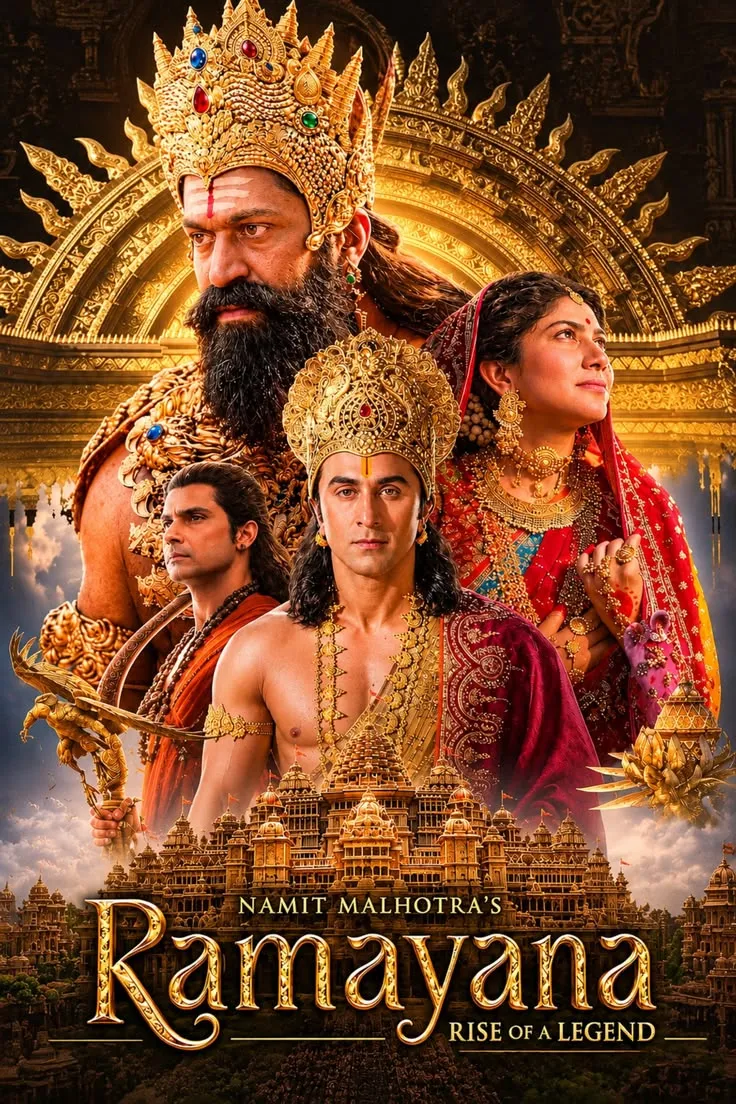
‘Make Your Own Film’: What the Supreme Court Observed
One of the most widely discussed moments during the proceedings was the court’s suggestion that those who disagree with the filmmakers’ interpretation could create their own version of the epic.
Responding to the petitioner’s concerns, Chief Justice Surya Kant observed that the filmmakers had made the movie according to their understanding of the Ramayana. He suggested that someone holding a different perspective could also make a film or documentary presenting that interpretation.
The bench also indicated that audiences and individuals are entitled to hold different opinions about a creative work. Some viewers may appreciate a particular portrayal, while others may criticise it. Such differences of opinion are part of public discussion around cinema.
The observation was particularly significant because the Ramayana is not simply another fictional story. It carries deep religious, cultural and emotional importance for millions of people. Consequently, cinematic adaptations can attract strong reactions from viewers who have grown up with different versions and interpretations of the epic.
However, the court’s refusal to grant an urgent hearing should not be confused with a final judgment on every allegation raised in the petition. The immediate decision concerned the request for urgent listing, not a detailed examination of the petition’s claims on their merits.
What Is the Controversy Surrounding Ramayana: Part 1?
The petition challenged the film’s portrayal of certain aspects of the Hindu epic, alleging that some details had been distorted. The petitioner argued that the film could affect how younger audiences understand the traditional narrative.
The disagreement reflects a larger debate about how religious and historical stories should be adapted for contemporary entertainment. Filmmakers often use visual effects, dramatic storytelling and creative interpretations to bring familiar narratives to a new generation. However, these creative decisions can become controversial when audiences believe that important characters, events or cultural values have not been represented accurately.
For many viewers, the Ramayana is closely connected to faith, family traditions and moral teachings. Its characters and events have been passed down through generations through religious texts, regional storytelling, television, theatre and cultural performances.
This makes any major cinematic adaptation a subject of considerable public interest. While some audiences welcome fresh interpretations, others expect filmmakers to remain close to the versions they know and respect.
Ramayana: Part 1 Cast, Director and Production Details
Ramayana: Part 1 is directed by Nitesh Tiwari and produced by Namit Malhotra and Yash. The film is the first instalment of a planned two-part cinematic adaptation of the ancient Indian epic.
The project features a prominent cast, with Ranbir Kapoor portraying Lord Rama, Sai Pallavi playing Goddess Sita and Yash appearing as
Read more – grammarfortune.com