In the glittering yet often unforgiving world of Indian entertainment and high society, relationships involving public figures frequently become fodder for speculation and harsh judgment. When former IPL chairman Lalit Modi publicly shared his romance with actress and former Miss Universe Sushmita Sen in 2022, the internet erupted with mixed reactions. Among the noise, one label stuck particularly stubbornly: the “gold digger” tag directed at Sen. Years later, Modi has stepped forward with a candid and chivalrous defense that not only counters those allegations but also highlights deeper issues around gender biases, financial independence, and public scrutiny in personal relationships.
Modi’s recent interview with Humans of Bombay offers a refreshing counter-narrative. Far from the narrative of a transactional relationship, he portrayed Sen as a fiercely independent, self-made woman who actively supported their outings. “There wasn’t a single time that I went out with Sushmita that I had to pay for anything. She paid for everything. I was like a kept boyfriend,” Modi shared. He emphasized her substantial personal wealth, noting her impressive collection of diamonds acquired through her own achievements in acting, business ventures, and brand endorsements.
This defense comes at a significant moment. Sen had earlier addressed the trolling herself with characteristic wit and dignity. Following Modi’s viral Maldives vacation posts that announced their relationship, she responded to critics by declaring she “dug deeper than gold” and preferred diamonds—subtly affirming her financial autonomy while refusing to let negativity define her. Their bond, though brief, appears rooted in mutual admiration rather than material gain.
The Backdrop of Their Relationship
The relationship between Modi and Sen first captured public attention in mid-2022 when Modi posted affectionate photographs from luxurious getaways, referring to Sen as his “better half.” He later clarified that they were dating, not married, tempering speculation about a wedding. The couple’s time together seemed marked by shared travels and family moments, blending Sen’s grounded family life in India with Modi’s international lifestyle.
However, like many high-profile pairings, distance played a role in their eventual parting. Modi later confirmed their amicable separation, eventually announcing a new relationship on Valentine’s Day 2025. Importantly, both parties have maintained respect for one another post-breakup, with no public acrimony. Sen has often described such chapters in her life as personal phases, emphasizing growth and unconditional love over societal expectations.
Challenging Stereotypes in Celebrity Relationships
Modi’s remarks extend beyond personal vindication; they challenge entrenched stereotypes. The “gold digger” trope disproportionately targets women in relationships with affluent or influential men, often ignoring their own accomplishments. Sen, crowned Miss Universe in 1994, built a successful career in Bollywood with memorable performances in films like Dastak, Biwi No. 1, and Main Hoon Na. Beyond acting, she has ventured into entrepreneurship, including jewelry and wellness initiatives, while raising two adopted daughters as a single mother—a testament to her resilience and independence.
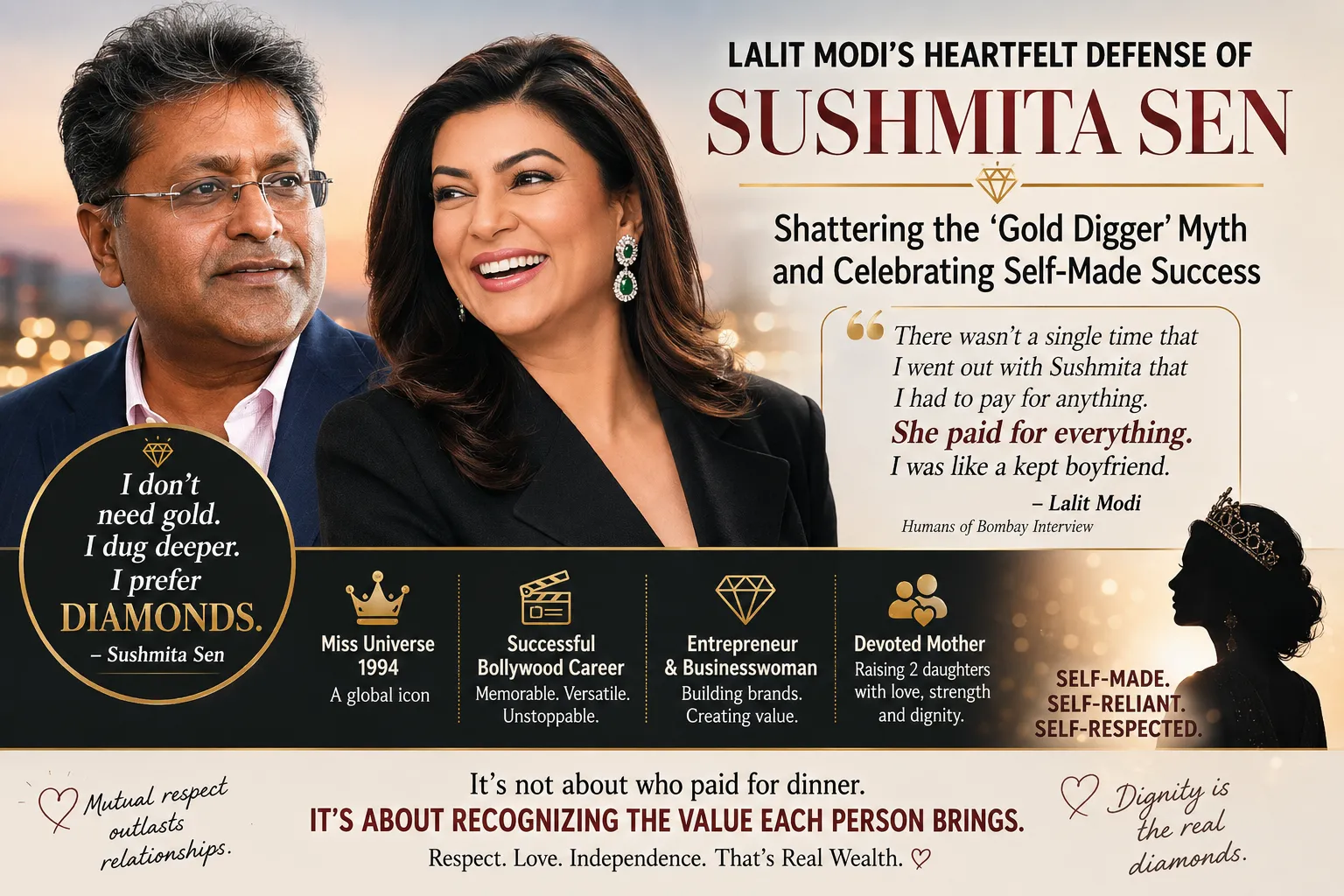
By flipping the script and humorously calling himself the “diamond digger,” Modi underscores Sen’s value as the “diamond” in the relationship: a woman of substance, beauty, and self-sufficiency. This perspective invites reflection on how society often reduces complex emotional connections to simplistic financial narratives, particularly when age gaps or differing social backgrounds are involved.
Such biases reveal broader cultural attitudes. In an era of financial empowerment for women, assumptions that successful actresses seek “security” from wealthy partners persist. Sen’s refusal to remain silent—combined with Modi’s supportive words—serves as a powerful rebuttal, encouraging public figures and audiences alike to prioritize facts over gossip.
Lessons on Dignity, Privacy, and Mutual Respect
This episode offers valuable insights for navigating public relationships. First, financial independence matters. Sen’s story exemplifies how personal success shields against reductive labels. Her career longevity and entrepreneurial spirit demonstrate that true confidence stems from self-reliance, not external validation.
Second, public scrutiny can distort reality. Social media amplifies unverified opinions, turning private moments into viral controversies. Modi and Sen’s experience highlights the importance of setting boundaries while occasionally addressing misinformation directly, as both did with grace.
Third, mutual respect endures beyond romance. Their post-breakup friendship and Modi’s willingness to defend Sen’s character years later reflect emotional maturity. In high-stakes personal lives, preserving dignity fosters healthier public discourse.
For aspiring celebrities or anyone in the spotlight, these events underscore the need for strong support systems and a clear sense of self. Sen’s journey—from international beauty queen to devoted mother and entrepreneur—illustrates that personal fulfillment comes from purpose, not partnerships alone.
A Nuanced View of Modern Relationships
Ultimately, Lalit Modi’s defense humanizes both parties. It moves the conversation from sensationalism to substance, celebrating Sen’s achievements while acknowledging the joy and challenges of their shared time. In a world quick to judge, stories like this remind us that relationships are multifaceted—blending love, companionship, and individual growth.
As society evolves toward greater gender equality, narratives that empower women to own their success without apology become increasingly vital. Sushmita Sen stands as an inspiring example of a woman who lives life on her terms: buying her own diamonds, raising a family with love, and facing criticism with poise. Modi’s words add a layer of validation from someone who witnessed her generosity and strength firsthand.
This chapter, though closed romantically, leaves a positive legacy: one of respect, self-worth, and the courage to challenge unfair stereotypes. In the end, it is not about who paid for dinner, but about recognizing the intrinsic value each person brings to any connection.