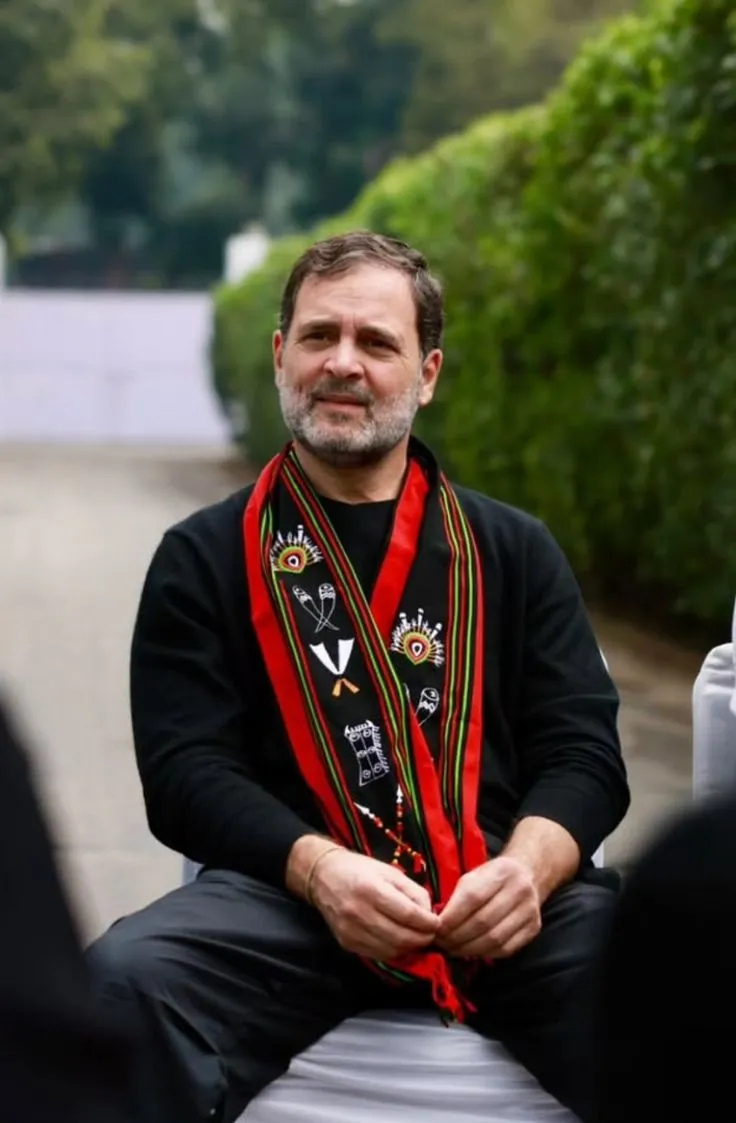
Congress leader and Leader of Opposition in the Lok Sabha Rahul Gandhi has accused authorities and associated elements of targeting student protesters who have been demanding reforms in the education system. After meeting young demonstrators from different states, he alleged that students were beaten, threatened and subjected to intimidation, including the sending of goons to their homes. He specifically claimed that a 15-year-old girl was forced to apologise. Gandhi described these actions as unacceptable and framed repeated examination leaks as a betrayal of India’s future.
The Core Allegations
Speaking after interactions with the protesting students, Gandhi stated that raising concerns about a failing education system and paper leaks is not a crime. He said innocent students who voiced their worries about their future faced physical action from police as well as pressure from anti-social elements. According to him, goons were sent to the homes of some protesters, and in one instance a 15-year-old girl was compelled to apologise. He called the sequence of pressure, intimidation, forced apology and its acceptance “complete nonsense” that his side would not accept.
The remarks come against the backdrop of sustained student mobilisations that have focused on examination irregularities, including high-profile paper leaks, cancelled tests and the broader stress placed on aspirants and their families.
Context of the Student Protests
Over recent months, groups of students and youth organisations have held demonstrations highlighting what they describe as systemic failures in the conduct of public examinations. Paper leaks in major entrance tests have repeatedly disrupted preparation cycles, forced re-examinations and generated widespread anxiety. Gandhi and other opposition voices have previously cited figures of numerous leaks over the past decade with limited accountability in the form of convictions.
Students have argued that years of hard work can be rendered meaningless overnight when question papers are compromised. Families, many from middle-class and modest backgrounds, invest significant time and resources in coaching and preparation. When leaks occur, the sense of injustice is acute. Protests have therefore combined demands for immediate accountability with calls for structural changes that would restore credibility to the examination process.
Gandhi’s Broader Critique
In his comments, Gandhi linked the alleged intimidation of protesters to a larger failure of the education system. He has repeatedly described the current arrangement as rigged against honest students, pointing to the combination of privatisation pressures, high costs of preparation and recurrent breaches of exam integrity. He has argued that the system extracts large sums from families while failing to guarantee a fair chance at advancement.
By meeting the young protesters and amplifying their accounts of pressure and threats, Gandhi positioned the Congress as firmly supportive of their right to dissent. He maintained that demanding a functional and transparent education system is a legitimate expectation, not an act that should invite beating, home visits by outsiders or forced apologies from minors.
The Question of Response to Dissent
The allegations raise familiar questions about how authorities handle student-led protests. Peaceful demonstration is a recognised form of expression, particularly on issues that directly affect the future of young citizens. When reports emerge of physical force, threats or pressure on families, they risk escalating tensions rather than resolving the underlying grievances.
At the same time, maintaining public order during large or prolonged protests presents practical challenges for law enforcement. Distinguishing between legitimate security measures and excessive or selective pressure is essential if trust is to be preserved. The claim that a 15-year-old was made to apologise under duress, if accurate, would represent a particularly serious overreach given the age of the individual involved.
Education Integrity as a National Priority
Examination leaks are not merely administrative failures; they undermine the principle of merit that underpins competitive selection for higher education and public employment. When leaks become recurrent and convictions remain rare, public confidence erodes. Students who follow the rules feel cheated, while the perception grows that money or connections can override effort.
Addressing the problem requires stronger preventive systems, faster investigation and prosecution of those responsible, and clearer communication with aspirants when disruptions occur. It also requires political willingness to treat the issue as a governance priority rather than a recurring controversy. Gandhi’s intervention seeks to keep the focus on these larger stakes, arguing that the treatment of protesting students cannot be separated from the substance of their demands.
Political Dimensions
As Leader of Opposition, Gandhi’s statements form part of a sustained political critique of the government’s handling of education and youth concerns. The ruling side has in the past defended its record, pointed to new legislation aimed at curbing unfair means in public examinations, and characterised some protests as politically motivated. The exchange reflects the deeper contest over who speaks for India’s students and how systemic problems should be diagnosed and solved.
Regardless of partisan positions, the accounts of pressure on young protesters and the specific claim involving a minor warrant careful scrutiny by relevant authorities. Independent verification of such allegations is necessary if public debate is to rest on facts rather than competing narratives.
Looking Ahead
The student protests over examination integrity and education reform have already forced national attention onto issues that affect millions of families. Gandhi’s latest remarks add a sharper edge by alleging that those raising their voices have faced not only disagreement but intimidation. Whether the claims lead to formal inquiries or further political confrontation, the underlying demand remains the same: an examination system that is fair, secure and worthy of the effort students invest in it.
For a country that relies on education as a primary route to social mobility, repeated breaches of trust carry high costs. Protecting the right of students to protest peacefully while fixing the vulnerabilities that trigger those protests are parallel responsibilities. The coming weeks will show whether the focus stays on constructive reform or remains locked in cycles of accusation and defence. The future of millions of young Indians depends on the answer.
Read more – seuldigital.com