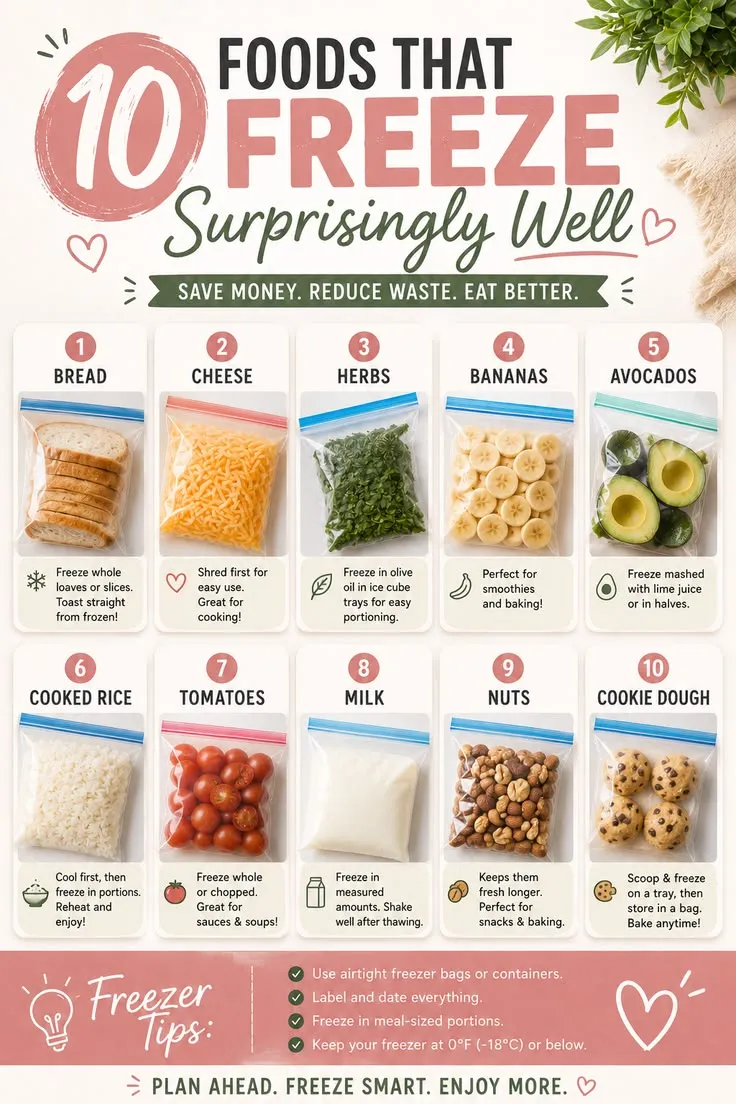
Freezing is one of the most effective ways to preserve food quality, reduce waste, and keep meals ready for later use. When done correctly, it pauses the growth of bacteria and maintains safety for extended periods. However, freezing does not improve the quality of food that is already past its best, nor does it kill all microorganisms. Success depends on temperature control, proper packaging, smart preparation, and safe thawing practices. These guidelines help home cooks freeze food safely while retaining the best possible flavour, texture, and nutritional value.
Maintain the Correct Freezer Temperature
The foundation of safe freezing is a consistent temperature of 0°F (-18°C) or lower. At this temperature, bacterial growth is effectively stopped. Food kept continuously frozen at this level remains safe indefinitely, although quality gradually declines over time. An appliance thermometer placed in the freezer provides a reliable way to monitor conditions. Avoid frequent or prolonged door openings, which allow warm air to enter and raise the internal temperature.
A well-stocked freezer maintains cold temperatures more efficiently than a nearly empty one. During power outages, a full freezer can keep food frozen for longer periods if the door remains closed.
Choose Suitable Packaging
Air exposure is the main cause of freezer burn, which appears as dry, greyish-brown, leathery spots. Freezer burn does not make food unsafe, but it damages texture and flavour. Use packaging designed for freezing: heavy-duty freezer bags, freezer wrap, heavy-duty aluminium foil, or rigid containers marked as freezer-safe.
Remove as much air as possible before sealing. For liquids or semi-liquids, leave a small amount of headspace to allow for expansion. Label every package with the contents and the date. Clear labelling prevents forgotten items from lingering and helps rotate stock so older food is used first.
Prepare Food Properly Before Freezing
Freeze food at peak quality rather than waiting until it is nearing spoilage. Cool cooked dishes completely in the refrigerator before transferring them to the freezer. Placing hot food directly into the freezer raises the temperature of surrounding items and can partially thaw them.
Portion food into practical serving sizes. Freezing large blocks means thawing more than needed and often leads to waste. Flat packages freeze and thaw more quickly and stack efficiently. For items such as berries, chopped vegetables, or individual portions of meat, a brief pre-freeze on a tray prevents clumping so pieces can be separated later.
Most vegetables benefit from blanching before freezing. Brief exposure to boiling water followed by rapid cooling helps preserve colour, texture, and nutrients. Fruits can often be frozen raw, sometimes with a light sugar or syrup pack depending on intended use. Raw meat, poultry, and seafood should be frozen promptly while still fresh, ideally within the recommended refrigerated storage times.
Understand Storage Times for Best Quality
Although frozen food stays safe indefinitely under proper conditions, quality is best within recommended time frames. Ground meats and sausages generally keep good quality for one to two months. Steaks, chops, and roasts last longer, often four to twelve months depending on the cut. Cooked leftovers, casseroles, and soups are typically best within two to three months. Breads, baked goods, and many fruits and vegetables maintain quality for longer periods when well packaged.
These times are guidelines for eating quality rather than safety limits. Regularly reviewing the contents of the freezer and using older items first maximises both safety and enjoyment.
Thaw Food Safely
Safe thawing is as important as proper freezing. The preferred method is thawing in the refrigerator, which keeps food at a safe temperature throughout the process. Plan ahead, as larger items may require a day or more. Food thawed in the refrigerator can be refrozen if necessary, though some quality loss may occur.
For faster thawing, place food in a leak-proof bag and submerge it in cold water, changing the water every thirty minutes. Cook immediately after thawing by this method. Microwave thawing is also acceptable when the food will be cooked right away. Never thaw perishable food at room temperature on the counter, as the outer layers can enter the temperature danger zone while the centre remains frozen.
Special Considerations for Different Foods
Leftovers should be frozen within three to four days of cooking. Soups, stews, and saucy dishes generally freeze well. Cream-based sauces, mayonnaise, and some high-water-content vegetables such as lettuce or cucumber do not freeze successfully because of texture changes. Eggs can be frozen after removal from the shell and light beating; whole eggs in the shell should not be frozen.
Commercially frozen foods should be kept frozen until ready to use and prepared according to package directions. Once thawed, follow the same safety rules that apply to home-frozen items.
Practical Habits for Everyday Success
Develop a routine of cooling, packaging, labelling, and dating food promptly. Keep an inventory list on the freezer door or in a notebook to track what is stored and when it was frozen. Rotate stock so older packages move forward. Clean spills promptly and maintain door seals so the freezer operates efficiently.
When in doubt about the condition of frozen food, rely on appearance, smell, and packaging integrity after thawing. Freezer burn can be trimmed away in many cases, but any signs of spoilage after thawing mean the food should be discarded.
Benefits Beyond Convenience
Proper freezing reduces household food waste, saves money, and supports flexible meal planning. It allows seasonal produce to be enjoyed year-round and enables batch cooking that frees time on busy days. When temperature, packaging, and handling guidelines are followed, frozen food remains a safe and practical resource for every kitchen.
By treating the freezer as an active tool rather than a long-term storage vault, home cooks can preserve both the safety and the quality of their food. Consistent attention to temperature, airtight packaging, prompt freezing of fresh items, and careful thawing delivers reliable results and helps keep meals fresh for longer.
Read more – thewhipp.com