A crane operator from Uttarakhand has drawn attention after sharing details of his work and earnings in Dubai. Balwinder Singh, who has operated cranes since 2005, now earns a monthly salary in the range of 4,000 to 4,500 UAE dirhams, equivalent to roughly Rs 1 lakh to Rs 1.7 lakh depending on exchange rates and specific terms. His account, shared through a content creator’s interview, offers a practical glimpse into one skilled trade that continues to attract Indian workers to the Gulf.
Two Decades Behind the Controls
Singh began operating cranes more than twenty years ago. That long experience forms the foundation of his current role. In the construction and infrastructure sectors of the UAE, employers place significant value on operators who understand load charts, site safety protocols, different crane types and the discipline required for high-risk lifting operations. Years of hands-on work reduce the learning curve on new projects and lower the risk of costly errors or accidents.
His journey reflects a common pattern among skilled Indian workers who build expertise at home or in earlier overseas postings before moving to higher-paying markets. Dubai’s continuous construction activity—ranging from high-rise towers and logistics hubs to infrastructure expansions—creates steady demand for reliable crane operators.
What the Job Pays
According to the details Singh shared, a crane operator in Dubai can expect an average monthly salary of around 4,000–4,500 AED. Converted at prevailing rates, this falls in the broad band of Rs 1 lakh to Rs 1.7 lakh. He emphasised that these figures represent an average range rather than a guaranteed package for every operator. Actual take-home pay depends on experience, the type of crane operated, the employer, working hours, overtime provisions and whether accommodation or other allowances are provided separately.
Industry salary data for the UAE shows variation. Entry-level or less experienced operators may earn less, while those with specialised certifications, tower-crane expertise or long track records can command higher figures. Singh’s earnings sit comfortably within the mid-to-upper range reported for experienced hands.
Licence and Entry Requirements
One of the clearer points from Singh’s account concerns licensing. He stated that becoming a crane operator in Dubai does not require a lengthy specialised academic course. What is essential is a valid crane operator’s licence. The cost of obtaining that licence typically falls between 6,000 and 7,000 AED and is usually borne by the individual rather than the employer.
Singh arranged both his visa and his licence independently. This route demands upfront investment and careful navigation of documentation, medical checks and regulatory approvals. Workers who rely on recruitment agents sometimes face additional fees or less transparent arrangements. Those who manage the process themselves retain greater control but also assume full responsibility for compliance and costs.
Nature of the Work
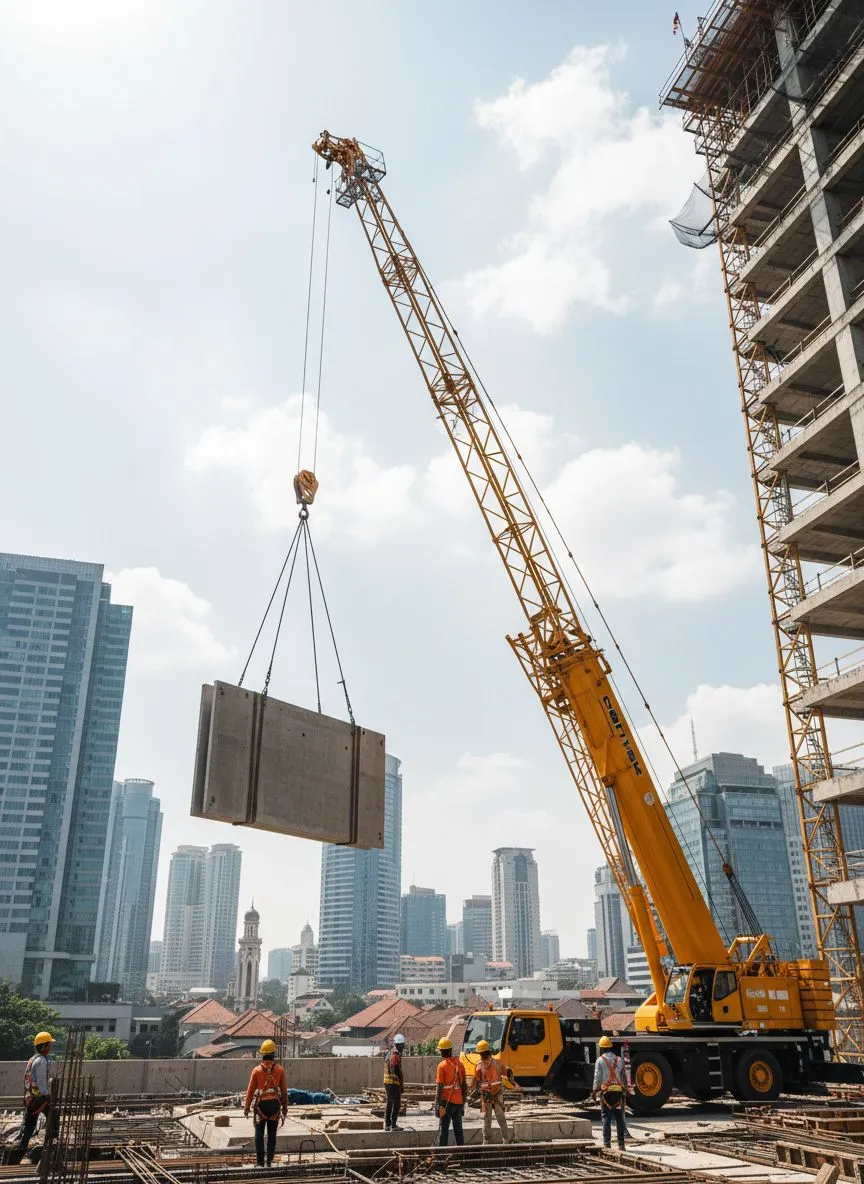
Crane operation is skilled, high-responsibility work. Operators lift and position heavy materials on construction sites, often at significant heights and under time pressure. Safety protocols are strict because errors can endanger lives and damage expensive equipment or structures. The job requires concentration, spatial awareness, mechanical understanding and the ability to work as part of a coordinated site team.
Hours can be long, and conditions on active construction sites involve heat, noise and physical demands even though the operator remains in a cabin. For many workers, the financial return justifies these challenges, especially when compared with similar roles in India. The ability to save a substantial portion of earnings and support family members back home remains a primary motivation.
Message for People Back Home
After describing his work and earnings, Singh encouraged people in Uttarakhand and elsewhere in India to consider opportunities in Dubai. His comments reflect a broader pattern: skilled trades that combine technical competence with safety certification often open better-paid pathways than unskilled labour. Crane operation, scaffolding, welding, heavy-equipment driving and related fields continue to feature in Gulf demand lists.
At the same time, realistic expectations matter. Not every operator will immediately reach the higher end of the salary range. Visa processes, licence costs, living expenses and the physical nature of the work all form part of the calculation. Those who succeed typically bring prior experience, valid certifications and a willingness to adapt to local regulations and site discipline.
Broader Context of Gulf Opportunities
Dubai and the wider UAE have long attracted Indian workers across skill levels. Large-scale construction, logistics, ports and energy projects sustain demand for plant operators. While media attention sometimes focuses on extreme hardship cases or recruitment fraud, many workers build stable careers, remit money regularly and return with savings or upgraded skills.
Singh’s account belongs to the latter category. More than two decades in the profession, an independently arranged visa and licence, and earnings above Rs 1 lakh a month illustrate what sustained skill development combined with overseas demand can produce. His story does not claim that every crane operator achieves identical results; it simply documents one experienced worker’s reality.
Practical Considerations for Aspirants
Anyone considering a similar path would need to weigh several factors. Obtaining a recognised crane operator licence involves cost and examination. Securing a legitimate employment visa requires either a direct company offer or a carefully vetted recruitment channel. Living costs in Dubai, including food and any expenses not covered by the employer, affect net savings. The work itself remains physically and mentally demanding.
Experience remains the strongest differentiator. Operators who already understand multiple crane types, safety systems and site coordination arrive with an advantage. Those starting from limited backgrounds may need longer to reach the salary levels Singh described.
A Skilled Trade in Demand
Balwinder Singh’s experience highlights a straightforward truth: certain technical trades continue to command solid remuneration in the Gulf when paired with proven competence and proper documentation. Operating cranes since 2005 gave him the foundation; moving to Dubai allowed that foundation to translate into higher monthly earnings. His willingness to share practical details—salary range, licence cost, independent visa arrangement—provides useful reference points for others evaluating similar opportunities.
For workers from Uttarakhand and across India who possess or can acquire the relevant skills, the crane operator role in Dubai remains one viable route to improved income. Success depends on preparation, legitimate processes and the ability to meet the professional standards the job demands. Singh’s account shows what is possible when those elements align.
Read more – Instantdua.com