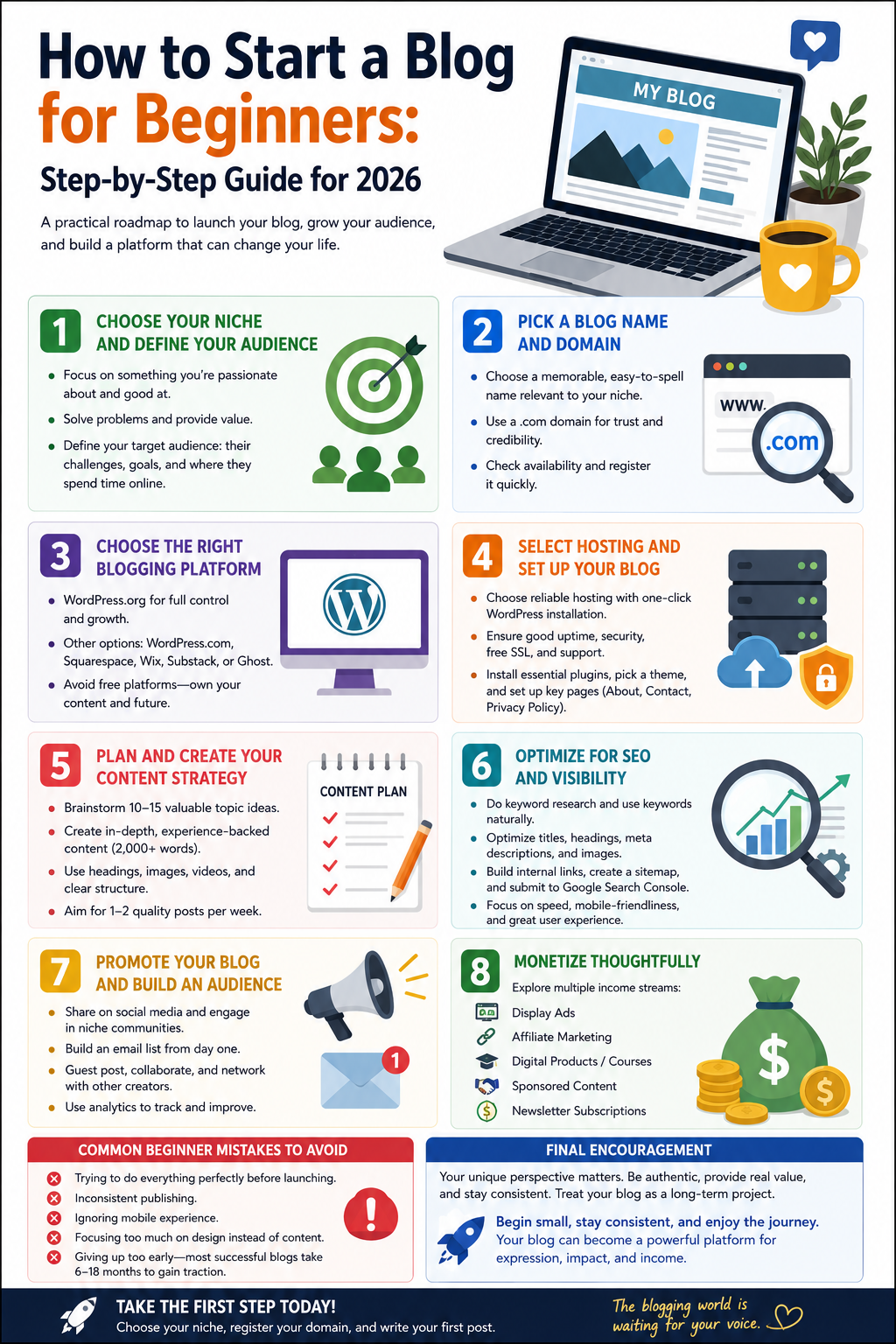
Starting a blog in 2026 remains one of the most accessible and rewarding ways to share your knowledge, build an audience, and even create a sustainable income stream. Despite advances in AI and social media, blogs continue to thrive as trusted sources of in-depth information, personal stories, and expert advice. Whether you want to document your journey, establish authority in your field, or monetize your passion, this step-by-step guide will walk beginners through the process with clarity and practicality.
Step 1: Choose Your Niche and Define Your Audience
The foundation of a successful blog is a focused niche. In 2026, broad topics face heavy competition, while specific niches allow you to stand out and attract loyal readers. Ask yourself: What are you genuinely passionate about? What problems can you solve? What unique experiences or expertise do you offer?
Popular niches in 2026 include personal finance for millennials, sustainable living, AI productivity tools, mental health for working professionals, and niche hobbies like urban gardening or slow travel. Avoid choosing something only for money — long-term success comes from sustained interest.
Once your niche is set, define your target audience. Are they beginners, professionals, parents, or students? Understanding their pain points, language, and preferred content formats helps shape your voice and topics. Create a simple reader persona: age, challenges, goals, and where they spend time online. This clarity guides every future decision.
Step 2: Pick a Blog Name and Domain
Your blog name should be memorable, easy to spell, and relevant to your niche. Combine keywords with personal touches — for example, “MindfulTechMama” or “BudgetNomadDiaries.” Use name generators for inspiration, then check availability on domain registrars.
Aim for a .com domain if possible, as it remains the most trusted extension. Short, brandable names work best. Once chosen, register it quickly to avoid disappointment. Many hosting providers offer free or discounted domains in the first year.
Step 3: Choose the Right Blogging Platform
In 2026, WordPress.org (self-hosted) remains the top recommendation for serious beginners who want full control and growth potential. It powers over 40% of websites and offers unmatched flexibility through themes and plugins.
For absolute beginners who want simplicity:
- WordPress.com — Easier managed version with less technical setup.
- Squarespace or Wix — Beautiful drag-and-drop designs ideal for visual niches.
- Substack or Ghost — Excellent for newsletter-style blogs focused on writing and subscriptions.
While free platforms like Medium or Blogger exist, self-hosted WordPress gives you ownership of your content and better monetization options long-term. Avoid locking yourself into platforms with limited export features.
Step 4: Select Hosting and Set Up Your Blog
Reliable hosting ensures your blog loads quickly and stays online. Look for providers offering one-click WordPress installation, good uptime (99.9%+), strong security, and beginner-friendly support. Many include free SSL certificates, essential for trust and SEO.
After purchasing hosting:
- Install WordPress.
- Choose a clean, responsive theme (many free options like Astra or GeneratePress work well).
- Install essential plugins: Yoast SEO or Rank Math for optimization, a security plugin, a caching plugin for speed, and an SEO-friendly contact form.
Spend time customizing your site: create an About page, contact page, privacy policy, and a simple logo. A clean, fast-loading design with good mobile experience is crucial in 2026.
Step 5: Plan and Create Your Content Strategy
Successful blogs publish consistently with purpose. Start with 10–15 article ideas focused on solving reader problems. In 2026, high-quality, experience-backed, long-form content performs best. AI can help with outlines and research, but authentic voice and personal insights remain irreplaceable.
Best practices for 2026 content:
- Write comprehensive guides (2,000+ words) that provide real value.
- Use clear headings, bullet points, and images for readability.
- Optimize for both humans and AI search tools with natural language and structured data.
- Include original images, infographics, or short videos.
Aim for 1–2 posts per week initially. Create an editorial calendar to stay organized. Focus on evergreen topics that continue attracting readers months or years later.

Step 6: Optimize for SEO and Visibility
Search engines and AI tools remain major traffic sources. Use keyword research tools to find topics with decent search volume and lower competition. Place primary keywords naturally in titles, headings, and content.
Build internal links between posts, create a sitemap, and submit your site to Google Search Console. In 2026, user experience signals like page speed, mobile-friendliness, and time on page matter significantly.
Step 7: Promote Your Blog and Build an Audience
Publishing alone is not enough. Share your posts on relevant social media platforms, but focus more on building an email list from day one. Email remains one of the most reliable ownership channels.
Engage in communities related to your niche, guest post on established blogs, and collaborate with other creators. Consistency in promotion builds momentum over time. Track what works using simple analytics tools.
Step 8: Monetize Thoughtfully
Once you have consistent traffic and valuable content, explore monetization:
- Display advertising (Google AdSense or premium networks).
- Affiliate marketing.
- Digital products or courses.
- Sponsored content.
- Newsletter subscriptions.
Diversify income streams rather than relying on one method. Focus first on building trust and audience — monetization follows naturally.
Common Beginner Mistakes to Avoid
- Trying to do everything perfectly before launching.
- Inconsistent publishing.
- Ignoring mobile experience.
- Focusing too much on design instead of content.
- Giving up too early — most successful blogs take 6–18 months to gain traction.
Final Encouragement
Starting a blog in 2026 is more accessible than ever, yet it still rewards patience, authenticity, and value creation. Your unique perspective matters in a world full of generic AI-generated content. Treat your blog as a long-term project rather than a quick win.
Begin small, stay consistent, and enjoy the process of learning and connecting with readers. Thousands of ordinary people have built meaningful businesses and communities through blogging. With dedication and the right approach, your blog can become a powerful platform for expression, impact, and income.
Take the first step today — choose your niche, register your domain, and write your first post. The blogging world is waiting for your voice.
Read more –releaseprcore.com