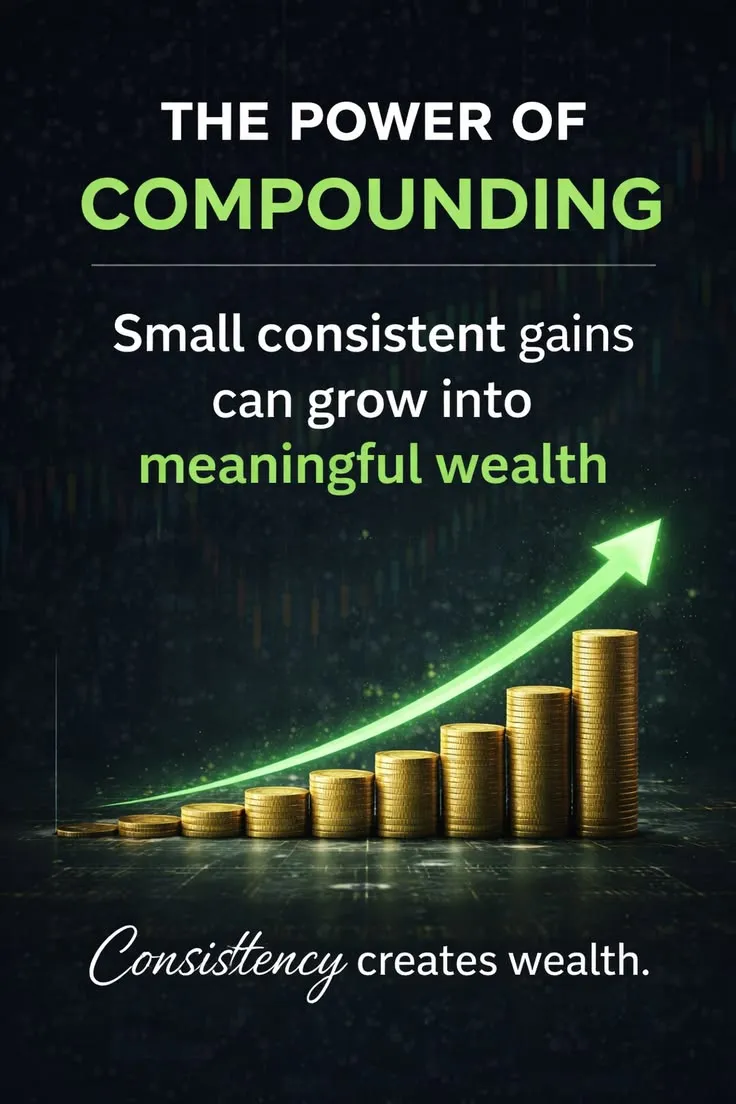
Compounding is one of the most powerful forces in personal finance. It describes the process by which earnings on an investment generate their own earnings over time. Instead of growing only on the original amount invested, money grows on both the principal and the accumulated returns. This creates a snowball effect that can turn modest, regular contributions into substantial sums when given enough time. Understanding how compounding works helps explain why starting early and staying consistent often matter more than investing large amounts later in life.
What Compounding Actually Means
Simple interest is calculated only on the original principal. Compound interest, by contrast, is calculated on the principal plus any interest or returns already earned. Each period, the base on which returns are calculated becomes larger. The longer this process continues without interruption, the more pronounced the growth becomes.
In practical terms, when investment returns or interest are left in the account and reinvested, they begin contributing to future gains. Over many years, a significant portion of the final balance often comes from earnings on earlier earnings rather than from the money originally contributed.
The Mathematics Behind the Growth
Here, A represents the final amount, P is the principal (starting amount), r is the annual interest or expected return rate expressed as a decimal, n is the number of times interest is compounded per year, and t is the number of years.
Even without using the formula daily, the principle is clear: higher frequency of compounding, higher rates of return, larger principal, and especially longer time periods all increase the final result. Time exerts the strongest influence because the exponential nature of the calculation rewards duration.
A related mental shortcut is the Rule of 72. Dividing 72 by the expected annual rate of return gives an approximate number of years required for money to double. At 8 percent, for example, money roughly doubles in nine years. At 6 percent, it takes about twelve years. This rule offers a quick way to grasp the impact of different rates over time.
Why Small Amounts Can Grow Large
Many people assume that only large investments produce meaningful results. Compounding demonstrates otherwise. Consistent contributions of relatively small sums, left to grow for decades, can outpace larger contributions made for shorter periods.
Consider two individuals. One begins investing a modest monthly amount in their mid-twenties and continues for several decades. Another waits until their mid-thirties or forties and invests larger monthly sums for fewer years. Because of the extra time the earlier investor’s money spends compounding, the first person frequently ends with a higher balance despite having contributed less overall. The early years allow returns to generate further returns repeatedly, creating a widening gap that becomes difficult to close later.
This pattern appears across savings accounts, retirement funds, and long-term investment portfolios when earnings are reinvested. The key variables are starting as soon as possible, contributing regularly, and allowing the money to remain invested.
The Critical Role of Time
Time is the most important ingredient in compounding. Each additional year multiplies the effect of previous growth. Delaying the start of regular investing by even five or ten years can substantially reduce the final outcome, because those missing early years would have provided the foundation for later compounding.
This reality encourages beginning with whatever amount is feasible rather than waiting until larger sums become available. A smaller contribution started earlier often proves more powerful than a larger contribution started later. The discipline of consistency further strengthens the outcome, as regular additions increase the principal on which future returns can compound.
Practical Ways to Benefit from Compounding
Several habits help capture the advantages of compounding. First, start as early as circumstances allow. Even modest automatic transfers into a savings or investment account begin the process. Second, reinvest earnings whenever possible instead of withdrawing them. Third, maintain consistency through market fluctuations and life changes; interrupting the process reduces the compounding periods available. Fourth, minimize unnecessary fees and taxes that erode returns, because every percentage point retained continues to compound.
Different vehicles offer compounding opportunities. Interest-bearing savings accounts and certificates of deposit provide relatively predictable compounding. Investment accounts, including retirement plans, can compound through reinvested dividends, interest, and capital gains. The specific rate of return varies with the type of investment and market conditions, yet the underlying principle remains the same: earnings generating further earnings over time.
Realistic Expectations and Important Considerations
Compounding is powerful but not magical. It requires time, realistic return assumptions, and the discipline to leave money invested. Markets fluctuate, and past rates of return do not guarantee future results. Inflation reduces purchasing power, so the real growth of money depends on returns that exceed inflation over the long term. Fees, taxes, and withdrawals all affect the final amount.
Understanding these factors helps set appropriate expectations. Compounding works best as a long-term strategy rather than a short-term solution. It rewards patience and consistency more than timing or large one-time sums.
Building Wealth Gradually
The most encouraging aspect of compounding is its accessibility. It does not require substantial starting capital or specialized knowledge. Ordinary people who begin early, contribute what they can afford on a regular schedule, and allow their money to remain invested can achieve meaningful growth over the course of a working lifetime.
The process turns time into an ally. Each year of compounding builds on all the years that came before it. Small investments, given enough time and left undisturbed, have repeatedly demonstrated the capacity to grow into sums far larger than the total contributions made. This is the essential lesson of compounding: consistent action over long periods can produce results that feel out of proportion to the effort required in any single year.
By grasping how compounding works and applying it through early, regular, and patient investing, individuals give their money the greatest opportunity to grow. The earlier the process begins, the more powerful the outcome tends to become.
Read more – casinopeers.com