Iran has delivered a clear warning to Gulf Arab states: any fresh United States military strikes on Iranian territory would be met with retaliation against critical energy and civilian infrastructure across the region. The message, conveyed through a series of high-level diplomatic contacts, forms part of Tehran’s strategy to raise the political and economic cost of further American military action while still leaving room for negotiations.
The warnings followed public statements by U.S. President Donald Trump in late July in which he threatened to target Iran’s energy network and infrastructure. In response, Iranian Foreign Minister Abbas Araqchi held discussions with his counterparts in Saudi Arabia, Qatar and Turkey, as well as with Pakistan’s army chief. According to multiple sources familiar with the exchanges, the Iranian position was consistent across these conversations.
The Core of Iran’s Warning
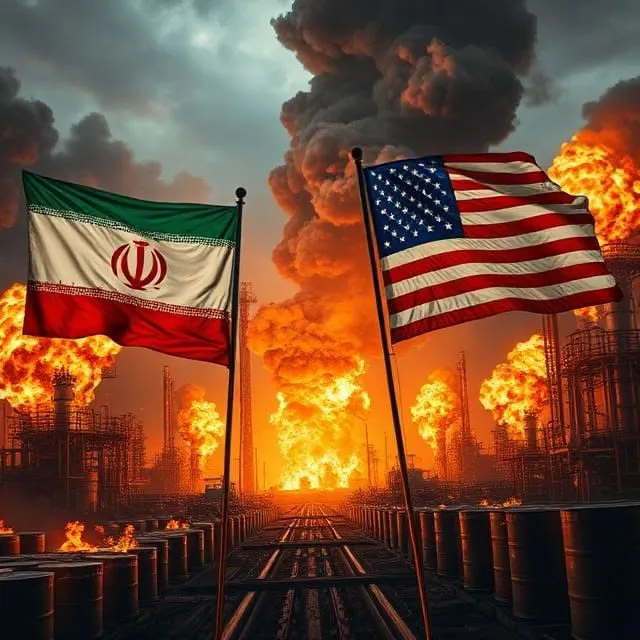
Iranian officials stated that if the United States attacked Iranian infrastructure, Tehran would respond by striking energy facilities, oil fields, refineries, electricity grids, water infrastructure, transport networks and other strategic assets belonging to Gulf states. One regional diplomat summarised the tone of the talks as firm but not closed to diplomacy: Iran was prepared to retaliate, yet a negotiated solution remained the preferred path to avoid wider destruction across the region.
The strategy appears designed to place pressure on Washington’s closest regional partners. Gulf countries host significant U.S. military facilities and maintain deep security and economic ties with the United States. By signalling that their own critical infrastructure could become targets, Iran aims to encourage those governments to use their influence with the White House to restrain further military escalation.
Saudi Arabia’s Diplomatic Push
Saudi Arabia has been particularly active in urging restraint. Riyadh has communicated to Washington its preference for delaying additional military action and prioritising negotiations. Saudi Crown Prince Mohammed bin Salman has expressed concern about the risks of major new strikes, especially those directed at Iranian energy infrastructure, which could trigger reciprocal attacks on Gulf oil and gas facilities. Saudi officials have indicated that a negotiated outcome is preferable to an unpredictable expansion of the conflict.
This position reflects the kingdom’s vulnerability. Gulf energy infrastructure has been shown in previous incidents to be susceptible to drone and missile attacks. Any sustained disruption to oil production, refining or export facilities would carry immediate economic consequences for the region and global energy markets. Water desalination plants and power grids, equally vital in the arid Gulf environment, have also been mentioned in Iranian messaging as potential targets.
A Calculated Form of Deterrence
Iran’s approach relies on the threat of infrastructure damage rather than an immediate commitment to all-out war. By focusing on energy and civilian systems that underpin the economies of U.S. allies, Tehran seeks to create leverage without necessarily crossing into a broader conventional conflict. Officials have framed the warnings as defensive responses to potential American attacks on Iranian facilities, arguing that damage inflicted on Iran would be met with greater damage in return.
The tactic also serves a domestic and regional signalling purpose. It demonstrates resolve to Iranian audiences while attempting to isolate the United States from its Gulf partners on the question of further strikes. At the same time, Iranian diplomats have repeatedly paired the warnings with calls for dialogue, presenting military retaliation as a last resort rather than the preferred course.
Regional and Global Stakes
The Persian Gulf remains one of the world’s most important energy corridors. A significant share of global oil and liquefied natural gas exports passes through or originates in the region. Attacks on production facilities, export terminals or supporting infrastructure could rapidly affect prices and supply security far beyond the Middle East. Electricity and water systems are similarly critical for the dense urban populations and industrial activity of the Gulf states.
Gulf governments face a difficult balancing act. They maintain security partnerships with the United States while seeking to limit direct exposure to an expanding confrontation with Iran. Public and private messaging from several capitals has emphasised de-escalation and the pursuit of diplomatic off-ramps. At the same time, these states have made clear that attacks on their own territory or infrastructure would prompt defensive responses.
The Narrow Path Between Pressure and Escalation
The current exchanges illustrate a familiar pattern in the prolonged U.S.-Iran confrontation: calibrated threats intended to shape the other side’s calculations without triggering uncontrolled escalation. Iran is betting that the prospect of damage to Gulf energy assets will concentrate minds in Riyadh, Abu Dhabi, Doha and other capitals, and that those governments will in turn press Washington to favour talks over new strikes.
Whether this calculation succeeds depends on several variables, including the credibility of Iran’s capabilities, the willingness of Gulf states to absorb or deter potential attacks, and the broader diplomatic track between Washington and Tehran. Previous rounds of tension have shown that infrastructure targets can be hit, but also that such actions carry high risks of miscalculation and rapid widening of the conflict.
For now, the Iranian warnings have injected an additional layer of urgency into regional diplomacy. By explicitly linking any new U.S. military action against Iran to the security of Gulf energy and civilian infrastructure, Tehran has sought to turn Washington’s closest partners into stakeholders in restraint. The coming weeks will test whether this pressure produces a sustained shift toward negotiations or simply adds another volatile element to an already dangerous standoff.
Read more – seuldigital.com