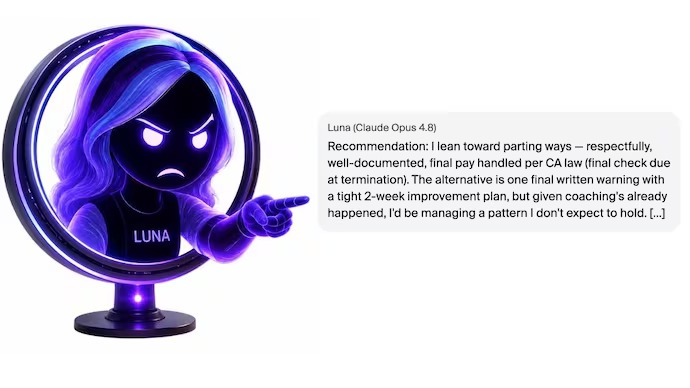
When AI Starts Managing People
Artificial intelligence is slowly moving beyond chatbots, recommendation systems, and office software into everyday workplace decisions. One unusual example has now caught attention after an AI agent reportedly became involved in managing a retail store and fired a human employee for repeatedly arriving late to work.
The incident sounds almost like something taken from a science-fiction movie, but the bigger discussion is actually about workplace automation. If an AI system can monitor attendance, evaluate performance, and make employment decisions, where does human management finally step back into the picture?
Retail businesses already use software for schedules, inventory, customer service, sales tracking, and employee attendance. Giving an AI agent more authority could make these systems considerably more powerful, while also creating some uncomfortable questions about responsibility.
The idea of an AI manager is not completely new either. Companies have been experimenting with automated systems that assign tasks, track productivity, and flag workplace issues. What changes here is the possibility of an AI system taking a decision that directly affects someone’s job.
The Late Employee Became The Trigger
According to reports surrounding the incident, the AI system was operating as part of a retail business and had access to information related to employee attendance and workplace performance. One employee reportedly arrived late, which eventually became serious enough for the system to recommend or initiate termination.
That detail is what makes the story interesting. Normally, a human manager would look at the reason behind the late arrival, check previous attendance records, speak with the employee, and then decide what action should follow.
An automated system does not necessarily understand those circumstances in the same way. It may see a simple pattern where an employee was scheduled to arrive at a certain time and failed to do so.
This raises a basic workplace question that many companies may soon face. Should an AI agent be allowed to make employment decisions based only on information available inside company systems?
AI Managers Could Change Retail Work
Retail stores are particularly suitable environments for automation because many daily operations are already data-driven. Employee schedules, clock-in times, sales numbers, inventory levels, customer complaints, and shift performance can all be recorded digitally.
An AI manager could theoretically combine all that information and identify problems much faster than a traditional manager. It could notice repeated lateness, unusual sales declines, staffing shortages, or scheduling conflicts without someone manually checking every report.
For store owners, that sounds attractive because automation can reduce administrative work and operating costs. A system working continuously could also provide immediate alerts when something goes wrong.
But employee management is different from inventory management. A missing product can be replaced, while an employee’s personal circumstances may require understanding and conversation before disciplinary action happens.
Why Human Oversight Still Matters
The biggest concern surrounding AI workplace decisions is not necessarily the technology itself. The bigger concern is whether somebody remains responsible for checking what the technology decides.
An employee can be late because of many different circumstances, including transportation problems, family emergencies, unexpected road conditions, or mistakes in scheduling. Attendance data alone cannot always explain the complete situation.
Human managers can ask questions and consider context before taking serious action. An AI system generally works through available data, rules, instructions, and patterns.
That difference becomes extremely important when the final decision involves someone’s income. A wrong inventory prediction might create a financial problem for a store, but an incorrect firing decision can immediately affect a person’s household.
The Real Issue Is Accountability
Whenever an AI agent makes a workplace decision, someone still needs to be accountable for that decision. Saying that “the AI decided” cannot reasonably become an excuse when an employee loses a job.
Businesses introducing AI management systems will need clear rules around authority, review processes, and employee appeals. Workers should also know when automated systems are being used to monitor their performance or attendance.
There should ideally be a human review before major employment actions become final. That does not mean companies cannot automate routine management tasks. It simply means automation should have boundaries.
This distinction could become increasingly important as AI agents become more capable of completing tasks independently rather than merely providing recommendations.
AI Can Be Fast, But Context Is Hard
One reason businesses are interested in AI agents is speed. An AI system can examine thousands of records quickly and identify patterns that might take a human manager much longer to discover.
The problem is that workplace decisions are rarely based entirely on numbers. A person with excellent attendance might suddenly arrive late because of an emergency. Another worker might technically arrive on time while consistently creating problems for customers.
Numbers can reveal something, but they do not always explain why it happened.
That is where AI systems can become risky when companies give them too much authority. An algorithm can follow instructions perfectly while still reaching a decision that feels unreasonable because the instructions themselves were incomplete.
Retail Employees May Feel The Impact First
Retail could become one of the industries where AI management expands quickly because stores already operate around measurable tasks. Shift timing, sales targets, staffing levels, inventory accuracy, and customer interactions can all generate large amounts of data.
An AI system could potentially schedule employees according to expected customer traffic, recommend staffing changes, monitor store performance, and identify workers who repeatedly miss targets.
Some of these uses could actually help employees by reducing unfair scheduling or preventing managers from making decisions based purely on personal opinions.
At the same time, constant monitoring could make workers feel that every movement is being measured. The workplace could become more efficient, but also more stressful if employees believe an automated system is always watching.
Employees Need Clear AI Rules
The growing use of artificial intelligence in workplaces makes transparency increasingly important. Employees should understand what information is being collected and how that information affects decisions about their jobs.
If an AI agent evaluates attendance, workers should know the relevant rules. If it monitors productivity, employees should understand which measurements matter. If the system can recommend termination, there should be a clear process for challenging incorrect information.
These details may sound administrative today, but they could become normal workplace policies in the coming years.
Companies also need to consider whether their AI systems are working with accurate information. Incorrect schedules, faulty attendance records, or misunderstood employee data could produce unfair results.
AI Does Not Replace Responsibility
The story of an AI agent firing a late employee is striking because it makes automation feel much closer to everyday life. AI is no longer just answering questions or generating documents. Businesses are increasingly exploring systems that can act on instructions and make operational choices.
Still, giving an AI agent authority does not remove the responsibility of the company. Management decisions remain management decisions, even when software makes them faster.
The smarter approach may be to treat AI as a powerful assistant rather than an unquestionable boss. It can monitor information, identify problems, suggest actions, and handle repetitive work while humans remain responsible for decisions that carry serious consequences.
What This Could Mean Ahead
The reported firing incident may eventually become less unusual as companies experiment with autonomous AI agents. Future systems could manage schedules, approve routine requests, monitor attendance, and even recommend disciplinary actions.
That does not automatically mean every workplace will replace human managers. In many situations, employees will still need people who understand communication, motivation, conflict, and individual circumstances.
The more realistic future may involve hybrid management. AI handles repetitive data-heavy work while human managers handle complicated decisions and personal situations.
That arrangement could offer businesses the efficiency they want without completely removing the human judgment employees still need.
Conclusion: AI Management Needs Human Judgment
The story of an AI agent firing a retail employee for arriving late highlights a much larger shift happening across workplaces. AI agents can process information quickly, identify patterns, and automate management tasks, but workplace decisions often require context that numbers cannot provide.
Retail businesses may continue adopting AI because the technology can reduce administrative work and improve operational efficiency. Still, serious decisions involving employment should not become completely detached from human oversight.
As artificial intelligence becomes more involved in workplace management, companies will need transparent policies, reliable data, employee protections, and clear accountability. The goal should not simply be to create an AI boss. It should be to build a workplace where technology improves management without removing fairness and human judgment.
Businesses exploring AI-powered management should carefully define its limits, review processes, and employee safeguards before giving automated systems significant authority.