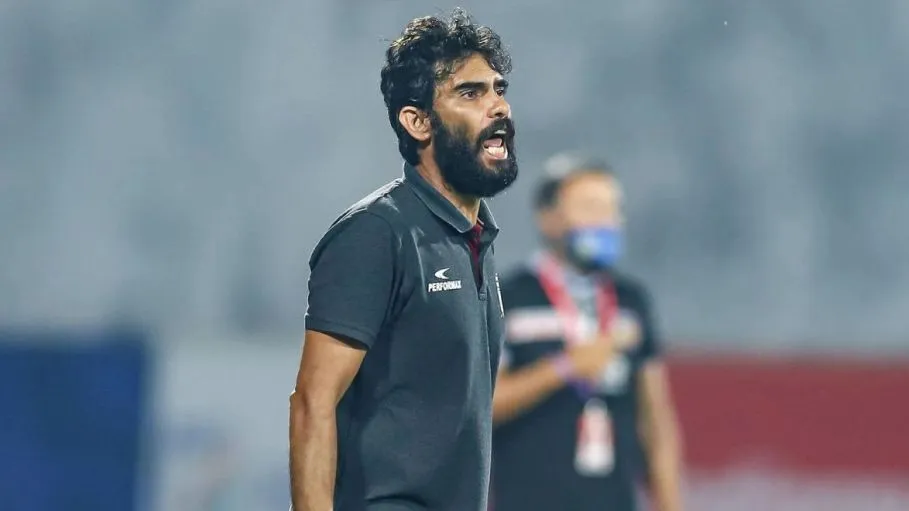
For all the excitement that surrounded Brazil’s visit to Kolkata, India head coach Khalid Jamil knew the real value of the occasion would be measured after the final whistle. The 4-0 defeat at the Salt Lake Stadium was emphatic on the scoreboard, yet Jamil’s post-match assessment focused less on the gulf in quality and more on the mistakes, lapses in concentration and moments of belief that decided the contest. He refused to single out individuals, defended his goalkeeper, and insisted that the experience itself contained lessons his players must absorb.
A Result That Exposed Familiar Weaknesses
Brazil, ranked among the world’s elite and managed by Carlo Ancelotti, scored through Estevão, Pedro and Samuel Lino, who found the net twice. India managed to keep the visitors at bay for the opening half-hour and even produced passages of purposeful build-up play. Once the first goal went in, however, the pattern shifted. Soft goals and individual errors allowed Brazil to take control, and the scoreline reflected the clinical way the South Americans punished every mistake.
Jamil did not attempt to soften the outcome. “I think two or three were soft goals, individual errors. Many mistakes,” he said. He acknowledged that concentration had dropped at key moments and that good teams capitalise ruthlessly when focus wavers. Against opposition of Brazil’s standard, one lapse is often enough. India discovered that reality in real time.
Defence of Gurpreet Singh Sandhu
Much of the immediate attention after the match settled on goalkeeper and captain Gurpreet Singh Sandhu. Errors contributed to Brazil’s first two goals, and Jamil replaced him at half-time with Prabsukhan Singh Gill. Public criticism followed quickly. Jamil’s response was firm and consistent.
He described Gurpreet as one of the best goalkeepers India has and cautioned against judging him on the basis of one or two matches. “You cannot blame Gurpreet,” he said. “The defenders also didn’t close down. So, overall, everybody’s mistake.” The coach’s stance was clear: the goals resulted from collective failures in positioning, closing down and concentration rather than the isolated fault of the man between the posts. He indicated that Gurpreet would remain part of the group and that the next match would offer another opportunity.
The defence of the captain carried weight. Gurpreet has been a long-serving and reliable presence for the national team. By framing the errors as shared rather than personal, Jamil protected both the player’s confidence and the principle that responsibility in such matches is distributed across the side.
Substitutes and the Question of Belief
Jamil was more critical of the players who entered the game from the bench. India made numerous changes, giving opportunities across the squad. The coach felt too many of those who came on failed to seize the moment. “Maybe they didn’t believe in themselves,” he observed. He stressed that players must be ready to capitalise when given the chance; otherwise further opportunities may not arrive.
The comment pointed to a deeper issue that surfaces when lower-ranked teams face elite opposition. Technical and tactical gaps are expected. What can be controlled is mentality and readiness. Jamil’s message to the squad was that belief and preparation must remain high even when the scoreline and the reputation of the opponent create pressure.
Early Promise and the Value of the Experience
Despite the final margin, Jamil found elements worth retaining. He liked the early build-up play, the movement and the willingness to engage rather than sit deep. India did not simply defend in numbers from the first whistle. That approach, he suggested, showed what the team is capable of when concentration holds. The problem was sustaining it once Brazil found the breakthrough.
He also emphasised the broader benefit of facing such opposition. Matches against teams of Brazil’s quality cannot be fully replicated in training or against more familiar rivals. The speed of thought, the precision of movement and the punishment of small errors provide a form of education that only elite fixtures deliver. “The more we play, the better,” Jamil said, looking ahead to the next challenge.
Looking Toward Uruguay and Beyond
India had little time to dwell on the result. Another high-profile friendly, against Uruguay, was scheduled soon afterward at the same venue. Jamil’s immediate task is to correct the defensive lapses while preserving the positive aspects of the team’s approach. The Brazil match offered a clear diagnostic: individual errors and momentary losses of focus remain costly, yet the willingness to play with intent against superior opposition is a foundation that can be built upon.
For Indian football the evening carried symbolic weight. Hosting Brazil in Kolkata generated genuine excitement and gave a generation of players a direct experience of the highest level. The scoreline was heavy, but the coach’s refusal to hide from the mistakes, his defence of his captain, and his insistence on collective responsibility set a tone of realism mixed with forward-looking resolve.
A Hard Night with Clear Takeaways
Khalid Jamil’s assessment after the 0-4 defeat avoided both excuses and exaggerated optimism. Mistakes hurt India. Concentration dropped at decisive moments. Some players who entered the game struggled to impose themselves. At the same time, the early phases showed competitive organisation, and the occasion itself supplied experience that no domestic fixture can match.
The result will fade in time. The lessons—about focus, about shared responsibility, about the mental demands of facing elite teams—are what Jamil wants his players to carry forward. In that sense the evening in Kolkata was less a full stop than a demanding chapter in India’s ongoing football education.
Read more – carandbikejunction.com