Pakistan Prime Minister Shehbaz Sharif used his address at the United Nations General Assembly to advance Islamabad’s account of the 2025 military confrontation with India. In the speech, he presented Pakistan’s actions during the episode as a success and credited external intervention for preventing wider escalation. As he spoke, cameras captured an Indian diplomat’s visible reaction—laughter that quickly spread across social media and news platforms—turning a routine diplomatic moment into a widely discussed visual exchange.
Background: Operation Sindoor and the Pahalgam Attack
The events Sharif referenced began with a terrorist attack on April 22, 2025, in Pahalgam, Jammu and Kashmir. Twenty-six civilians were killed in the assault, which was claimed by The Resistance Front, widely regarded as a cover for the Pakistan-based Lashkar-e-Taiba. The attack stood out for its brutality and the targeting of tourists.
India responded on May 7, 2025, with Operation Sindoor. The operation involved precision strikes on terrorist infrastructure located in Pakistan and Pakistan-occupied Kashmir. New Delhi described the action as measured, non-escalatory and focused specifically on dismantling terror networks and incapacitating militants who could be used for further cross-border attacks. India has consistently maintained that the operation achieved its limited objectives and that subsequent military exchanges ended after Pakistan’s side sought a cessation of fighting.
Sharif’s Narrative at the UNGA
In his General Assembly address, Sharif revisited the 2025 confrontation. He framed Pakistan’s military response in positive terms and suggested that the episode demonstrated resolve. He also thanked US President Donald Trump for what he called a “timely intervention” at a critical juncture, asserting that the intervention helped avert a more dangerous escalation between the two nuclear-armed neighbours. Sharif linked lasting peace in South Asia to progress on the Kashmir issue and touched on other bilateral points, including the Indus Waters Treaty.
The speech followed a familiar pattern in which Pakistani leaders use the UN platform to highlight their version of events, criticise Indian policies, and internationalise the Kashmir dispute. India has long rejected third-party mediation claims and insists that outstanding issues must be addressed bilaterally, with an end to cross-border terrorism as a prerequisite for meaningful engagement.
The Viral Reaction
While Sharif spoke of Pakistan’s claimed success, the camera focused on the Indian delegation. Diplomat R. Srinivas was seen laughing. The unscripted reaction, captured under the bright lights of the General Assembly hall, circulated rapidly. Clips appeared across platforms, with viewers interpreting the laughter as a spontaneous dismissal of the victory narrative being advanced from the podium.
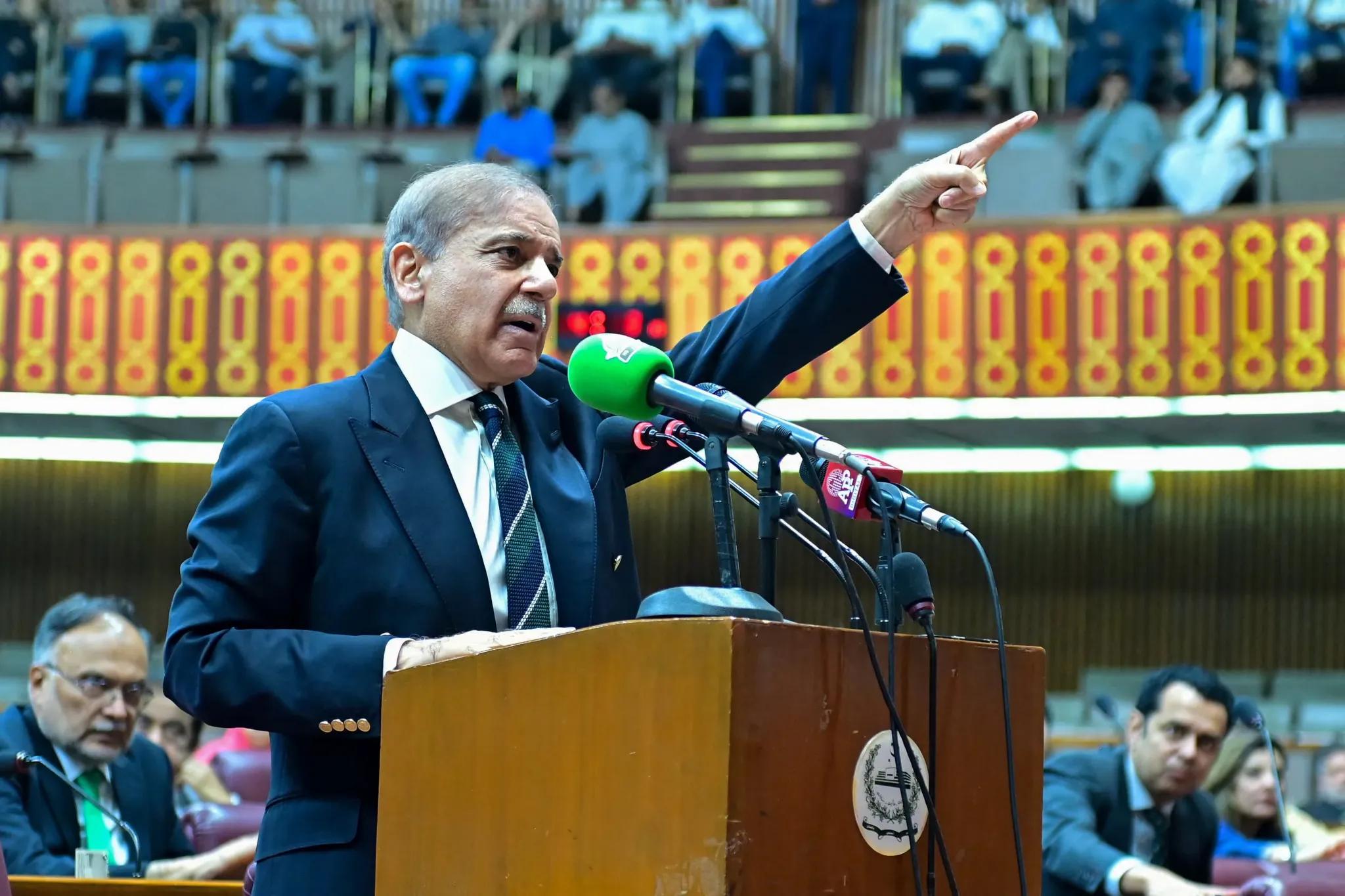
In diplomacy, facial expressions rarely remain private when cameras are rolling. The moment provided a visual counterpoint to the formal speech and became a talking point precisely because it required no translation. For many observers, it crystallised the gap between the two countries’ accounts of the same events.
India’s Formal Response
India exercised its Right of Reply. First Secretary Petal Gahlot delivered a pointed rebuttal. She rejected what she described as falsehoods and hypocrisy, reiterated India’s position on terrorism, and defended the country’s right to protect itself against cross-border attacks. The response referenced the Pahalgam killings, the nature of Operation Sindoor, and Pakistan’s record on terrorism. It also pushed back against attempts to portray the 2025 confrontation as anything other than a response to terror infrastructure.
Indian statements have previously noted that Pakistan’s military had sought a halt to the fighting after sustaining damage, and that no third-party intervention determined the outcome. The Right of Reply continued that line, keeping the focus on accountability for terrorism rather than accepting an alternative military narrative.
Competing Accounts of the Same Events
The exchange illustrates how the two sides continue to construct different public memories of May 2025. India’s account centres on the Pahalgam attack as the provocation, the targeting of terror camps as a legitimate act of self-defence, and the subsequent de-escalation as a result of military realities on the ground. Pakistan’s account, as presented by Sharif, emphasises successful resistance, external diplomatic involvement, and the unresolved political dispute over Kashmir.
These competing narratives are not new. They surface regularly at multilateral forums, in domestic political discourse, and in media coverage in both countries. What distinguished this particular moment was the combination of a high-profile claim of victory and an unfiltered visual reaction that undercut it in real time.
Diplomacy in the Age of Cameras
Modern multilateral diplomacy unfolds under constant visual scrutiny. A speaker’s words still matter, yet so do the reactions of those seated nearby. When a claim lands poorly with the opposing delegation, the camera can amplify the scepticism more effectively than a prepared statement. The laughter of the Indian diplomat did not alter the formal record of the session, but it shaped how many people experienced and later discussed the speech.
At the same time, formal instruments such as the Right of Reply remain essential. They allow states to place their positions on the official record, correct what they view as inaccuracies, and signal red lines. India’s response sought to do exactly that—reasserting the centrality of terrorism, rejecting external mediation claims, and refusing to concede the military narrative advanced by Sharif.
Broader Implications
The episode changes little in the structural relationship between India and Pakistan. Core disagreements over terrorism, Kashmir, and the terms of engagement persist. Yet moments like this reinforce domestic perceptions in both countries and supply content for ongoing information contests. For India, the viral clip served as an informal rebuttal. For Pakistan, the speech itself was an attempt to shape international and domestic understanding of the 2025 events.
As long as the underlying issues remain unresolved, similar exchanges are likely to recur at future UN sessions. Speeches will be delivered, rival accounts will be offered, and cameras will continue to capture unscripted human reactions. In that sense, the viral moment at the General Assembly was both specific to one speech and characteristic of a much longer diplomatic contest.
Read more – Dailymarathishayari.com