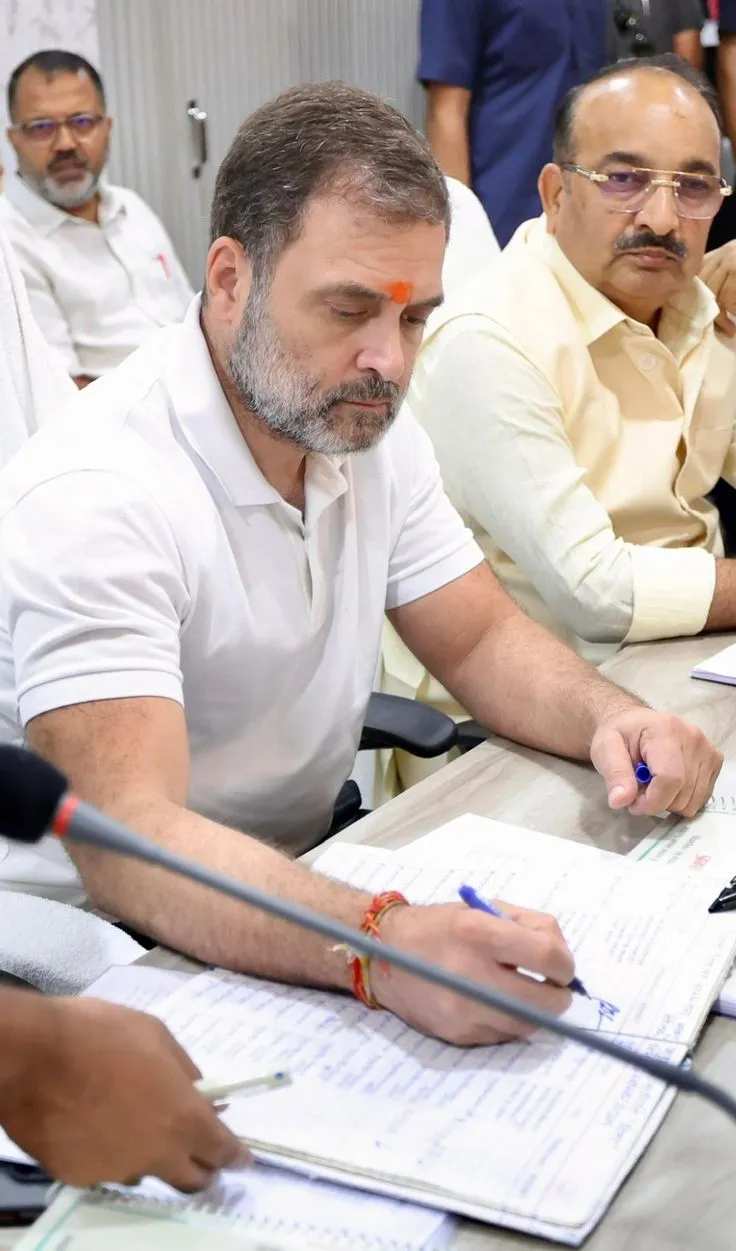
For the second time in two weeks, Congress leader and Leader of the Opposition Rahul Gandhi occupied centre stage in Pune’s political conversation. The first occasion was his own Chhatron Ki Goonj event on August 22. The second came inside a BJP state executive meeting, where Chief Minister Devendra Fadnavis and the party’s top leadership spent significant time discussing how to counter the imprint left by the Congress leader. The focus itself has been read as an acknowledgement of the traction Gandhi has begun to gain among younger voters and women in Maharashtra.
From Student Outreach to Party Strategy Room
Gandhi’s August 22 programme in Pune formed part of his ongoing Chhatron Ki Goonj series, an attempt to engage directly with students and young citizens. The Pune edition stood out because it was oriented strongly towards young women. Large numbers of women attended, and the interaction touched on issues of patriarchy, respect, mobility, education and everyday restrictions that many participants said they faced. Gandhi’s remarks on the difference in how society reacts when boys and girls use strong language, and his broader critique of what he described as a restrictive mindset, generated both support and sharp political reaction.
Two weeks later, that reaction surfaced inside the BJP’s own closed-door deliberations. At the state executive meeting, the party leadership devoted considerable attention to the political messaging and organisational implications of Gandhi’s outreach. Fadnavis urged party workers to understand what he called the Congress’s new model of politics. The tone of the discussion indicated that the BJP no longer viewed the events as mere spectacle but as efforts that required a structured response.
Acknowledging Reach Among Youth and Women
One of the clearer signals from the meeting was the recognition that Gandhi’s recent interventions have drawn attention from younger voters and women. Maharashtra has a large cohort of voters in the 18–26 age group. Party strategists are aware that this demographic is increasingly active on social media, responsive to issues of education, jobs and personal freedom, and less automatically aligned with older political loyalties.
The BJP’s response has begun to take shape around the theme of women’s reservation. Fadnavis accused Gandhi of being responsible for delays in the implementation of women’s reservation, using strong language to frame the Congress leader as an obstacle rather than an advocate. By placing the reservation issue at the centre of its counter-narrative, the party aims to contest the ground Gandhi has tried to occupy on questions of women’s empowerment and equality.
This approach reflects a broader shift in emphasis. Instead of dismissing the outreach entirely, the BJP is attempting to reframe the debate on terms it considers more favourable, while also signalling to its cadre that the challenge from the Congress leader should not be underestimated.
Political Traction and Organisational Implications
Observers note that the decision to spend substantial time on Gandhi inside a formal party meeting is itself significant. In earlier phases, similar Congress initiatives were often brushed aside as publicity exercises. The current discussion suggests a recalibration. The party appears to accept that repeated, issue-focused engagement with students and young women can create political momentum, especially when it coincides with wider discontent over examination irregularities, employment and social attitudes.
Fadnavis’s call to understand the Congress’s evolving methods points to an internal assessment that the opposition is experimenting with a different style of politics—less reliant on traditional mobilisation and more focused on direct conversation, social media amplification and thematic campaigns. For a party that has dominated Maharashtra politics in recent years, the need to address this shift indicates that the leadership sees potential for the Congress to expand its presence among new voter segments.
The Road Ahead in Maharashtra
Maharashtra’s political landscape remains complex, with multiple parties and shifting alliances. In this environment, the ability to connect with first-time and young voters can influence outcomes in closely contested seats. Gandhi’s Pune event and the subsequent BJP discussion illustrate how a single outreach programme can ripple outward, forcing rival parties to adjust their messaging and priorities.
The BJP’s emphasis on women’s reservation as a counter-issue shows an attempt to reclaim the narrative on gender and representation. At the same time, the party’s own organisational efforts to engage youth more actively on digital platforms reflect an understanding that traditional campaign methods alone may no longer be sufficient.
For the Congress, the fact that its leader’s outreach is being debated at length inside the ruling party’s highest state forum is a form of validation. It suggests that the combination of student-focused events, emphasis on personal freedoms and criticism of social hierarchies is registering beyond the immediate audience.
A Quiet Indicator of Changing Currents
Political meetings rarely devote extended time to an opponent unless that opponent is perceived to be gaining ground. The Pune BJP executive meeting therefore serves as a useful indicator. Rahul Gandhi’s recent efforts in the city, particularly his interaction with young women, have created enough of a political imprint to require a formal response. How effectively each side converts these exchanges into lasting organisational strength and electoral support will shape the next phase of competition in Maharashtra. For now, the resonance of Gandhi’s outreach is visible not only in the crowds that attended his programme but also in the strategy discussions of his principal rival.
Read more – therecipetaste.com , uuploadarticle.com