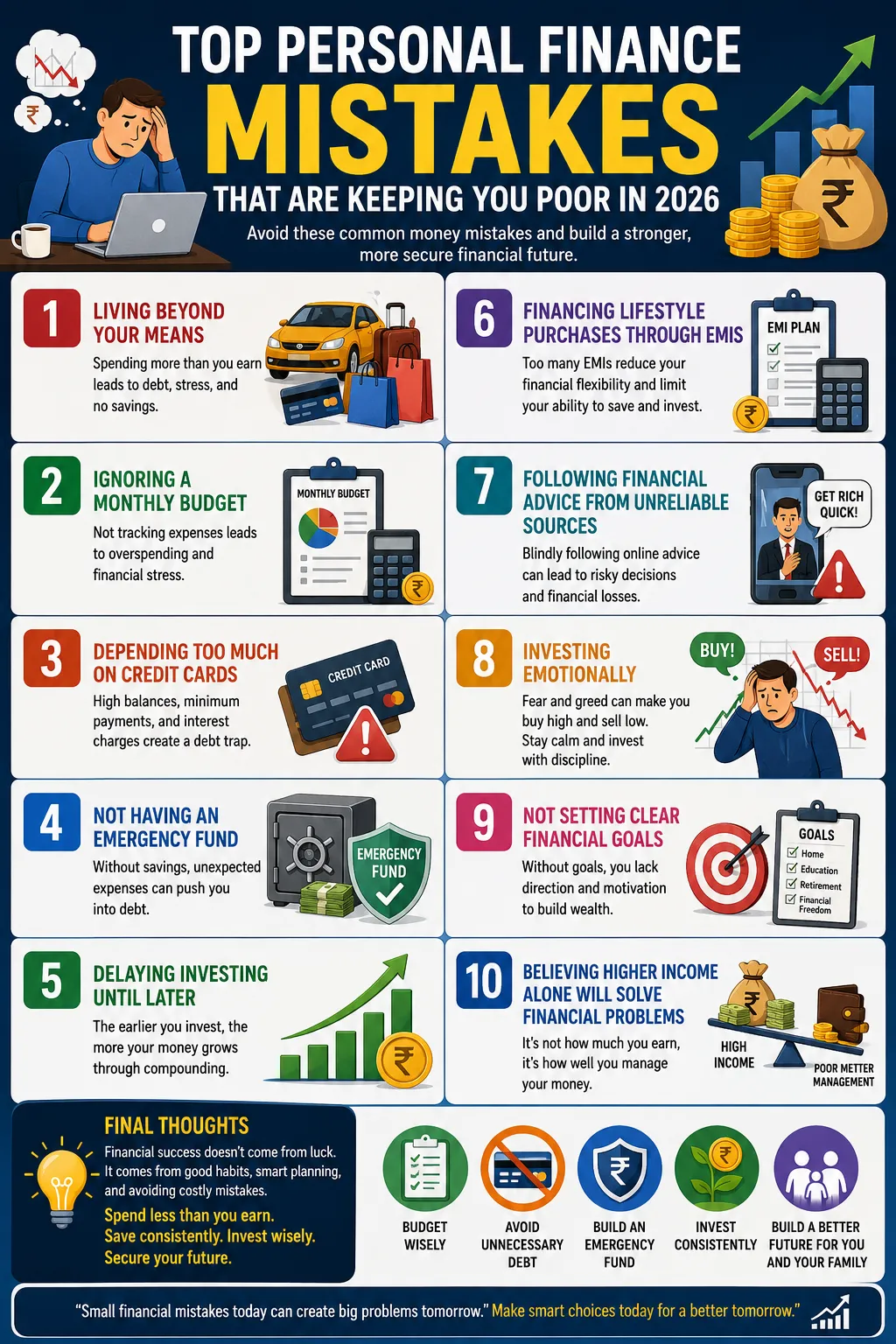
In 2026, earning more money is no longer enough to achieve financial security. Rising living costs, easy access to credit, digital spending habits, and lifestyle inflation have made wealth building more challenging than ever. While many people focus on increasing their income, they often overlook the financial mistakes that silently drain their wealth year after year.
The truth is that most people do not stay financially stuck because they earn too little. They remain stuck because of poor financial habits, lack of planning, and avoidable money mistakes. If you want to improve your financial future, understanding these common pitfalls is the first step.
1. Living Beyond Your Means
One of the biggest reasons people struggle financially is spending more than they earn. As income increases, many individuals immediately upgrade their lifestyle by purchasing expensive gadgets, cars, vacations, and luxury items.
This phenomenon, often called lifestyle inflation, creates a cycle where higher earnings never translate into higher savings. Instead of building wealth, people increase their expenses to match their income.
A simple rule for long-term financial success is to ensure that your income grows faster than your spending. The gap between what you earn and what you spend is where wealth is created.
2. Ignoring a Monthly Budget
Many people know how much they earn but have no idea where their money goes each month. Without a budget, expenses gradually increase through subscriptions, impulse purchases, food delivery apps, and entertainment spending.
A budget is not about restricting your life; it is about giving every rupee a purpose. People who track their spending are often better prepared to save, invest, and handle unexpected expenses.
In 2026, budgeting apps and digital banking tools make expense tracking easier than ever, yet many people still avoid it. This mistake often leads to overspending and financial stress.
3. Depending Too Much on Credit Cards
Credit cards can be useful financial tools when used responsibly. However, they become dangerous when they are used to fund a lifestyle that income cannot support.
Many people make the mistake of paying only the minimum amount due each month. While this may seem manageable, interest charges continue to accumulate, making debt increasingly difficult to repay.
Financial experts consistently warn that excessive credit card usage, missed payments, and high balances are among the fastest ways to damage long-term financial health. What begins as convenience can quickly turn into a debt trap.
4. Not Having an Emergency Fund
Unexpected expenses are inevitable. Medical emergencies, job losses, car repairs, and family obligations can arise at any time.
Without an emergency fund, most people are forced to rely on credit cards, personal loans, or borrowing from family and friends. This often creates long-term financial setbacks.
Financial planners generally recommend maintaining an emergency fund that covers at least three to six months of essential living expenses. This financial cushion can prevent temporary problems from becoming long-term debt burdens.
An emergency fund is not an investment; it is financial protection.
5. Delaying Investing Until Later
One of the most expensive financial mistakes is waiting too long to start investing.
Many people believe they need a large amount of money before they can begin investing. In reality, investing early is often more important than investing large amounts later.
The power of compounding allows investments to grow over time. Even small contributions made consistently can create significant wealth over the long term.
People who postpone investing until they receive a salary increase or achieve financial stability often miss valuable years of compound growth.
6. Financing Lifestyle Purchases Through EMIs
The widespread availability of easy financing has made it simple to buy almost anything through monthly installments. While EMIs can be useful for essential purchases, they become problematic when used excessively for discretionary spending.
Many consumers accumulate multiple EMIs for smartphones, electronics, furniture, vacations, and luxury products. Individually, each payment may appear affordable. Collectively, they can consume a large portion of monthly income.
When too much income is committed to debt repayments, financial flexibility disappears. This leaves little room for saving, investing, or handling emergencies.
7. Following Financial Advice from Unreliable Sources
Social media has created countless self-proclaimed financial experts. While some provide valuable guidance, many promote risky strategies, unrealistic expectations, or investments they barely understand.
Blindly following online trends without proper research can lead to costly mistakes.
Successful financial planning requires reliable information, clear goals, and a long-term perspective. Before acting on any financial advice, it is important to verify the source and understand the risks involved.
8. Investing Emotionally
Fear and greed remain two of the most powerful forces in personal finance.
Many investors buy assets after prices have already surged because they fear missing out. Others panic and sell investments during market downturns.
This emotional decision-making often results in buying high and selling low—the exact opposite of successful investing.
A disciplined investment strategy based on long-term goals typically produces better results than reacting to short-term market movements.
9. Not Setting Clear Financial Goals
People often say they want to save money or build wealth, but they fail to define exactly what they are working toward.
Without specific goals, financial decisions become reactive rather than strategic.
Clear objectives such as purchasing a home, funding education, building retirement savings, or creating passive income provide direction and motivation. They also help determine how much to save and invest each month.
Financial success rarely happens by accident. It usually follows a well-defined plan.
10. Believing Higher Income Alone Will Solve Financial Problems
Perhaps the biggest personal finance mistake of all is assuming that earning more money will automatically fix financial issues.
Many high-income earners still struggle financially because they overspend, carry excessive debt, and fail to save consistently. On the other hand, many moderate-income individuals build substantial wealth through disciplined financial habits.
Financial success depends less on how much money you make and more on how effectively you manage it.
Final Thoughts
The financial challenges of 2026 are different from those of previous decades, but the principles of wealth building remain unchanged. Budget wisely, avoid unnecessary debt, maintain an emergency fund, invest consistently, and spend less than you earn.
Most people do not become poor because of a single bad financial decision. Instead, financial struggles often result from small mistakes repeated over many years.
By identifying and correcting these common personal finance mistakes today, you can build stronger financial security, reduce stress, and create a more prosperous future for yourself and your family.