India head coach Khalid Jamil has chosen not to engage deeply with Brazil manager Carlo Ancelotti’s recent comments on the absence of a football culture in India. Speaking ahead of the national team’s friendly against Panama, Jamil indicated that everyone is entitled to an opinion and preferred to keep the focus on the task immediately in front of his squad.
Priority on the Pitch
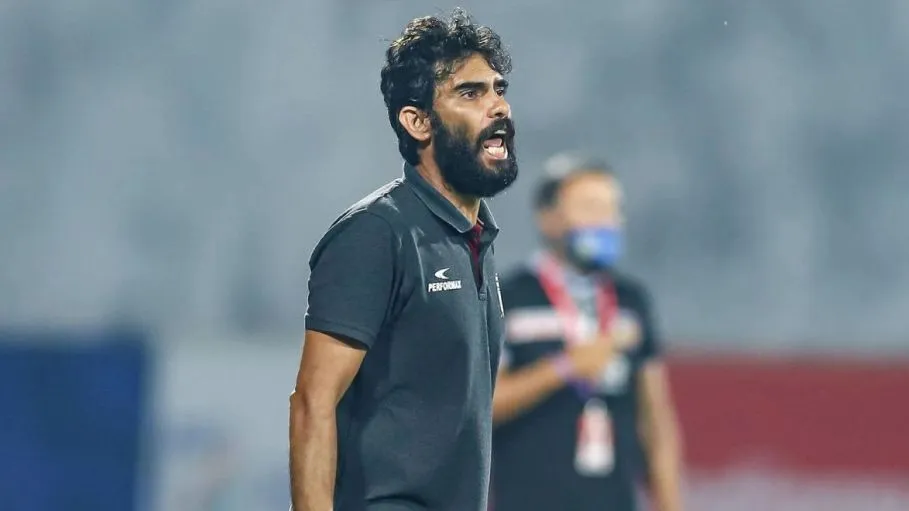
Jamil was asked about Ancelotti’s assessment during his pre-match press engagement. Rather than entering into a debate about cultural diagnoses or long-term structural issues, the India coach steered the conversation back to preparation and performance. His message was straightforward: external opinions exist, but the priority remains what the team does on the field in the coming days.
India are using the current FIFA window to face a series of higher-ranked opponents. The first of those matches is against Panama in Bengaluru. Jamil has assembled a squad that blends established players with younger faces, and he has repeatedly emphasised the value of testing his group against quality opposition.
Context of Ancelotti’s Remarks
Ancelotti, speaking before Brazil’s own preparations, had observed that India lacks a deep football culture and needs stronger grassroots systems to produce a consistent pipeline of players. He also noted India’s limited experience against top-level international sides. The comments generated discussion within Indian football circles, particularly because they came from one of the most respected coaches in the world and ahead of a high-profile friendly between the two nations.
Jamil’s response reflects a deliberate choice to avoid distraction. Coaches of national teams frequently face external commentary on the state of the game in their countries. Some choose to address it at length; others treat it as background noise. Jamil’s stance falls into the latter category. By declining to dwell on the remarks, he signalled that his energy and that of his players are better spent on training, tactical preparation and the specific challenges posed by Panama.
Focus on the Panama Fixture
The match against Panama represents an important early test in the window. Panama, a side that featured at the most recent World Cup, sits significantly higher in the FIFA rankings than India. For Jamil, the game offers an opportunity to evaluate his selected group in competitive conditions, assess how players respond to higher physical and technical demands, and gather information that can inform the subsequent matches against Brazil and Uruguay.
In recent public comments, Jamil has stressed the importance of belief, discipline and collective responsibility. He has spoken about the need for players to enter matches with confidence, follow the team plan and improve from one outing to the next. Home support in Bengaluru is expected to play a role, and the coach has highlighted the potential influence of the crowd as a motivating factor.
Building Through Exposure
Jamil has consistently framed the current series of friendlies as beneficial for Indian football’s longer-term development. Facing teams of the calibre of Panama, Brazil and Uruguay provides experience that cannot be replicated in domestic competition or against lower-ranked opponents. The exposure allows players to measure themselves against different styles, speeds and levels of organisation.
This approach aligns with a broader recognition within the Indian setup that progress requires regular contact with stronger opposition. While results remain important, the learning process — understanding gaps in technique, decision-making, physical conditioning and tactical adaptability — is equally valued. Jamil’s reluctance to be drawn into cultural debates can be seen as an extension of this results-and-process orientation. The work, in his view, happens on the training ground and the pitch.
Managing Attention and Expectation
High-profile friendlies inevitably attract attention, both positive and critical. Ancelotti’s comments added another layer of external narrative. By refusing to amplify or contest those remarks at length, Jamil attempted to keep the internal environment of the national team steady. Squads can easily become distracted by media storylines; a coach’s ability to maintain focus is often tested in such moments.
Jamil has previously indicated that he accepts constructive criticism as part of the role while remaining selective about which voices influence his thinking. His handling of the Ancelotti episode fits that pattern. Acknowledgement that opinions exist, followed by a clear redirection toward the next match, allows him to close the topic without appearing dismissive or defensive.
Looking Ahead in the Window
After Panama, India will travel to face Brazil and then Uruguay, both matches scheduled in Kolkata. Those fixtures will bring even greater scrutiny and higher technical demands. Jamil’s current messaging suggests he wants his players to treat each game as a step in a continuum rather than as isolated events defined by ranking differences or external commentary.
The coach has spoken about the need for players to take responsibility, stay united and compete without being overawed. These themes are likely to remain central regardless of the opponent. Whether facing a Central American side or traditional South American powers, the internal standards Jamil is trying to establish will determine how much the team extracts from the window.
A Pragmatic Stance
Khalid Jamil’s response to Carlo Ancelotti’s remarks was characteristically pragmatic. He neither endorsed nor disputed the assessment of Indian football culture in detail. Instead, he affirmed the right of others to hold views and returned attention to the immediate competitive task. In doing so, he modelled the kind of focus he appears to want from his players: concentrate on controllable factors, prepare thoroughly, and let performance provide the most meaningful answer.
As India steps into a demanding sequence of matches, that approach may prove more useful than prolonged debate. The results and the manner of performance over the coming days will shape the next chapter of discussion around the national team far more than any exchange of opinions between coaches.
Read more – wellposhan.com