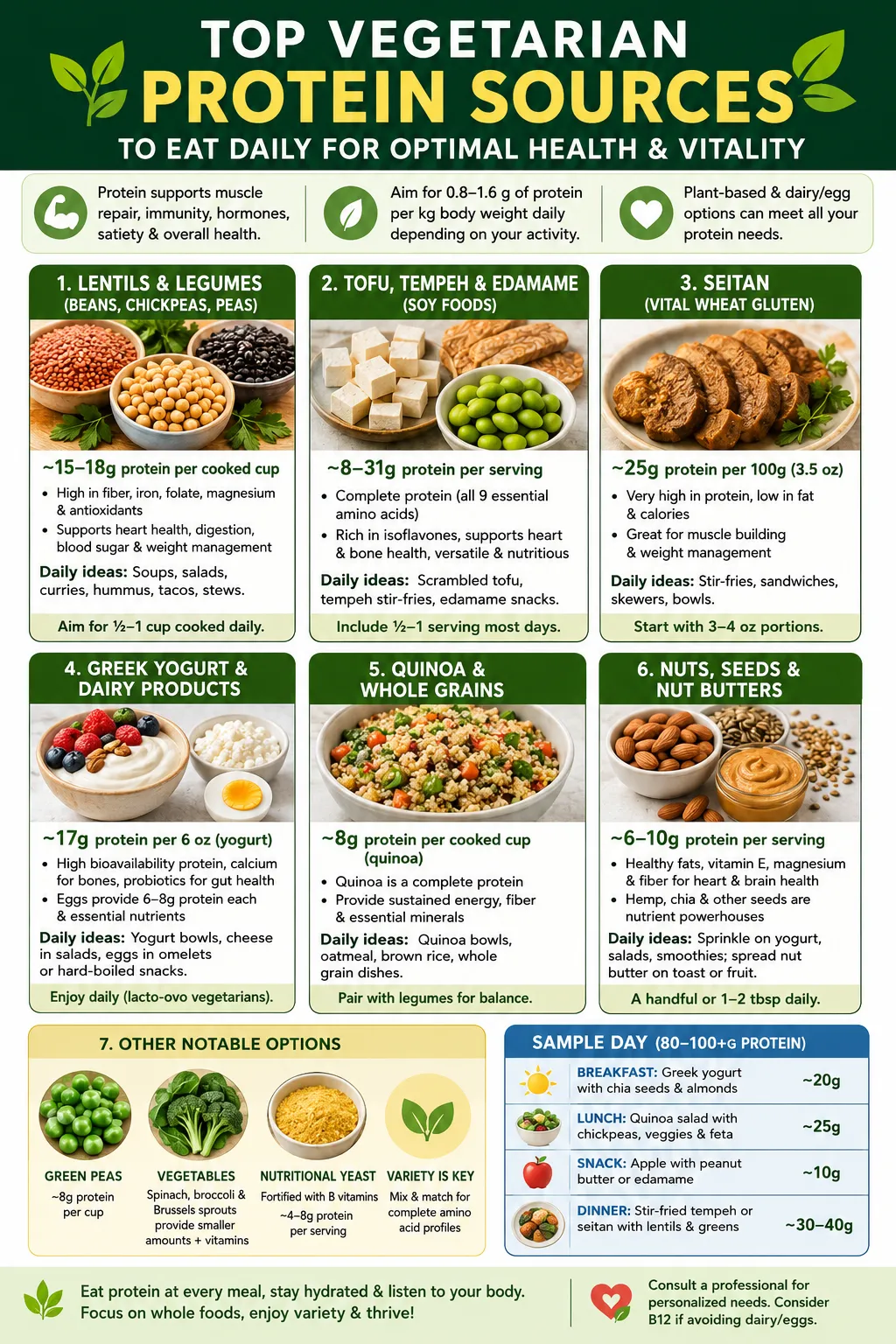
Vegetarian diets offer abundant, nutrient-dense ways to meet protein needs without relying on animal flesh. Protein supports muscle repair, hormone production, immune function, satiety, and overall cellular health. While the Recommended Dietary Allowance (RDA) for adults is about 0.8 grams per kilogram of body weight—roughly 56 grams for a 70 kg (154 lb) person—many active individuals or those focused on muscle maintenance benefit from 1.2–1.6 grams or more per kg.
Plant-based and dairy/egg options provide complete or complementary proteins when varied throughout the day. Studies confirm that well-planned vegetarian diets supply adequate protein for most people, with legumes, nuts, seeds, and soy foods playing key roles. Concerns about incomplete proteins or deficiencies are often overstated when energy intake is sufficient and protein-rich plants are emphasized.
Here are some of the top vegetarian protein sources to incorporate daily, with approximate protein values, benefits, and practical tips.
1. Lentils and Legumes (Beans, Chickpeas, Peas)
Lentils deliver around 18 grams of protein per cooked cup, alongside 15–16 grams of fiber—over half the daily recommended intake. Chickpeas and black beans offer about 15 grams per cup, while kidney beans provide roughly 15 grams. These affordable staples are rich in iron, folate, magnesium, and antioxidants.
Benefits: They support heart health by helping manage cholesterol and blood sugar, promote digestive regularity, and aid weight management through high fiber and satiety. Legumes complement grains for a complete amino acid profile.
Daily Ideas: Add lentils to soups, salads, or curries; use chickpeas in hummus or roasted snacks; include beans in tacos or stews. Aim for ½–1 cup cooked daily.
2. Tofu, Tempeh, and Edamame (Soy Foods)
Soy products stand out as complete proteins containing all nine essential amino acids. Tofu provides about 8–10 grams per ½ cup (or more depending on firmness), tempeh around 17–31 grams per cup, and edamame approximately 17 grams per cup.
Benefits: These foods offer high-quality protein with additional isoflavones linked to heart health and bone support. They are versatile, low in saturated fat, and nutrient-dense with calcium, iron, and magnesium in some forms.
Daily Ideas: Scramble tofu for breakfast, grill tempeh for stir-fries, or snack on steamed edamame. Include ½–1 serving most days.
3. Seitan (Vital Wheat Gluten)
Seitan is one of the highest-protein plant options, with about 25 grams per 100 grams (3.5 oz). Often called “wheat meat,” it has a chewy texture ideal for mimicking meat.
Benefits: It is low in fat and calories relative to its protein density, making it excellent for muscle building and weight control. Pair it with soy or other sources for completeness if needed.
Daily Ideas: Use in stir-fries, sandwiches, or skewers. Start with 3–4 oz portions.
4. Greek Yogurt and Dairy Products
Low-fat Greek yogurt offers around 17 grams per 6 oz serving. Cottage cheese, milk, and cheese also contribute significantly. Eggs provide 6–8 grams each and are complete proteins.
Benefits: Dairy adds high bioavailability protein, calcium for bones, and probiotics in yogurt for gut health. Eggs supply choline and vitamins like B12 and D.
Daily Ideas: Enjoy yogurt with nuts for breakfast, add cheese to salads, or include eggs in omelets or hard-boiled snacks. Lacto-ovo vegetarians can use these regularly.
5. Quinoa and Whole Grains
Quinoa is a complete protein with about 8 grams per cooked cup. Oats, brown rice, and other grains add 4–8 grams per serving.
Benefits: These provide sustained energy, fiber, and minerals like magnesium and manganese. They pair well with legumes for balanced meals.
Daily Ideas: Use quinoa as a rice alternative in bowls, add oats to smoothies or overnight oats.
6. Nuts, Seeds, and Nut Butters
Almonds offer ~6 grams per ounce (23 nuts), peanuts around 7–8 grams per 2 tablespoons of butter, and hemp or chia seeds provide strong profiles (hemp hearts ~9–10 grams per 3 tablespoons).
Benefits: They deliver healthy fats, vitamin E, magnesium, and fiber for heart and brain health. Seeds like hemp and chia are nutrient powerhouses.
Daily Ideas: Sprinkle seeds on yogurt or salads; spread nut butter on toast or apples. A handful daily adds up without excess calories if portioned.
7. Other Notable Options
- Green Peas and Vegetables: Peas provide ~8 grams per cup; spinach, broccoli, and Brussels sprouts contribute smaller but meaningful amounts plus vitamins.
- Nutritional Yeast: Often fortified, it adds B vitamins and 4–8 grams per serving as a cheesy topping.
Building a Daily Routine
Aim for protein at every meal: e.g., Greek yogurt or eggs at breakfast, lentil soup or tofu salad at lunch, bean-based dinner with quinoa, and nuts/seeds as snacks. A varied plate—combining grains + legumes or using complete sources like soy/quinoa—ensures all amino acids. Most vegetarians meet needs easily with adequate calories and diversity.
Sample Day (approx. 80–100+ grams protein):
- Breakfast: Greek yogurt with chia seeds and almonds (~20g)
- Lunch: Quinoa salad with chickpeas, veggies, and feta (~25g)
- Snack: Apple with peanut butter or edamame (~10g)
- Dinner: Stir-fried tempeh or seitan with lentils and greens (~30–40g)
Broader Health Advantages
Vegetarian protein sources emphasize fiber, antioxidants, and unsaturated fats, which support heart health, stable blood sugar, weight management, and reduced risks of chronic diseases compared to heavy reliance on red or processed meats. Plant-focused eating also benefits the environment.
Listen to your body, consult a professional for personalized needs (e.g., athletes, pregnant individuals), and consider B12 supplementation if avoiding dairy/eggs. Focus on whole foods over heavily processed alternatives for maximum benefits.
Incorporating these top sources daily transforms meals into nourishing, satisfying experiences. With creativity in the kitchen—through curries, bowls, bakes, and snacks—vegetarian eating proves both delicious and powerfully supportive of long-term health and vitality.